
The Ultimate Guide: How To Stop A Puppy From Biting And Nipping
This post may contain affiliate links. We may earn money or products from the companies mentioned in this post.
Do you have a mouthy puppy?
Is your puppy constantly nibbling chomping destroying your hands, feet, legs, and arms?
If this sounds like your puppy then you’ve come to the right place!
Welcome to The Ultimate Guide on How To Stop A Puppy From Biting And Nipping!
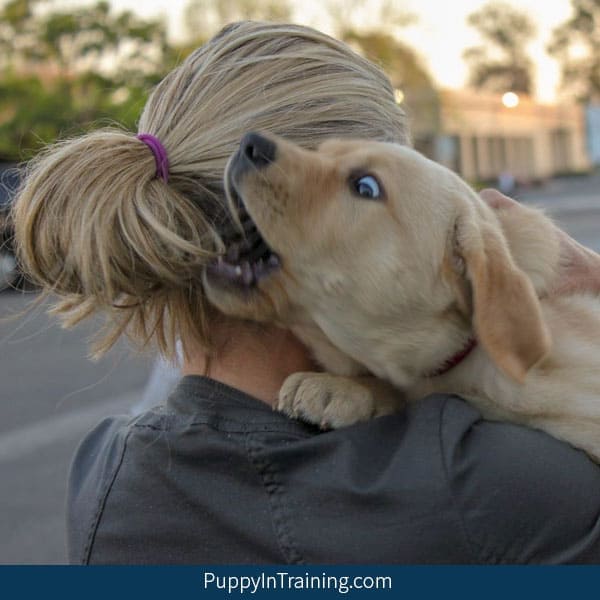
I’ve raised 6 guide and service dog puppies in training (UPDATE: we’re now at 17 and counting!), worked with and trained countless other 7-week to 18-month-old guide pups, and also fostered dozens of young puppies.
Believe me when I tell you I know a little bit about mouthy puppies and their little dagger teeth.
I’ve suffered a few puncture wounds in my time. However, every little nip has really just been a normal part of puppy behavior and there are a few things I’ve learned to do to help minimize damage to bloody hands, feet, arms, legs, torso, and butt (they haven’t gotten me in the face or head…yet).
QUICK RECOMMENDATION: My puppies have drawn blood with their teeth many times. The Milunova Pupr Pals™ Dog Toy is a plush squirrel puppet toy that helps to protect your hands from those sharp puppy teeth during play.
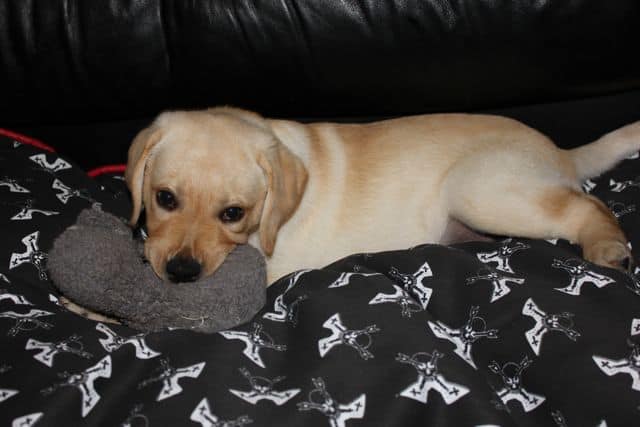
How To Stop A Puppy From Biting And Nipping
We hear these questions all the time:
- How do I get my puppy to stop biting my hands?
- My puppy is great, but he’s always biting me. How do I get him to stop biting?
- My puppy’s teeth are so sharp! What do I do to get him to stop his mouthy behavior?
Here’s an exact quote from one of our readers:
…My wife and I just adopted a beautiful female yellow lab. Stella is 8 1/2 weeks old and we’ve had her just over a week. I want to bounce some questions off you from what I’ve read on your site, as Stella is driving us crazy…Biting. To go along with the chewing, she’s gotten more than a touch nippy. Heck, she’s snapped at my face while I was holding her a couple of times. Again, no corrections or ignoring is helping…
–Stella’s Dad
That was actually just one of a laundry list of questions Stella’s dad had about Stella the bouncy 8 1/2-week-old Labrador Retriever puppy.
So the question is how do you stop puppy biting?
A mouthy, bitey, nippy, puppy is perfectly normal and I would actually be surprised if you were not experiencing some growing pains with a nippy puppy.
As I said earlier I’ve been raising puppies for a while now and some of the others in my group have been puppy raisers for 25+ years and raised a dozen or more puppies in the guide dog program.
Every time I see them with a new puppy I inevitably see little dagger-like puncture marks on their hands and wrists.
Even a seasoned puppy raiser usually ends up with some collateral damage from these playful guide pups.
There is some good news. Most puppies can be trained to regulate and minimize their biting pretty easily.
You can teach your puppy how to have a soft mouth and work on teaching him bite inhibition.
Here are some tips on things you can do to minimize the number of puncture wounds you receive from your little vampire…I mean a bundle of joy 🙂
QUICK ACCESS: If you’re having puppy training problems then you should join our Puppy Training Tips email list and get instant access to our New Puppy Owner Checklist PDF. To get started CLICK HERE.
Tips On How To Stop Puppy Biting

One of the reasons why puppies stay with their littermates until they are 7-8 weeks old is so they learn bite inhibition.
If you’ve ever observed a litter of puppies playing you probably noticed that some puppies will get a little too playful with biting and nipping.
When puppies are playing, biting, and nipping each other playtime stops when one of the puppies lets out a yelp and walks away.
Over time puppies will learn that biting too hard ends playtime and will learn to soften their mouths. After all, puppies don’t ever want playtime to end…do they?
This brings us to our first tip on how to stop a puppy from biting:
1. Make your puppy think he is hurting you when he bites by letting out a puppy yelp!
Basically, you are trying to replicate the same behavior as one of the other puppies in the litter.
So, let out a nice yelp to briefly startle your puppy and stop playing with him. This will teach your puppy that when he bites too hard playtime ends.
Ending playtime is key when you do this because I’ve seen and experienced puppies that think the yelp is just part of the game and if you continue handling or playing they sometimes get more excited and come back with an even harder bite.
2. Redirect your puppy’s biting by slowly removing your hand from his mouth and replacing it with one of his dog toys.
This is probably our favorite technique. Whatever inappropriate item your puppy is biting whether it be your hand, arm, feet, or face (like in the example from our reader) slowly remove the item from your puppy’s jaws and replace it with his favorite dog toy or chew then leave him alone to play with his toy for a while.
We have found that it’s a good idea to have lots of different textured toys as your puppy will most likely get bored if all he has is a bunch of plush toys. Here’s a sample list of textured toys in our collection:
Other Plush Dog Toys – aggressive chewers tear up plush toys in seconds. We took away all of Dublin’s plush toys. Two we use and recommend are the Dragon Chew Guard Dog Toy which is a little more durable for a plush toy and the Hide-A-Squirrel because when pups pull out the squirrels it simulates the de-stuffing.
Nylabones – we like the Dura Chew Giant, but be warned this thing will hurt if your puppy drops it on your bare foot.
KONG Toys – if you have an aggressive chewer try the KONG Extreme! Even Dublin didn’t chew through that one (although I’ve heard other dogs have).
Beef Collagen Sticks – Collagen Sticks are a great alternative to Bully Sticks, especially if you don’t like the strong smell of bully sticks.
Bully Sticks – we buy the Mighty Paw Naturals Bully Sticks. Even my finicky dog, Linus loved his bully sticks.
Yak Cheese Dog Chews – another favorite for redirecting bitey behavior away from your hands. We have three dogs making the Mighty Paw Yak Cheese Dog Chews the perfect size.
Deer Antlers for Dogs – we’ve heard good and bad about deer antlers and my advice is to read about them and decide if it’s the right chew for your dog.
3. Give your puppy a command
If you’ve been working on basic obedience then giving your puppy a command will sometimes get him to stop biting and go into obedience mode.
We teach our guide dog puppies “Leave it” pretty early on and once they know what it means a quick “Leave it” will get them to stop.
However, even just telling your puppy to “sit” or “down” (if they know these commands) could easily break their nippy mood.
4. Exercise your pup’s mind and body
There are two sides to this coin. You want your puppy to get plenty of exercise both physically (long walks, playing in the yard with him, etc.) and mentally (work on his training and get him thinking).
However, have you ever seen a kid who’s overly tired? You guessed it they act crazy and the same can happen with your puppy.
5. Try using Bitter Apple Spray
So how would you use Bitter Apple Spray to deter a mouthy puppy? If your puppy is in that nippy mood then spray a little bit of Bitter Apple Spray on your hand and then let him put his mouth on your hand.
Most puppies will usually take a few bites/licks of your hand then start smacking his chops licking his jowls trying to figure out where that horrid taste came from.
After doing this a few times your puppy will figure out that putting his mouth on your hand results in an icky taste in his mouth. Most pups hate the taste of Bitter Apple Spray, but some actually like it so this will not work with all pups.
One more word of caution…if you’ve already received a few puncture wounds from your pup’s little vampire teeth then you might not want to get Bitter Apple in the sores because I know from experience that it stings like heck!
A Few More Tips About Puppy Biting
At about 4-5 months our puppies lose all of their tiny dagger teeth and they are replaced with adult teeth. It’s also around this time that our pups usually stop their mouthy, biting behavior.
One more word for the wise. NEVER SLAP OR HIT YOUR PUPPY! Your puppy will probably think one of two things:
- You are playing and he’ll come back trying to bite you even harder or
- He will learn to fear you and your hands.
Hitting your puppy will most likely lead to even bigger behavior problems down the line.
Every puppy is different some of these tips may work with your current puppy, but not with your next puppy.
We’ve experienced this firsthand with Linus and Stetson.
Yelping made Linus more excited and more likely to continue his bitey behavior.
On the other hand, the yelp seemed to startle and confuse Stetson who would abruptly stop biting at first yelp.
If you think your puppy is being overly aggressive or none of these tips are helping your puppy you should seek a certified professional dog trainer and set up an in-home training session so the trainer can experience your puppy’s behavior firsthand.
Conclusion
Always remember when raising and training your puppy to be consistent, persistent, and patient.
Puppies can be a lot of work, but the work you put in now will show when you’re pup becomes a well-behaved full-grown dog.
I hope those tips on how to stop your puppy from biting helped.
What about you guys?
Do you have a puppy who likes to bite?
What have you done to help keep his biting at bay?
Tell us all about your experiences in the comment section below.
One final note. If there was one thing I thought you should try immediately the next time your puppy starts biting your hand it would be…
Redirect your puppy’s mouthy behavior with a collagen stick. We haven’t had a dog yet that didn’t love his collagen stick.
Exchanging my hand for a collagen stick has always worked for me. As an added bonus your puppy will enjoy chewing on his collagen stick for a good 10+ minutes.
Over time your puppy will learn:
- Chewing on Beef Collagen Stick = OK.
- Chewing on Hand = No Bueno.
I hope that helps. Good luck with your puppy. Let me know if you have any questions.
Save to Pinterest

Top Picks For Our Puppies
- BEST DOG CHEW
We Like: Beef Collagen Sticks - All of our pups love to bite, nip, and chew. We love using Collagen Sticks to help divert these unwanted behaviors. - BEST PUPPY TOY
We Like: Calmeroos Puppy Toy w/ Heartbeat and Heat Packs - Perfect for new puppies. Helps ease anxiety in their new home. - BEST DOG TREATS
We Like: Crazy Dog Train-Me Treats - We use these as our high-value treats for our guide dog puppies. - BEST FRESH DOG FOOD
We Like: The Farmer's Dog - A couple months ago we started feeding Raven fresh dog food and she loves it! Get 50% off your first order of The Farmer's Dog.
Check out more of our favorites on our New Puppy Checklist.


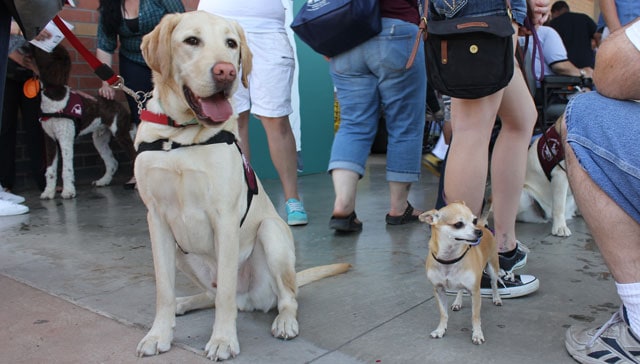
Our current puppy is 5 months old and finally exiting the bitey/nippy phase. Most puppies stop biting/teething when their baby teeth fall out and their adult teeth come in at around 4-6 months old. One chew we like with our puppies so much we started selling them are collagen sticks. Here’s a link to our collagen sticks for puppies. Whenever our puppies are biting/teething we give them something like a collagen stick to chew on and let them calm down for a little bit before we start interacting with them again.
Here’s an article on potty training your puppy and here’s another on stopping your puppy from jumping up.
Hopefully, you find that information helpful. Good luck with your training!
My puppy is about 7 to 8wks & she has bite me & my hands & arms are bleeding & she gets more aggressive when I push away & I gave her ropes,chewing toys & then she goes after shoes etc.& still peeing & pooping in house we bring her outside but she still comes in doing the same thing & jumping on people I need help I love my puppy I can’t afford no money on trainers please help me my husband is ready to get rid of her but we both love her please help me I’m desperate
I have an 8-9 month puppy. She is getting very nippy at night when I sit on the couch. Currently it is just with me. She was doing it with the kids but stopped. I stand and turn my back to her but if we sit down she eventually comes back. She has adult teeth and her bites are really starting to hurt. Any suggestions?
I am a professional dog walker and walk a 20 week old golden retriever. He has shown dominant behaviours already, such as humping blankets and trying to hump me. I have had to remove items from his mouth and he growls and bites. He has gotten me twice and broke skin and drew blood both times. There doesn’t seem to be anything more price worthy than what he has in his mouth. How can I work with him and his owners?
Yelping and stopping any play immediately (or turning away) is the best way to deal with it immediately. Secondly you want to redirect the behavior, after the initial reprimand wait a bit then offer something that the dog can chew on (nothing hard as bone for teething) and give high praise when they bite that.
I recently just lost my 16 year old beagle that I raised from 8 weeks old. I subsequently just rescued a 7 week old blue tick beagle purebred and keeping her with her mother for a little longer was unfortunately not an option, and the rest of the litter was also gone already, it was not a breeder that I got her from it was a circumstance of her beagle and another beagle with a different owner that is a neighbor just happened to hook up.
She has started with the play biting after settling into her new forever home, and as I had my previous pup for 16 years (I still miss him so much) I had completely forgotten how to curb the play biting, she is a very sweet and cuddly pup and I knew the play biting was completely innocent in her mind but was painful for me, I let out a puppy yelp and it immediately got her attention and she stopped biting and I then stopped the play as I didn’t want her thinking it was part of the play and she calmed down, a few minutes later I gave her a scratch and praised her and the biting didn’t happen again and she just soaked up the attention so for her the yelp method seems to be perfect and I’m glad I found this article.
I rescued Charley – a German Shepherd – who they thought was three years old. Based on his nibbling, and teeth whiteness, and overall puppy-like behavior, I presumed Charley was closer to 1. When he tries to bite my hand, I actually shove my whole hand in his mouth. I doubt this is appropriate. However, he doesn’t chew my hands anymore.
I have a 15 week old GSD puppy. If he is awake, he is chewing on something and, too often, it is me. Finger muzzle or yelping makes him almost aggressive. Turning into a statue used to help, but now he bites my feet to try to keep my attention. Telling him to sit used to work, but now he just gets mire worked up. Crating him calms him down and he comes out calm and sweet but goes back into barracuda mode within minutes. Plus, he has taken to diving at me, barking and nipping when he is hungry or wants to go outside. I have raised two adult rescues and both went from nightmare behavior to being dream dogs. I have never raised a puppy before,
I have a 7 month old pitbull puppy. Most times he’s a ham but tonight on our last walk before bed, he picked up a plastic bottle from the street. I told him no and drop it. Then I tried leave it. He didn’t listen. I tried to remove it from his mouth and because he’s testing me and teething he actually bite my arm several times and jumped. How do I redirect him? He has been to obedience training and usually is well behaved but we will not be able to keep him if he continues this behavior. Should I speak to a behaviorist? I feel extremely overwhelmed. My husband was so angry he bit me on our walk that he said he wants to give him to a rescue. We’ve had him since he was 11 weeks old. If I bring a bully stick on our walks he’ll drive me nuts trying to go for it. Any suggestions? Should I speak to his former trainer? She’s also a behaviorist & I know he’s in his adolescent phase now.
We rescued a German Shepherd that was found on the street.He appears to be 7-8wks old and is a land shark.Redirecting works sometimes,but all the time.Know being away from his pack at such an early age contributes to his behavior.Any suggestions on training one so young&unsocialized?
You can buy bitter apple spray from Chewy.com or Amazon.
I have a 12 wk old mini schnauzer, shes sweet and adorable, but she has my forearms looking like I’ve been in a cat fight. I almost rehomed her, but couldn’t do it. Ive tried everything.. Help!
Where do u get the bitter apple spray?
I have an 11 week old female mini schnauzer..4 lbs. just a tiny and recently recovered from Parvo. Her biting is so constant that I can’t even enjoy her. I have tried yelping, trading my hand for a toy. Throw the ball. Nothing helps. It’s getting to the point that while I love her I don’t like her and I’ve had four other MS and never went through this. I think being so small at 8 weeks 2.3 lbs she should have stayed with mother longer but too late now. I need help. Didn’t try bully sticks yet due to she’s on a special diet for her stomach. Doing great with that.
Hey Tina, I was facing the same issue with my doxie. I tried to reinforce every time he calmed down and whenever he tried to bite or nip at me, I would ignore him but put him on a short leash. Eventually your pup will realise she is being ignored and will lie down or sit silently, that’s when you give the pup the treat, but be careful not to fuss your pup while giving the treat. That will result in putting her out of her calm/relaxed mood. Hope this helps repeated reinforcement of calm behaviour will make your pup understand what’s the desirable behavior with which she gets treats.
Need some advice for a 4 month old Labrador puppy!! He is extremely nibby, and biting everyone as a greeting, or to get attention from people. We aren’t sure how to remedy this situation or discipline him that isn’t tapping him on the nose.
Any advice is appreciated!!
Weimaraner’s are a high energy breed. You want to make sure you get your dog plenty of exercise. When I have my puppies indoors, if they don’t know the house rules then I keep them on leash, on a tie down, or in the crate until they understand what they can and cannot do. FYI, I’m currently raising a black Labrador Retriever and we’re still teaching her house rules at 10 months old. We have small children so we keep her on leash in the house for their safety. I hope that helps, good luck with your puppy!
Hi I have a 14 week old Weimaraner & I’m losing my mind with the biting I have a 10 year old & the puppy just randomly jumps on the couch to bite her or me for no reason not even play time, I don’t know what to do honestly any advice I’d love thank you Misty
Hey, i have a 3 and a half old dachshund. She keeps biting all the time. Sometimes my hand skin peels off, she knows that when i say no she is not supposed to do something but when she is biting and i say No, She doesnt listen and keeps biting. How do i keep her from biting on our hands and legs?
I’ve got a 10 week old German shepherd puppy. We’ve had her for 2 weeks. The first couple days were hard, but then we got in a routine. I was able to redirect her biting. But in the past couple days days she has started biting hard not wanting to go in her crate for a nap. Bully sticks don’t seems to redirect the behavior. A command does, but then when she sees me closing the door she is upset and starts biting again. It’s like she’s throwing a temper tantrum. I ignore the yelps once the door is closed (which she wasn’t doing before) and then she’ll settle down. What am I doing wrong? How can I get her to stop biting when going in the crate and yelping once the door is closed
Valerie, we are in the same position with our 9 week old English Springer. If you come across a solution please let me know! We are at our wits ends! And if we find something that works I will come right back here to let you know!
My 8 week old French Brittany puppy will not stop biting at me. It may be my legs, hands, shirt, pants etc., No matter what I do which includes bitter apple, stay still, turn my back, yelp and ignore him he runs after me and attacks. The only time he does not is when he is in bed with me at night.
I love him very, very much and I’m concerned that I may be doing something wrong which will effect him when he is no longer a puppy.
It appears that my puppy is experiencing separation anxiety as well. He always wants to be with me, but then he attacks me. He does not share any of these issues with my husband.
How can I help control the situation?
We just adopted an 8 1/2 week old lab puppy. What is a good way to help her burn off her energy while she is still too young to take out on walks or bring in the grass? Just trying to make sure she is getting enough exercise and hopefully help with some of the biting.
Congratulations on your new puppy! If he were my puppy I’d continue introducing him to new people to help get him socialized. One thing I would do is before introducing the puppy I’d let people know that he’s bitey/nippy and then teach them what I’d like them to do when he bites to help with training. Good luck with your puppy!
Thanks for the great advice! We have just got a Cavoodle pup, he is now 10 weeks old. He is pretty nippy and bitey but we are working on it using the strategies you listed above. He is also bitey and nippy when we visit friends or he meets new people. Just wondering if we should continue socialising him with new people or should we stop until we have trained him to manage his biting better, meaning he can then interact with new people better? Thanks!
Seven weeks old is a little young to be away from mom and littermates. This is actually the time when she would be learning about bite inhibition from mom and siblings. We raise mostly Golden Retrievers and Labs and in our experience the mouthy behavior usually continues until after their adult teeth come in at around 5-6 months old. Before then you can do some of the things mentioned in this article. Every puppy is different and some things work better than others. For instance, one thing we try to do is make a crying sound when a puppy bites us to imitate what a littermate might do. Some puppies will stop while others get excited and start biting more. Another way you can imitate a littermate is when your puppy stops biting just leave the play area and ignore them by walking away. And as you mentioned using a chew toy to redirect behavior which is one of our favorite methods for bitey puppies. Good luck with your training!
I have a seven week year old MorkiePoo I am struggling with her nipping and biting at my toes, hands and I want to learn what to say to her when biting besides giving her a toy can you help me?
Congratulations on your new puppy! If you’re giving him lots of mental and physical exercise during the day then it’s possible that he’s overly tired when night time comes around. If you’re crate training then you might just try crating him to see if he goes to sleep. Our current puppy does this and acts a bit crazy when she’s exhausted. As soon as we crate her she goes right to sleep. On the other hand if your puppy is not getting enough exercise then it’s possible that you need to exercise him more. While many of us will give our puppy plenty of physical exercise it’s also important to exercise their brains as well. Try having several training sessions throughout the day and see if that helps bring down his energy level at night.
Hi!
We have an 11 week old goldendoodle (more golden retriever than doodle). At night time he goes crazy and won’t stop biting and growling at us.
We’ve tried staying still, walking away, grabbing his collar to hold him still (not hurting him). But it only seems to deter for a few minutes.
During the day he’s great! We can take away toys, pull on his ears/tail, and take away food without any issue.
We’re first time dog owners and unsure if this is normal behavior. Any insight?
As I mentioned to another reader at 10 months old your dog is probably not teething anymore. I’d recommend a certified professional dog trainer for an in home evaluation.
At 11 months old your dog is probably no longer teething or having issues with adult teeth coming in. I’d recommend bringing in a certified professional dog trainer for an in home evaluation that way they can observe your situation and give you a plan to work on your dog’s behavior.
I have a 10month old yellow lab. He been biting and hard and won’t stop,tried the yelping and ow and that hurts..he even bit me in my thigh few hours ago pretty high up and broke into tears..take him out and no change..tried treats and bones and filling toys with dog treat spray can flavored stuff for dogs..Help its hopeless.I always say puppy stage or made excuses cause he was the runt and weighed 8lbs at 8weeks old. Vet said we saved his life from a legit dog breeder from starving..I love my boy and it kills me I’ve had dog with nippings and play biting but this is beyond and he in training to be a service dog. What can I do that I haven’t done yet?live in housing apt so can’t let him bark and bite like he does every day for like 2hrs..even attacks my butt,feet,arms,legs,thighs..feeling hopeless.
We adopted an 11 month old pup in May of this year from the Humane Society. She is loveable kind dog however, any time she plays or gets excited she will bite or nip. She recently bite my thigh and left a nice bruise. I know she is excited to see us when we get home from work but I have to say we are not liking the jumping biting much at all. We have tried the ignoring until she calms down, saying OUCH loudly and toys and treats for listening with no luck. I’m at a loss. I’m affraid she’s going to nip the wrong person and it will end badly. Any suggestions on how to help with this?
Most puppies are very bitey until their adult teeth come in at around 5-6 months old. However, it is important to minimize their biting when they’re young. What works best for us is redirecting the biting by giving our pups their favorite chew toy in place of our arms and feet. Also, it’s important to have many different types and textures of toys as your pup will often get bored of the same toy.
Hi I’ve got a nine week puppy every thing is for biting So I freeze a piece off carrot long bit and that’s helping when he has his mad crazy moments I calm him with puppy toys I got on line overall it’s been not too bad patience is the trick🤨🤨
I got a 7 weeks old puppy and I tried everything to stop her biting me, but nothing worked. She nips playfully first, and then it gets into biting my ankles, hands, toes and clothes. When she bites the sleeves or leggings, there is nothing that makes her stop.. she just gets more and more aggressive, pulling hard.
We start brining our puppies to puppy kindergarten to help socialize them with other puppies. Most puppy kindergartens will teach some obedience and usually allow some free play time for puppies. Make sure whoever is offering the puppy kindergarten requires all the pups be up to date on their vaccinations. Good luck!
We adopted an abandoned puppy who was found at 5 weeks and don’t know if he had any puppy interaction. What do you suggest for our puppy so he gets use to other dogs. He is almost 11 weeks old.
Hi guys, I have a 6-month old puppy, and I’m wondering how I can get him to stop biting, so this article helped me a lot. Also, I want to teach him to “shake hands”… Been searching for some methods, found this one, and I’m wondering if yo think it will work, if I follow this method?
If you’re still having issues you should try contacting a certified professional dog trainer for an in home evaluation.
Sometimes our puppies get so excited they bite at everything except the appropriate toys/chews. We do a few different things to help:
#1. We grab our puppy’s favorite chew and let her settle down in the crate.
#2. We grab our puppy’s favorite chew and let her settle down on a tie down.
#3. We cradle our puppy to help her calm down (this can take several minutes). Once she is calm we release her with an OK.
Hopefully one of those things helps you with your puppy. Good luck with your training!
My puppy is almost 5 months old. I’ve literally tried everything and nothing is working. The main thing I’m doing right now is getting up and removing myself from him and that’s not even working. When I yelped it made him bite me harder and go even more crazy. I tried giving him a toy or bully stick but he finds my arms, legs, face much more exciting. It’s to the point where he is breaking skin and making me bleed almost every time. I honestly don’t even know what to do at this point, it’s so frustrating.
We haven’t worked with deaf puppies, but I’ve found that redirection usually works best, basically replace the inappropriate object (arm, leg, etc) your puppy is biting with an appropriate object like a plush toy or bully stick.
How do you recommend working with a deaf puppy to teach them not to bite?
Most puppies bite until their adult teeth come in. When we raise our puppies we try to redirect biting from our arms/legs to appropriate chews like bully sticks, plush toys, and KONGs. I wouldn’t recommend flicking the nose with your finger this can cause an increase in biting or possibly other behavior problems.
Hello my name is Rozell Austin. I picked up My Shih-Tzu Pet 4/25/20.He did a little puppy nibbles and more puppy nibbles than I was accustomed to,so I looked you folks up and a few other sites and went to work on training!He was 8 wks old and yesterday I decided I was going to give him a good bath,meaning shampoo/hair conditioner! I have to say I carefully eased into everything with Zeus, because of his high anxiety and tantrum behavior!His biting got much better and I actually thought we were doing great till last night when he bit me hard and drew blood! I was very upset,but I kept my cool and said NoBiting several times and backed it up with finger flicks at his nose!Well he settled down,I thought we were understanding each other till morning and he tried again to bite harder when he wanted his way!This has got to stop!!! I have a 11yr old very well trained and Zeus now 15wks old and I am getting a Girl puppy 2 wks ,she will be 10weeks old! I thought I need a trainer?, I have always train my own and only went into training when I wanted to do more than the basics,Please Help
You might start with a group obedience class where you can learn how to teach your dog some basic house manners and obedience skills. Also, it will give you a chance to have a trainer assess your dog and give you some tips on how to handle behavior problems.
Working on a puppies bite inhibition is a slow and long process. It takes time, patience, persistence, and consistency. We make recommendations in this article, but what has worked best for us is redirecting to an appropriate behavior such as instead of chewing on your leg replace your leg with a bully stick to chew on. When we work with our puppies we do this constantly and consistently and as I’ve mentioned before we usually see improvement after their baby teeth fall out and their adult teeth come in, roughly at around 5-6 months old.
My dog is over a year old and bites at my legs when I go out or come in. He jumps and dirties my clothes,not allowing me to to get dressed for an occasion. What’s the solution, please?
I have a border terrier who’s about 18 weeks old and constantly nips. He latchs onto your leg and bite extremely hard never leaving go. How do I resolve the issue because if not I fear we will have to give him back.
I’m having the same problem with a 10 week old Australian cattle dog pup (kelpie/lab mix). Worried about her getting my 5 year old in the face.
We have a 12 week old Mini Australian Shepherd. He will “mouth” our hands, but he will also jump up and nip our noses. Tonight he nipped my nose and drew blood. It typically happens so fast that substituting something else for our faces isn’t feasible. Other than keeping our faces away from his mouth 😉, is there anything else we can do so that he stops?
Working on bite inhibition with a puppy definitely takes time. What works best for us is showing your puppy what is appropriate to chew on by replacing your hand/foot with an appropriate chew toy like a bully stick or plush toy. It will take time and puppies usually start showing improvement around 5-6 months after their adult teeth come in.
We have an 11 week old Bouvier that’s in a bad biting or nipping phase. I just reached out to the breeder with pointers, since she seems to have great with other recommendations. This is what she recommended: ..he is bored or looking to play. I would purchase a small pack of chewies (smalls ones to hand him but not choke) so when he starts to grab your pants, bite, mouthing…hand one to him. You can also redirect with new toys or ones he favors. If he becomes persistent…..when he jumps or bites, simultaneously gently push his head down and say no. Do not use the hand gesture and chewies at the same time….he will think that is a reward system for chewie…
We also started adding a long morning walk to train against going after autos and bikes. Exhaustion and lots of positive training with freeze dried beef liver is helping! We also picked up some Nothing to Hide “fake rawhide” Chew sticks and he loves to satisfy his chew on those.
Maybe cover up when the dog is around. It probably thinks things that dangle are toys I doubt it’s trying to hurt anyone but for safety should probably not have those bits out when the dog is around. Maybe should have a cat instead? Good luck!
I feel your pain! I have gone through this and still am to an extent with my 9 month old pup! He was really bad up until he lost his baby teeth and was teething and even right after. He still will be mouthy sometimes but he has definitely gotten better with time. I have found that buying him a lot of different toys has really helped. And though he loves to rip apart the plush toys, (I never leave him alone with them because I don’t trust him not to eat it) I have found that he seems to be craving a good chomp into something with more resistance. I have bought him many different “synthetic bones” (as I have read horrible things about shards of real bones ripping up the insides of dogs), and that really seems to help and satisfy some chomping need. I was talking to someone that trains dogs and they said different dogs and breeds have different needs when it comes to chewing. Certain breeds have a “need” to chomp and chew things. My dog definitely does. It has really been an uphill struggle with him for sure but I can honestly say that working with him everyday, being patient (still have to), and giving him plenty of options of toys has really made a big difference. And also, I don’t know about your pup, but mine gets really cranky just like a little kid if he is tired (he has a bedtime because of this!) or if he “needs” something. I make sure to take him out regularly, make sure he always has fresh water and that he isn’t over tired. Because he is most mouthy when he’s cranky! I know that a lot of people frown on putting dog in cage when he bites, but mine was crate trained first and he doesn’t mind being in there. Sometimes when he is cranky or especially mouthy or just flat out biting mood, I say “No biting” in a stern voice without yelling and put him in the crate for 10 minutes, like timeout. It has been working for me. Be patient, don’t give up on your pup!
I have an adorable Bouvier pup that is ten weeks old. He’s doing well with sit/stay. We are still working on ‘come’. He’s doing well with the wee wee pads, thanks to your suggestions. My problem now is that he continues to bite (mouth) and I can’t seem to stop that behavior. My husband and I are going to need blood transfusions soon.
Hello. I know this may sound strange but it’s true and I’m needing your expert opinion. I am part of a nudist colony in Central California. We have recently adopted a yellow lab who is a bit nippy. He has developed a habit of biting our members….. members. We have tried everything including replacing the objects with some silicone/rubber shafts we had laying around but it’s been no help. This is causing a bit of strain at the camp. Can you please give us advice?
Congratulations on your new puppy! You should always be working on getting your puppy to bite/chew on the appropriate things. Teaching him that biting things like your hands, feet, furniture is not good and redirecting him to his toys, chews, and other appropriate items. At around 5-6 months when the adult teeth come in it usually gets better, but as I mentioned you’ll want to work on his bite inhibition before that so he’s not biting/chewing with his adult teeth.
My 17 week year old bulldog puppy bites and nips a lot! Seems like he does it more with women more than men. So should this go away in another month at 5 months? He hasn’t lost any teeth yet
We use our leashes when working with our puppies if they’re playing too aggressively.
I have two puppies. One is 14 weeks gathering other is 7 months. They do not stop mouthing each other. I have to keep them apart . How do I train them not to mouth each other. Sometimes it escalates tombiting
Redirecting the behavior by using many different textured toys has always worked best for us. However, it takes a while to teach your puppy what is appropriate to chew on. Most of our puppies don’t out grow the chewing/bitey phase until after their adult teeth come in at around 6 months old.
Dang have a little patience, 4 months is still young, all his baby teeth are still there and he is teething.
None of your ideas, none, have worked for my four month old puppy. Over the last 1-2 months I have tried everything and can honestly say not one of your “tips” helped at all. He’s either going back to his breeder or I’m hiring Hermie the elf to remove every single shark tooth from his mouth.
Congratulations on your new puppy! A few things we do with our dogs when we bring home a puppy.
1. We do like you did and crate our puppies sometimes when they are too much.
2. We give our older dogs safe places to get away from the puppy. The older dogs are allowed up on furniture and we’ll also sometimes give them their own space in the living room or bedroom.
3. We use tie downs with the puppy.
4. We keep our puppy on leash and by our side so they can’t bite the older dogs.
Hopefully that helps. Good luck with your puppy.
My 13 week German Shepherd just loves to chew on my seven-year-old mixed breed tail and feet. I can divert him from chewing on my hand or my feet with a bully stick, but I can’t seem to get him away from our adult dog. He ends up in the crate a lot of the time just to keep the adult dog safe. Do you have any suggestions for us?
Thank you so much for your reply, Colby!
I did reach out to the breeder and I did find a certified professional to visit with.
I have really appreciated all of the work you have put into your site and have referred to it frequntly as we have navigated getting a puppy.
I especially feel like your advice about getting her a “litter mate” that smells like her siblings and mom was really helpful as she transitioned to sleeping in a crate by herself in a new home.
Congratulations on your new puppy! Every puppy is different. We mostly raise Labrador Retrievers and Golden Retrievers and have had puppies that stopped biting within the first few weeks and others that continued their mouthy behavior throughout puppyhood (until 18 months old). From my experience around 4 months is when it is usually the most difficult (around the time their adult teeth start coming in) and at around 6 months old (around the time all the adult teeth are in) it starts getting better. Try to stay patient, persistent, and consistent with his training and he should improve over time. Of course, if you continue having problems it’s sometimes a good idea to have a certified dog trainer come in to assess your puppy and give you tips on things you can do to help with behavior issues. Hopefully that helps. Good luck with your puppy!
We got our Mini Goldendoodle when he was 15 weeks 2 days old He was born 10/09/19 and we got him on 01/24/20. we love him but we can’t seem to get him to stop biting. We tell him no bite and he will stop and start licking us but, then goes back to biting. know this is just a stage. Our last dog was 8 weeks when we got her and it seems like it was easier to break her of biting. She was a labradoodle/soft-coated wheaton terrier who passed away at two months shy of 7 yrs on Jan 2, 2020. Is it harder to break this one because he is older.
Thanks,
Pat
Congratulations on your new puppy! I haven’t seen this type of behavior with any of the puppies we’ve raised (mostly Golden Retrievers and Labrador Retrievers). You might look into bringing in a certified professional dog trainer to assess your puppy. Also, you might reach out to your breeder to see if he/she has any information he/she can share with you about the parents and litter mates.
Hi Colby!
I know this is an older post but I have a biting question that is a little different.
We recently brought home a 9 week old Golden puppy from a breeder.
And while she does your typical mouthing and nipping…
She has also turned and snapped aggressively towards my face a few times when I have picked her up, removed her from a situation, or just tried to kiss her head. When I hold her near, she stiffens, and will push against me and kind have give me a side eye look.
Not always, but enough that I’m concerned. She does not try to bite like this when she greets me on her own or is playing like a normally frisky puppy.
My questions are these.
Is this normal for a 9 week old puppy, especially a Golden?
Is this an indicator of future temperament issues?
I obviously don’t want an adult dog that is unpredictable.
And we paid extra for her to have future breeding rites in the event that we might want to do that as an option. And would not even consider breeding a Golden with a less than very gentle personality.
I have only experienced this behavior in a couple of other puppies that were different breeds and our last Golden was so gentle and sweet and never pushed away, refused snuggles and kisses, gave the “look”, or snapped under any circumstances.
I’m concerned and perplexed.
Thank you for any advice you have!
Kristin
If your puppy is only one month old I’m assuming this is a litter of puppies. We’ve had several litters at our house and when the puppies are that young I let them work things out on their own so they learn bite inhibition and how to play properly with their litter mates.
My month old puppy is biting her siblings on their legs as they sleep causing them to yelp loudly but she continues to hold down and shakes their legs. What can I do?
Here’s an article we put together on potty training that might help: https://puppyintraining.com/how-to-potty-train-a-puppy/
When we work on potty training we don’t allow our puppies in the bed until after they are fully potty trained. Also, we crate train all of our puppies so when we can’t keep a close eye on our pups we use our crate. If crate training is an option you might consider crating your puppy when you can’t keep an eye on him. Hopefully that helps. Good luck with your puppy.
I have always told all my dogs “No Bite” in a firm normal tone (I didn’t/don’t yell it. Simply saying No Bite and pulling away seems to do the trick. They will either lay down and stop altogether or my latest little man usually instantly softens his touch. He is only 12 1/2 weeks old so it’s still a work in progress with him. My problem with him is pottying in my bed. We got him as a therapy dog because I have severe depression, chronic pain and chronic migraines. My 70 pound pit mix hurt me when she would jump in my bed so we got Scout who is a chihuahua-Shih Tzu mix and he’s my constant cuddle bug. Even though I take him to potty every time I go (which is often) he still has accidents when I leave my room for more than 5 minutes and don’t take him with me. Any ideas?
I love this, Colby! Thanks for all the helpful biting + nip tips. 🙂
So recently I found this list of the top 5 commands (sit, stay, etc) and how best to teach them
It seems all the research I’ve come across in Google suggests the key for training our pups is to keep patient, and keep things fun and lighthearted… which is some of what you seem to be saying here. Am I right?
Anyway, after reading some of your posts, I trust your expert opinion and wonder if you have anything to add to/comment on in those 5 basic commands. Any feedback is appreciated.
Thanks again.. You’re awesome!
Awesome! This actually works! Thinks for the wonderful advice I have a one year old Pitt who loves to nip when playing I followed these simple steps and wow I am completely in awe
Our puppy used to love chewing on our dining chairs and the legs of the couch. I tried using the sour bitter apple spray but it wasn’t that effective. It would only work immediately but a day later, he went at it again. Of course I tried to divert his attention and gave him his toys but he enjoyed chewing our wooden furniture more. We plan on getting another puppy soon so I’m trying to prepare in advance. What do you advise? Thank you!
Im in Fionas situation .MY dog is ayear and a half german shephard who was in a shelter for a year so he rips skin off IVE TRIED EVERYTHING HE GETS SO BAD i HAVE TO GET HIM IN A HEADLOCK AND DRAG HIM TO THE DOOR SO i can escapeNOTHING WORKS he isnt mean but he thinks its fun I CAN YELL TRY TO BRIBE HIM GIVE HIM A BONE OR TREAT BUT HE KEEPS ON DESTOYING ME .tHE ONLY TIME HE IS GOOD IS WHEN HE IS TRAINIG iVE HAD HIM FOR 5 MOS BUT IF HE DOESNT STOP i WILL HAVE TO TAKE HIM BACK TO THE SHELTER i THINK HE MAY HAVE GOTTEN IN TO THIS HABIT WHILE IN THE SHELTER AAAAAAAAAAAT MY WITS END???
It sounds like he’s going into that uncontrollable puppy zoomie mode. Do you have any chews you could give him when he starts getting bitey? Bully Sticks have worked well for us, but you could try other chew product or toys like Himalayan Dog Chews or a Frozen KONG. Sometimes all a puppy needs is a little time to calm down.
I’ve tried all of these things, he takes the toy, throws it to the side & continues locking his jaws round my legs. Snarling and growling. I cant keep him away from my legs when we are out he lunges at them and the whites in his eyes increase in size. I can’t ignore him as it hurts like hell, he doesn’t bother with me yelping, I can’t put him in time out when we’re out walking, turning my back on him doesn’t work either, he’s not bothered about being out in time out. 80% of the time he’s lovely, he gets played with and praised but all of a sudden he just switches, it’s like he has a split personality & im frightened he’ll go for someone or really hurt us, he attacks all of us like this. This afternoon he nearly brought me to tears. Just do not know what to do. He’s a 3 month cocker spaniel.
Hello, I believe my 13 week old puppy I rescued 2 wks ago is deaf. Can you tell how you figured out your pupp was deaf. My pup, Caesar, is very nippy and I have the hands abs feet piercings to show for it. I am about 99.9 % sure he is deaf. I have rescued countless dogs and puppies but this is a first. I read that predominantly white dogs even if they have a few spots of colore are predestined for deafness.. I am working with hand signals. I used to raise Dobies and the guy I bought my first pups from, began breeding Dobies after WWII. He said the Germans had them as military dogs and they were trained with simple hand signals so as not to alert the enemy. He came home and had been breeding Dobies for 30 years when I got my first two.
Congratulations on your new puppy! Our puppies are usually very mouthy until they are around 5-6 months when their adult teeth start coming in. One thing we do is we try to have many different textured toys so when our puppy gets tired of one we replace it with a different toy which usually gets their interest. Something else we do is when our puppy is getting very bitey we give him a chew like a bully stick and put him on a tie down for 5-10 minutes while he gets some of the behavior out of his system.
I have a 9 week old puppy got him at 5 1/2 weeks old. He was biting when i got him and he is bigger now and the biting is much worse. He is literally tearing my arms and face up. He is very playful but too ruff. I’ve tried using “no” with him. And even switched my hands with his toys but a few minutes he gets bored with that and comes at me again. My first reaction was to swat his butt. He just thought I was playing and came after me full force. So I know that’s not the answer. My next step was to use a spray bottle with water to see if that would work. I am afraid that if I dont fix this now I can’t control him when he is grown. I dont want any of my dogs aggressive. I have honestly never had a puppy this tuff. What should I do to stop behavior, I cannot afford a trainer.
Congratulations on your new puppy! In our experience most puppies are mouthy at least until their adult teeth come in at around 5-6 months old. It’s highly unlikely you’ll be able to get a puppy trained in a few days. A couple things I’d do are:
1. Make sure you always monitor playtime so you can intervene if one puppy is getting too rough.
2. If your aunt’s puppy is chewing on your puppy then redirect the behavior by replacing your puppy with a chew toy and let your aunt’s puppy play with the toy rather than leave bite marks on your pup.
Hopefully that helps. Good luck with your puppy!
Hello! I just recently got a puppy and so did my aunt. My aunt constantly wants mine to play with hers but hers is always aggressive and keeps leaving bite marks in my puppy’s ears. I’m puppysitting my aunts dog in a for a few days at the end of June. Any recommendations on how I can train her to stop biting in just a short few days? She is attending obedience school but it isn’t working
Yes, we are still working with service dogs. We mostly work with our dogs for the first 18 months which includes basic obedience, good house manners, socialization, and some basic task training. We then work with another other service dog organizations to get our pups up to speed on more advanced task training. At this time we have not trained a diabetic alert dog, but it is something we would consider in the future. We do have friends that are connected with another organization called Dogs 4 Diabetics that you might take a look at when you have a moment.
Where are you located, and are you still training service dogs? What about for diabetes?
I would not hit nor recommend hitting a dog. Yes, bitter apple spray is aversive, but we only spray the object that our puppy may bite, nip, or chew.
You say don’t hit your dog but you’ll use a negative thing like apple spray. How nasty
My puppy is 5 months old and is still biting my hands and arms, it really hurts and swapping it for a toy doesn’t work. I am struggling please can you help?
Thank you for rescuing. Unfortunately, we’ve never worked with a deaf puppy so it’s tough to give you any actionable advice. There are a few deaf dog blogs out there that might be able to help you. Check out:
https://deafdogsrock.com
https://thegraffitidog.com
Hopefully that helps. Good luck with your puppy!
I have a boxer collie/ Australian Shepard mix 18 week old puppy. He’s deaf and can’t hear us reprimand him. He constantly is biting and gouging is. He is going to puppy training but that is a struggle. We found out that he came from an Indian tribe to the rescue shelter when he was 6 weeks old. He also had a deaf sister. The vet recommended hemp calming chews but they take 1-2 hrs to take effect. When he wakes up he immediately starts biting.
Yep! We always preach patience, persistence, and consistency with your puppy.
Takes time to train a puppy. Just play with her and try to spend time with her eventually, she will learn.
They love rewards, try rewarding her. Good luck!
My 4mths old Cavapoo pepper, is biting nipping and also eating my outdoor plants. She digs up the garden brings in branches and leaves. The only real command she obeys is sit. I need help!! TIA x
Most puppies are very nibbly when they’re that young. There are a tips in this article and others have left their own tips in the comment thread if when you have time to read through. The biggest thing for us is managing our puppy’s behavior by keeping him on leash when in the house. Good luck with your puppy!
I have an 18 month old Siberian Husky and biting is her only playful enjoyment. I tried all the suggests posted here, nothing works. She tries to bite me and in return I bite the tip of her ear. Sounds goofy I know but it works every time. She is gradually getting with the program and should not take too much longer. Got idea because most dog moms correct their puppies by doing this. Good luck, this too shall pass.
I have a 9 week old malamute that very mouthy. He wants to chew on me every time I get around. He has chewed my 2 year old granddaughter also. I don’t want to get rid of my dog but can’t let him bite. He is very very Loving as well. Please help.
Our 12 week old King Charles Cavalier puppy is biting the mouth of our 5 year old lab, all in play, but causing sores all around the mouth of the lab. What can we do? How can we keep them from playing in this manner? Feel so bad for our Lab!
We have a 12 week old golden retriever and she is a biter when she plays. Just today I received some bloody marks on my hands. I am going to try some of your techniques and hopefully it helps. She is adorable but she starts playing and wow she gets wound up
My roommate has a 18 month old Golden he growls and barks viciously at me when I put him in his crate when he’s out I try to be nice and let him play he grabs all sorts of objects when i try to take them away he growls at me also if he’s eating and I walk by he growls for about 2 weeks when roommate was gone he was great no bad behavior what can be done I might add that he’s in his crate a lot and when roommate is home he stays in the room with him I feel he needs more out time but I don’t think roommate gets it what can be done if anything ?
I just wanted to say that I’m in the exact same situation with a 12 week old Labradoodle. He’s extremely wild, and bites my son constantly to the point where they can’t even be together. It’s so very bad. I am at a loss. The dog us out of control. We’ve tried all these ideas and nothing changes.
We have a 10 week old Aussie who is put of control. We have tried all of these techniques mentioned for 3 weeks now with no progress. She seems to be getting more aggressive and my kids can not even walk across the room without being pounced on and bit. My 8 year old daughter is even scared to walk past her because she is going to get bit no matter what. I have also tried keeping her on the leash to control her in the house. Amy ideas?
I have a 9 week old German Shepard puppy he is very bity and I cannot stop him biting me. Any tips to help?
Stop hitting your dog and shake a can of pills or pennies at her. You’ll make her aggressive.
My dog is a terrorist. I know keep a pill bottle in my pocket at all times. When she comes for me or anyone i shake the pill bottle and she coward and stops. Pennies in a can also work. We use this on top of the things stated above in the article.
I am experiencing the same things in this thread with my 3 1/2 month puppy. My yelp is real as is the ouch. My arms make me look like I am a cutter. I have tried the steel mesh ktchen gloves and they help but I need them longer up my arms.
I did just try a littlr slap on her hip which only momentarily startled her. I sleep with a pile of chew toys on the night stand for when she wakes up wanting to play.
Just started yesterday gently holding her head down to the ground with one hand and the other hand holding her legs to put her into submission.. I can usually feel her relax at which time I put a chew toy in her mouth. Has anyone tried this?
The one that’s worked the best for us is replacing whatever our puppy is biting with another object like a plush toy or a chew.
my boyfriend and I just got a Belgian Malinois puppy last month. we have tried everything to get him to stop biting!! we have bitten him back, yelped, stuck our fingers on his tongue hard, and the bitter stuff (he loves that stuff) still. Nothing seems to be working…
My puppy is a German shepherd x English mastiff 15 weeks and still biting quite hard I have found that we rub Vick’s over our legs feet and hands he stays away. This has also worked on the vacuum and brooms as he would chew and bark every time they were used
The tactics in this article are really good. Just make sure that when you give the toy it’s after you have ignored him completely for about ten seconds. No eye contact, no hand contact, nothing until your puppy has calmed down a bit. Then give them the toy to chew on.
I would also start to work on obedience training as soon as possible – it’s mentally challenging and tires a puppy out. A tired puppy is a well-behaved puppy.
Keep your little one on a leash and use short bursts of tension to help correct her behavior, don’t let her have free rein of the house
As for the pooping I had that problem with my doxie, and I found that if I was outside for fifteen minutes he always did all his business, sometimes I was being too impatient. Potty training is a long process, keep at it and be consistent!
We have an 8 1/2 week part Yorkshire Pomeranian & chihuah puppy. He has bien & drawn blood on my arm. I’ve been using the word wrong with him & have given him his Kong toy. Any suggestions?
Mine is an 8week old lab puppy he’s terrible at biting of my husband or my 8year old lab we’ve only had puppy ten days and my older dog is a nervous wreck what can we do we’ve tried everything he just seems so nasty my husband wants to let him go to another home
Hi we have a puppy that bites well she’s 2 she does it every time I come in she just won’t stop could u tell me if u no why when we bought the dog the lady brought it to my house it was nervous it came in lokked at me then looked at my 10 year old grandaughter and went to my granddaughter she couldn’t play out for 2 weeks it howelled it just followes her around why would it pick a child they play hiding chasing its good but it won’t do what I ask thank u I will try what u have said I will let u no if it takes the mic sorry I can’t spell
We actually pick up our pup and blow into her face instead. This seems to work too.
I like that you mention seeking out professional help if you’re still having problems with your puppy biting. We have two dogs already, but my kids really want a puppy. Our two dogs are rescues, so a puppy would be a new experience for us. This is a helpful post of things to remember while we look for a puppy.
My puppy is deaf, how can I train him not to bite, 9 weeks old. I’m going to try the bitter apple. Any other suggestions. I’m working on signing, but he’s usually very excited when he is under attack!
I found that if you just immobilize that cute little face between your hands and say “no biting” several times and then take him out to pee he comes back in and settles down. They nap a lot at 10 weeks! But it definitely takes a lot of patience and repitition until they get it. I have an 11 week old German Shepherd and he’s smart and fast learning. Face to face and give the command – they’ll get it.
Hi loving all the advice.
We just brought home our 8week old spaniel pup 5 days ago. She likes to chew and nibble on anything especially my 7 year old daughter. We started off yelping at her but because my daughter is quite high pitched when she plays this was no help. For a few days now if she starts nibbling on my hand i gently spread my fingers making it slightly uncomfortable for the puppy and then replace with a chew toy. If she’s chewing on something she shouldnt i gently open her mouth and remove it and replace with a chew toy. She’s learning fast, however learning to do the same with my daughter is a little harder as daughter is very excited to have a pup but thankfully the novelty of being chewed on is wearing thin and i’m helping train my daughter to stay calm and train the puppy haha oh the joys of puppy training with a 7 year old too 🙂
We are reading your tips together so we are both on the same page and daughter is enjoying teaching Daddy how to train the puppy too.
Thanks for your help.
And I’ll take any other suggestions how to train a service dog from you I’m trying to get her to get my phone when I fall and get my bag of medicine when I need it to get any other items like my cane if I need it and if I need to have help up I need her to be there for me oh she is a Mastiffs and a boxer breed she’s 50 lb and she’s only 20 weeks old and I’m still trying to teach her not to jump up and I have to go in for another back surgery but I’m afraid to have my back surgery until after she stops jumping on me cuz I’ll have wires hanging out of my back so I will take any suggestions on tips that you can throw towards my way thank you very much God bless
Thank you for some more suggestions on how to help me stop my puppy from biting me I’ve tried everything except for that Apple stuff I’ve tried the yelping I’ve tried the different toys in the mouth all of that so now I’ll go out get some apple stuff and hopefully that might help because this is going to be my service dog and I don’t need her to bite me I need her to get me things and I’m trying to do this all on my own because I don’t have the money to pay somebody to help me so thank you very much for having this up on the internet I appreciate it God bless you
I am becoming concerned. I have a 5 1/2 month female Golden Retriever and Lab mix. I also have a 4 yr old male (fixed) Rottweiler and Mountain Cur mix. He loves her and she loves him BUT she will not stop biting his ears, legs, elbows, face, neck and she makes him cry out. Normally I separate them when she gets intolerable but how can I make her stop hurting him. He loved to play bitey face but she is showing no signs of stopping. She is also not dumb, when I am in the room, she will stop and the second I turn around she is at him again. Please help
he also has bitten me and left teeth marks along wit brusing
i just need some advice.i have a male 5 month old boxer puppy that thinks that he is charge. He has bitten me many times. When i get out of his cage to to let him out to go to the bathroom when i get home from work. He also likes to jump up on people or when i get home from work he will jump on me and nip me. What can I do to get him to stop this and get him under control now before he gets to be a adult dog?
i’m gonna try the whistle cause i’ve tried ignoring her and like someone else said it is not working..i give her her bone or toy but she gets distracted for only a few seconds. I hope this really works for us.
I have an American Bulldog Male Pup who will 6 months old in a week. I’ve followed all the advice columns on American Bulldogs and they are very smart and affectionate. It’s just that I’m 65 years old and when my husband got the puppy he didn’t realize how much work this breed was going to be at first. We recently lost our mini Dachshund of 15 years to a heart attack , we had just found out that she had a heart problem 2 days before. So my husband is used to an older dog that likes to sleep all day. We brings home a 2 month old American Puppy expecting it to do the same. 🙂 (My husband didn’t have dogs as a child, in my house there wasn’t a time without a dog, 2 or 3.) My Dad had a retired police German Shepard and every time she had puppies several went to the training facility to be police dogs or separate out for service dogs. Back to this Bulldog Puppy who loves to Bite Me, when the puppy wouldn’t go to sleep he’d bring it to me. I’d laugh and say of course he is going to sleep all the time he isn’t 15 yrs. old he is a puppy and needs play time, you need to wear him out before he sleeps for the night. Well my husband sticks me with that job. The puppy was born in the winter so I played with him in the basement. I’d have we’d race back and forth across the basement, at first he didn’t know what I was doing, but he learned to run quick. Then I had him chase after a ball. He always wanted to play tug with whatever you had in your hand. I really don’t want him to learn that one but I think it is an instinct with this breed. Anyway I think the puppy thinks of me as a puppy. I’ve done the loud ouch from the time we first got him, that is always the first thing I say when he bites me, when he continues, I say “NO BITE” and nudge him away. If he still at it STOP! I always have the hand up like a stop sign I forgot to add that and if he is biting my hands and arms at this point I use that hand to push him away right in the nose. It seems to work. for a couple of hours on the arms and hands. But if I’m up and walking around LOOK OUT he sneak attacks. He will come up and bite me in the butt a lot, thighs calves, feet, & toes my whole body is his chew toy. If my husband is there he will yell at him but that does not stop the prankster. I can’t even bend over to get something off the floor without an playful attack. He just loves me that much. I know it is love because when he does calm down it turns into rubbing against me and whiny. I’d just like the biting to stop.
Hi I had this problem for few days and realized I had to feed him first before putting my dog back to crate. They bark. Ecuador they are expecting something, either you changed your routine, or shows excitement everytime you let them out, or did not meet their need. Since you put them back again this short amount of time ( which is not recommended), you can not get them too excited, no eye contacts, praising or patting in between. That solved my problem, hope it works for you as well!
Air dusters are not harmless. They contain chemicals which can cause very nasty burns, so spraying this at any living creature is a BAD idea.
I have tried everything. My golden we are thinking she is going on 9 months. She was abandoned and we rescued her. She jumps and bites. Tried commands, time outs in her kennel for just a couple minutes, and giving her toys. We’re bruised, bloodied sometimes and lost…help
Our family just recently got sibling male lab puppies. They are almost 12 weeks now. We have them in the same room in separate crates now. (We had them in same crate for the first two weeks to adjust being away from mom.). We put them down around 7:45 in the evening and they sleep through until around 5am. I put them outside to do their business and put them back in their crate until 6 and then feed them cause they are so loud. They cry and bark that entire time 5-6. Any tips on helping calm them during that time before feeding time?
Thanks,
Cathy
For an older (7.5 month), large breed (Great Pyrenees/Lab mix), puppy, who was not trained between 3-6 months by previous owner:
We have used your training tips for nipping/biting and have been fairly successful. But he does continue to nip/bite when he gets excited (2-3 times a day). And due to his size, his nipping is closer to actual biting.
What else can we do to train him not to nip/bite when he gets excited?
I am fostering an 8 week old Great Pryenees and she is biting continusly. She bites anything she gets close to. She has put a number of holes in my hands and arms. I have tried all of your suggestions but the only thing I can do to make her stop is smack her with a piece of paper. It makes noise but it doesn’t hurt her. The only problem is that it only works for a few minutes and then she’s after something or someone else. I am loosing my patience with her because I have to follow her everywhere. I’m afraid I am going to do something that ruins her but I have to find some way to stop her biting! Help!
I have a min pin that is a year and a half old, I also have an 8 year old Min pin. I got these dogs when they were puppies. My older dog was a very sweet girl, she hardly chewed the furniture and was potty trained quickly, her only problem is begging, there is no way we can eat without her climbing all over. So my real problem is my younger girl, she is insane, she has chewed holes in all of my throws, some toys we give her she’ll chew them and when they have sharp edges she puts them under the throw and starts biting them through the throw and causes big holes in them. Next she would snatch any thing and run with it..she has destroyed 4 hearing aids, pencils and anything she can get ahold of. We really try to keep things out of her reach. She is a black min pin., so when we watch t.v. She will sneak up and grab anything she can and because she is black we don’t see her sometimes. She is extremely fast and it is hard to catch her. Sometimes they get along, but the young one is constantly nipping my older dog on the neck. She is extremely jealous if we try to pet my other one. Whatever my older girl does she will push her out of the way and beat her to it. Even at the doggie door she sometimes blocks it so my other dog can’t get out, whatever my other dog has in her mouth, she likes to take her baby with her, and the other one stalks and tries to take it away and they and get in a fight. I’m afraid my big girl is becoming sad and constantly sticking out her tongue. My little one can jump 3 feet off the ground and she constantly barks at anything she sees outside and sometimes she will poop in the house even when she’s just been out. I desperately want to take her to be trained but I can’t afford it right now. . I’m sorry this is so long, but I feel bad for my older dog. I don’t want to give her away because my husband and I really love her. These dogs are the same breed but they are nothing alike..I know the little one is an alpha dog and my older one is not aggressive enough,, what can I do until I can get her trained..
Take a look at this article when you have a moment:
My puppy goes crazy sometimes what do I do?
I’m glad it helped and I agree Golden puppies have some very sharp teeth.
None of those tips have worked with our puppy. Not one single thing. At my wits end because she hurt my son pretty bad yesterday. I’ve researched on the internet too and she just thinks we are playing… 🙁
Thank you! This helped greatly with our latest litter of foster puppy. Baby goldens have very sharp teeth.
I’m glad your enjoyed the article helped. Hopefully one of the tips helps with your puppy.
Two weeks ago, I brought home my first “Chi” puppy. I have had a Lhasa, and also a Shih Tzu, but don’t remember a lot of biting although I know their teeth were as sharp as razors! Now…. with “Ace”…totally different story! And those tine teeth…although cute as can be and sooooo white……are like needles. I read your article and your tips for curving that behavior, and you said “never hit your puppy” and I totally agree. However….a two finger tap…right on the tip of his nose…with the command “NO BITE” startles him. And then I hold him extra tight to stop the wiggling. He’s going on 11 wks old, and still less than 1-1/2 pounds. The “tap” seems to hurt his little feelings! He buries his nose in my neck and in a few seconds he comes up for a breath, and some kisses. I praise him for that part!! I am going to try the yelp. I didn’t know about that one! Enjoyed your article! Thanks for the advice!
Thanks for sharing your experience and for your training tip.
My puppy was TERRIBLE for biting my feet – I ended up having to wear Ugg boots all the time – and she bit holes in the toes of them!! the only thing that stopped her was spraying an air duster at her. Air dusters are the cans of compressed air that you use for cleaning computer keyboards. when you spray them they make a noise, but you are just spraying air and it wont hurt your pup – I only had to do it a couple of times and she has never bitten my feet since
Thank you for sharing your experience with your puppy.
When my little girl was a pup she would love to attack your ankles. The trainer told me to just ignore her but it was getting pretty painful. I have this whistle I was given at a women’s self defence seminar. It is very shrill. When my little bugger would come charging after my ankle I blew the whistle. It only took three sessions of that noise to deter my furry kid. So my girl is no longer an ankle biter.
We list of our tips in this article. There’s also a ton of great information in the comment thread that you might find useful.
Congratulations on your new puppy! If your puppy is well behaved something you might think about is what you are doing different at puppy class compared to what you do at home. One thing I’ve noticed with many puppy owners is they often give their puppy too much freedom when at home and are unable to enforce rules in the house. When we work with our puppies we often keep them on leash in the house to help manage their behavior. Hopefully that helps. Good luck with your training!
We have a 4nnth border collie, tried yelping when bites, tried ignoring her, tried giving toy to distract her. Nothing seems to work, she just gets very excited and keeps jumping at us and nipping wherever she can reach. We take her to puppy training where she us very good and calm, but once back home she s like a wild thing. Any ideas please. Barbara
Thanks for sharing, both Colby and Martin. The sweet little mini schnoodle who came to live with me at age 2 1/2 months was docile for 2 full days. She then turned into a whirling dervish–never slows down and the little sharp teeth never stop biting except when she’s asleep. Yelping and stopping play do not make her stop, so I will try the spray bottle today. If that doesn’t do the trick, next will be bitter apple spray. I never experienced such a biter, so do not want the behavior to become entrenched as small children come to visit me.
My grandson that lives with me ,and I got a bulldog puppy . we have tried everything that you have posted .have been a long time dog owner for many years but first bulldog. this pup takes it to a level she is so bad about biting us that i cant were shorts because our legs and arms look like we have been beat . like i said we have tried everything than i can think of but do not have any puppy classes in our area . live in a very small town closes place is an one and have hours away .gas,time, and cost of classes are very exp, i am on a very fixed income and save for this puppy for a year for my grandson that is 9. my Husband died last year after a 47 years and he and my grandson were very close . he has no man in his life now ,just me waited a year after his death . we lost our Newf 2 months after his Grandpa died we had Newfs for the last 15 years but to much dog for grandma to take care of . so grandson wanted a bully and read everything that we could about the bread before getting one . and at my wits end about the biting never had a pup before that is this bad and have had many pups in my 62 yrs but we love her very much . need help !!grandson is becoming afraid of her and is not wanting to bond with her because she brings blood every time we try to play
I hope some of the tips on biting and nipping have helped with your Shih Tzu. If you found something that works for you and your dog please let us know.
It is so tough to puppy train my dog. I have a 5 month old Shih Tzu that likes to nip at my toes all the time. She’s a darling, but it can get irritating when she starts to nip. Will try out the above methods that you have described. Hope it works for her!
Hopefully you’ve tried all of the suggestions in this article as well as the suggestions mentioned in the comment section. One thing to remember is training is marathon and not a sprint. As I mentioned in the article we start seeing improvement with our puppies when they start losing their teeth at around 4-5 months old. Try to remain consistent, persistent, and patient with your training.
what do I do
Hi I have a puppy that when I pick it up it will bite me and I have been trying to train it to stop biting but it isn’t working
Sorry for the late response. I’ve packed most of the ideas I have for biting and nipping into this article. One thing I’d mention is the importance of being consistent, persistent, and patient any time you are working with your puppy. If you read through the comments our readers have some other ideas they have tried with their own pups. Finally, if you’re still having problems with your puppy then it always helps to bring in a certified professional dog trainer for an in-home evaluation.
Hi Colby, thank you for your awesome article, have a Siberian Husky, he was six months old yesterday and have had him for about two months, original owner got him when he was eight weeks old and he was never taught not to play bite so I’m having a seriously hard time trying to get him to quit, have not let him do it once and have tried everything I’ve read to make him stop trying, have had some success but he forgets easily, at least he’s not drawing blood anymore but that’s because I’ve learned how to take my hand away slowly while holding his upper jaw and not letting him chew toys anywhere near me, I love him so much and know if he can’t stop it’s going to be dangerous when he gets bigger, usually when I try to correct him he zooms around and around (amazingly he never bumps into anything) and then tries to jump on me, so far I’ve tried clamping his mouth together which he hates, standing up and ignoring him, saying NO loudly (yelping like one of his littermates doesn’t work, it doesn’t phase him at all) and then it’s into the kitchen for a timeout, Shilo and I need your help so I truly hope you will reply and give me some other ideas, tried putting a drop peppermint oil on my hand but unfortunately he seems to like it which probably isn’t good for him😞this behavior is only in the living room, when he’s outside or in the kitchen he’s fine but would rather not have to ban him to the kitchen forever🎭praying you can help us😇
We could use some help with our 9 month old adopted terrier mix, Penny! We’ve only had her a week. She’s super sweet and very submissive, but when she gets excited, she runs alongside my 7 year old and 3 year old and bites their arms and legs. She will also just run into them at almost full force, knocking my three year old down. Of course, it upsets the kids that she would hurt them and I don’t know how to comfort them and correct Penny’s behavior at the same time. Any advice is greatly appreciated!
Your pup must be related to mine, she bites all the time. I keep a spray bottle full of water and spray her when she bites. It’s not an instant cure all but she is getting the idea. Would like to hear if you find a solution. Good luck;
I’ve had several puppies get mouthy when trying to pet them on the head. I’m not sure if you’re trying to pet your puppy on the head, back, chest, but if you want to give affection by petting you might try petting on a different area of your puppy for a short period of time (start with one pet on the back). If he’s successful then praise and reward. Another idea I would try if this were my puppy is tiring him out before giving him affection. Obedience training works great as it tires out both body and mind. If you haven’t already you should also consider taking your puppy to a puppy kindergarten class. Hopefully some of those suggestions help. Good luck with your training!
Hello! And help!!!
We have a 12 week old Golden Retriever who will not stop biting. He has more toys of every variety than he probably needs. But he wont accept affection, he just bites our hands whenever we try to pet him. We’ve had him for a month now. We’ve tried yelping when he bites us, acting hurt and standing, moving away, or even going limp… but it only excites him. We’ve tried replacement. It works, but as soon as we try to pet him again, even after hes calmed down, he bites and knaws at our hands.
He knows the gentle command, and does it for treats, but not on our hands.
He is unaffected if we clap, or hiss, tsst, or poke him to disrupt his train of thought.
Its like everytime we touch him, it’s playtime. And playtime means biting.
My husband has had it. He doesnt think the dog cares about us at all, and as such seems to have started to dislike him… What do I do??!
Thanks Colby. We will give your ideas a try.
This situation sounds a little different then the mouthy puppy behavior we experience in our young puppies (2-5 months). As you figured out that’s mostly what this article is about. Your situation sounds similar to my current puppy as we sometimes have problems controlling his behavior when he’s off leash in the backyard. Here are a few things we dog that may help you:
1. Keep him on a long line or flexi-leash to help control behavior when in the backyard.
2. When he’s charging give him a simple commands like sit/down.
3. Teach him hand signals.
Talk to your vet about whether you should adjust his feeding. I would not feed my dogs if they were nipping me because they want to be fed. It would increase the likelihood of the behavior in the future. Hopefully that helps. Good luck with your training!
Hi Colby,
Our Lab mix, Jameson, is now a little over 6 months old. He has lost most of the razor sharp puppy teeth but is still very mouthy. If we are walking in the back yard he likes to still nip at the ankles and pants. We have a wooded area in our back yard and most times if he is in the woods and we call for him then he comes right away but he generally charges out of the woods onto the grass with his mouth open like he is in attack mode. We are trying to break him of the habit of charging at us with his mouth open. I try to redirect him to a chew rope/toy but wonder if you have any other ideas of how to break him of this. It wasn’t to bad when he was lighter but now he is getting up in the 45 -50 lb range and he can be a force when he lunges at you especially if you are not expecting it. We are still feeding him puppy chow one cup 3x a day and we are wondering if we should start adjusting his feed, he seems like he is hungary all the time. Also will start nipping at you when it is getting close to the feed times.
Thank you for letting us know about the alcohol content in Bitter Apple. I’ll take a closer look at the contents and talk to my vet about the potential harm this might cause our puppies when using this product. I appreciate the update and will likely make an update to the post after doing some research. Thank you!
After reading all advice I went to get bitter apple. The pet store no longer carries it because of the alcohol content. They had a safer product which I checked out with my vet and got an OK.. Thought this might be of interest.
When my parents’ Boston terrier was a puppy she started getting really, really aggressive. Their vet told me to stare her down until she looked away in order to establish dominance. She quickly quit biting, and was no longer aggressive after about a week.
We have a 4 month old Puppy that is very nippy with my kids especiallythe smaller one (4yrs). I believe that part of the issue is that she, my daughter, is a very hyper child and routinely runs from one end of the backyard to the other in attempt to have the pup “play tag” I’ve sat down with her and explained that he (the pup) doesn’t understand that he’s hurting her and he thinks he IS just “playing tag” but again she doesn’t fully understand. Yesterday while in the backyard I heard my daughter crying and screaming, and came running to find the pup had a hold of her pant leg at the ankle and was playing tug of war. Is there some sort of exercise, or method that I can use that involves my daughter? I’m afraid that they both are developing a bad habit that is going to turn into something even worse. Not that it means less to me if it’s my own daughter, but heaven forbid he would do the same on someone else’s child. Any help would be greatly appreciated.
I’m guessing he’s struggling and only stopping for a second or two before starting the struggle again? If this is the case then yes, you might try letting him loose the moment he stops struggling and work on increasing the time as he learns stop struggling = freedom.
I’ve noticed every puppy we’ve had has a different reaction to the suggestions in the blog post. One thing we teach our pup’s from day 1 is to cradle. In general they know that’t the time when they’re supposed to be calm. When our puppies go into the wild stages like you mention we will often grab a toy and put them in a cradle position. This usually calms them down and gets them into a normal state of mind.
I’ve tried this with Remy too but he really tugs on the leash with it in his mouth. This is very frustrating. Perhaps I should stand there and ignore him a bit longer and let him loose the instant he stops struggling.
My puppy bites quite a bit right now. He is 11 weeks old. He seems to have some sort of self-control when he’s calmer. He gently bites at times. Other times, he bites very hard still and snaps at our clothes. This is mostly in his really wild stages like in the evenings, after a walk or after he gets out of his kennel. It really tests my patience at times. He gets even more energized when we tell him “no” or if we yelp so mostly I re-direct him and calmly reward him for biting a toy. When he’s really wild I usually end up putting him in his kennel for a few minutes.
Every puppy is a little different. When standing on the leash most of my puppies will bite on the leash or my shoe, but eventually give up. The moment your puppy gives up and settles is the time to praise and reward.
Not understanding the leash treatment. Mine just starts biting my foot when I stand on it.
Consulting with a professional dog trainer and getting an in-home training session is very helpful with any puppy behavior problems. A professional dog trainer can better assess situations in person then what can be explained in an email or discussion forum. If you have the means I’d recommend researching and finding a good trainer to work with you and your puppy
When raising a puppy I always preach patience, persistence, and consistency. When we train our guide dog puppies we take 18 months to train them in basic obedience, socialization, and good house manners. After training our pups for 18 months they move on to advanced training for another 6 months (sometimes longer) before they are matched with their partners and go through another 4 weeks of training. It’s a marathon not a sprint. Keep working on all of these little things and your puppy will improve. In our experience most of our puppies get better with their mouthy behavior at around 4-5 months when their adult teeth start coming in. Hopefully that helps. Good luck with your training!
I have almost the same problem as Elise. Jackson, my 8 1/2 week old pit, listens to some commands. Especially with my husband, and most of the time with me..but only when we’ve either just gotten in from walk or the dogs just woken up. After that, after playing for a little…. he is ready to nip, but only with me for the most part! Would you also suggest that I bring in a In-Home Trainer.
Hello, my name is Justine and my husband and I just got a Pit Bull puppy 2 weeks ago. He’s now 8 1/2 weeks old. My husband easily asserted dominance with Jackson, but when it comes to me, FORGET IT! He is becoming very mouthy, and nips at EVERYTHING. We try taking our hands and feet away, yelping, and ignore all the time. Even try and redirect his attention to a toy. We say “no bite” and “gentle” and nothing seems to be changing! I really need as much advice as I can get! Please Help!
Congratulations on your new puppy! Unfortunately, Labs are very mouthy dogs and we cover our tips on stopping biting and nipping in this article. The good news is in our experience our puppies are generally less mouthy after their adult teeth come in at around 4-5 months of age.
Hi Colby. Thanks for such a nice blog. Just 40 days back me and my husband got Alvin – a black Labrador. He is around 3 months+ now. The major problem we are facing with him is that he is biting me majorly on my legs, knees, etc. I have tried setting him aside by distracting him with his toys, making a yelp and even giving him a punishment. But all this seems to be like a temporary solution. Once, he is back in his playful and active mode, he will be back biting me. Can you please suggest me something on this…! Thanks!
Something you might try is bringing in a professional dog trainer for an in-home evaluation and have her observe you and your partner to see the differences in your behavior and help to understand why your puppy acts differently with you and your partner.
One thing we do with our pups when they are as young as 9 weeks is keep them on leash throughout the day. When our puppy starts getting hyper, bitey, zoomies, etc we’ll shorten up the leash, stand on it, and ignore our pup till he calms down. Hopefully that helps a little. Good luck with your training!
If you could offer me any advice would be appreciated! I have a 16 week old chocolate Labrador puppy and all she does is attack me. She leaves my partner alone and listens when he tells her no and off but with me it is constant. I can’t have her sit with me as all she does is attack my arms hands legs body basically everywhere! Even when she has a toy in her mouth she holds it there and nips me still. When I shout she runs away but soon comes back! I have tried yelping, ignoring, putting her in her crate, shouting, holding her nose, tapping her I’ve even put lemon & chilli on my hands it spurred her on almost! Please help!!
Hi there
I have a 10week old puppy got him at 9 weeks and omg he is a bity little fella. Personally myself when I get up he will always bite my legs and my dressing gown I always say no and show him a toy but it’s seems like it’s not working.. Now sitting down he will always jump up at me and my partner and try and nip which is really annoying because he don’t understand no or down …… He has nipped us quite a few times on our hands feet and legs… Once he has one of these parts it’s like he don’t wanna let go….. It’s really frustrating because it’s like I can’t walk around without him biting me or jumping up at me… But this only happens once in the whole day !!! It’s like when the moons out for a second he goes crazy!!! Me and my partner do push him away but my partner shouts a lot louder then me and pushes him away a lot firmer but I don’t know if I’m the one doing it wrong or she is ???? I don’t know what to do but really need this to stop.
Most of our guide dog pups are Labs and most of them are mouthy puppies. I shared all of the tips I have for mouthy pups in this article. In our experience most of our puppies aren’t as bitey/nippy after their adult teeth come in at around 4-5 months of age. Good luck with your training.
I have adopted one month old lab pup. Initially he was good but in a week it seems that only way the lab puppies play is putting my hands n feet in mouth. Oh man please first tell me what are the other things a puppy can do for playing or am I left with just a creature who wants to chew my hands n feet. Don’t get me wrong I love dogs, I have been playing with street dogs since I was kid , feeding them etc. Now that I got one of my own I am facing this problem I never expected from my experience of street dogs.
One thing you might try is having sessions specifically for training your dog by inviting friends, family, neighbors over to work on meet and greets with your dog when they enter the house. We worked on this over the holidays since we had Christmas at our home. One thing we’ve done with our dogs when guests come over is either put our dog on leash or on tie down and ask our guests to ignore the dog until he is calm. Remember to stay consistent, persistent, and patient with your training and your dog will eventually figure it out. Good luck with your training!
Congratulations on your new puppies! It’s tough to say if they are having appropriate play without observing the interaction. You might look into getting a professional dog trainer to stop by and observe their play. We separate our puppies from time to time to calm them down and give them a brake from each other. One thing I would mention is to read up on raising siblings together. We’ve seen many siblings grow up together end up with behavioral issues. The main problem we’ve noticed is the two dogs are so bonded that when they are separated they both get severe anxiety. Good luck with your training!
I have an 8 month goldendoodle who still likes to jump and bite when he gets excited. He is a fairly calm and laid back dog except when people enter the house. He gets excited and will jump and grab onto anything he can get, whether it be clothes, hands, anything. He will also do this sometimes during play. He doesn’t latch on too hard but at the same time they aren’t very soft mouthing grabs. He goes to the dog park multiple times a week, is walked daily, plays with the neighbor dog, and plays with frisbees and balls throughout the day. We have tried yelping, turning away, leaving the room, having him sit before being pet, timeout crating, and even switching out toys for the hands. What other methods would you suggest?
We adopted a brother and sister from a humane shelter local to us… they are 13 weeks old corgi mix…. the sister has very short corgi legs the brother (we call daddy long legs) is so lanky… they are very loving pups, until they get riled up, then the playing, fighting begins… I have tried many toy distractions, firm voice, and just recently separating them… I am worried that they are going to harm each other as they are growing rapidly… am I crazy? they are very bonded, sleep curled up with each other, eat from the same bowl with no issues, and will play very well together at times. Any suggestions for me or them to get them not to bite/wrestle so rough?
When my puppy starts getting out of hand with my other dogs I put my puppy on leash and keep him by my side until he is calm. Hopefully that helps. Good luck with your training!
I have a old dog bearded collie. We just got a 6 month old toy schnauzer. King, (schnauzer)
likes to bite Bears (Collie) ears, tale, and jumps at his face. King will not leave Bear along.
We put Bear downstairs and he comes up at night. Any thoughts as to what to do.
Barb
When we train our guide dog puppies we do all of the things in this article to work on their bit inhibition. It takes a lot of time, persistence, consistency, and patience. Usually around the time our pup’s baby teeth fall out (around 4-5 months) they get much better with their mouthy behavior. One other thing we do to keep our puppies under better control is keep them on leash at all times even when in the house. Good luck with your training!
I didn’t mention that she is 12 weeks old.
My family and I have adopted a English bulldog, she is the cutest puppy but she loves to bite on us. One minute she is cuddling and snuggling with us and the next she is chewing on my forearm. She especially likes to go after my son, he is 8 years old and she will grab him by his shirts, pants or socks. It’s getting to the point where she is being put in her crate a lot more than she is out with us. What can I do to train her not to bite on us, we’ve tried the yelping, replacing what she’s biting on with a toy. we have many different textured chewing toys for her.
Congratulations on your new adopted dog! When our puppies get excited and overly playful I just put them on leash and have them stay next to me until they calm down. Our puppies are similar an try to pick up most things on the ground with their mouths. Two things we do with our pups: 1. Keep them on leash to prevent them from picking things up. 2. If they pick something up then I exchange with them by offering a treat or toy (something more desirable). Good luck with your training!
I have adopted a street dog. Made sure of his vaccination and initial treatments. He is roughly around 8 months old. He has this habit that when he is in playing mood he comes running n tries to bite everyone. Though he doesn’t bites he just grabs hamd for instance n then leaves.
He also goes out n eat lot of unwanted things like grass and even small insects
Kindly tell me what can I so to stop these habbits of his
great article and glad i found it…many seem to be having the same issues as myself.
I have a 4.5 month old bulldog which is very stocky for it’s age…shes a tonne of muscle so at times can be quite hard to control. When i thought i was buying a bully had it in my head she would be sleeping half the time and not so energetic but mine seems to be running on durracel most of the day. Shes very playful, hyper at times but also knows not too bite hard hard in most instances when playing. There are occassions when she really growls and snaps to actually hurt and bite me normallyif she has found a piece of tissue and i try to remove it from her onth or if i pick her up when she is having fun and taking her away from some kind of enjoyment. On the other hand sometimes she has run up the stairs and i can pick her up to bring her back down and she won’t even think about biting.
Since a young puppy we have kept her bed in our kitchen and blocked off the door to the lounge with a largepiece of plastic type board. As she has grown she now stands on 2 legs and looks over the board so can see us in the lounge and often cries wanting to come in. Our rule was to slowly introduce her to the living roomover time but the kitchen is big enough to be her den and leads to the back door so we didn’t want her coming into the loung and destroying the carpet and everything else it. It would often be 1 hour then gradually longer but now she has put on weight she charges at the board which is supposed to slide across to allow her to enter and it goes flying, and she charges in like a bull in a china shop. We don’t mind her being in the lounge when she is calm but after a while she can go very hyper then the biting starts at the feet, and she jumps up if your sitting on the sofa and goes for the arms or between the legs. My parents are elderly and i bought the bulldog as i was supposed to be moving but had issues with my house so they allowed my to stay with them until i was due to move again which is in a couple of months so i feel the whole situation is a little unfair on my parents especially now the puppy is causing them to feel uncomfortable at times. Much of the time she is very docile especially at night and she will lie in the middle of the carpet or at their feet but it is certain times of the day where she will role around on the carpet and you can just tell she is going to go hyper as her jaws start going really fast and she is snapping in mid air at herself then jumps up and will just go for the feet of anyone that is closest.
Sometimes she will follow someone around snapping at their feet causing me or my parents to nearly fall over and i’m more worried for them due to their age. I often wear slippers or just socks and sometimes she can be perfectly fine and won’t go for me but recently now her adult teeth are slowly coming through she will grap onto my feet and really hurt. A couple of times she wouldn’t let go and the only thing i could do was smack her near her backside to let go as the pain was too much. I will normally use a bottle of water spray if nearby which has worked well since she was young but she is growing used to it and often will just hold her moth out wanting the water so it distracts her for a short time only.
My parents often have friends around who have young kids and my dog is amazing around them…doesn’t bite or nip. she might mouth but it seems that she loves the energy the kids bring and will rund around in the garden or lounge for ages but when the kids go she goes back to being slightly spiteful.
I’ve had great days with her and really bad days where it gets me down and i think of selling her but i keep telling myself that it might just be teething and she will get over it, so I really would like someone elses opinion based on what i’ve said above.
Is this standard behaviour for a puppy in general or the breed or is this a sign of behavioural problems.
Yep, sometimes puppies get overly excited and ignoring them helps them to calm down. Thanks for stopping by.
It can be so frustrating, playing with a bitey puppy. It really does help to give them a little time to cool down, and they realize that when they get too snappy, it means playtime is over!
The three items you mentioned: squirt bottle, holding the mouth closed, shaking a can of coins I have not really done with my pups. Out of the three you’ve mentioned the only one I would consider doing with my pups would be shaking a can of coins to redirect behavior. However, shaking a can of coins could startle a puppy which you would not want to happen. Instead of shaking a can of coins squeaking a toy might be better for redirecting behavior.
Unfortunately, you chose a breed that is notorious for being mouthy dogs. The good news is that as many have mentioned the mouthy behavior is not as bad after puppies lose their baby teeth at around 4-5 months of age.
I have a 10-week old lab puppy- we’ve had him for 2 weeks. The biting is out of control. I know everyone says that it calms down around 4-5 months, but I’m so worried that my husband and I will never be able to enjoy him. We’ve tried what I feel like is everything- replacing with toys constantly, ignoring as much as possible and rewarding him for good behavior. He generally knows that he gets treats for sitting so having him sit and rewarding with a treat does deter him momentarily. We recently gated off our kitchen so that we would have a way to leave and ignore him when he’s getting bad but I find that instead he’ll quickly start biting something else that he shouldn’t, like the gate or my kitchen table. My main question is– some other suggestions mentioned here such as the squirt bottle, holding his mouth closed, shaking a can of coins… are those methods safe to be using with a puppy? I’m desperate and I’ll try anything, but I don’t want to cause any problems down the road either.
Congratulations on your new puppy! One thing we do that you may want to try is to keep your puppy on leash and by your side even when you’re in the house. This makes it much easier to control your puppy when she’s biting, jumping, etc. When your puppy starts getting hyperactive just shorten up and stand on the leash until she calms down. Hopefully that helps. Good luck with your training.
Hi!! Thank you for all of your tips on biting/nipping! They have worked well for me and my older children, however our 8 1/2 week old labradoodle puppy uses my 2 year old as a chew toy! She bite marks all over her hands and the puppy has drawn blood. My daughter is too young to understand how to keep her from doing this and as much as I try to keep the puppy from jumping and biting on her…..she still continues. My daughter is now starting to be afraid and cry every time the dog is around! Help!!
Congratulations on your new puppy! Most puppies are mouthy. We’ve noticed the suggestions mentioned in this article help, but also that most of our puppies remain mouthy until around the time they lose their teeth (usually around 4-5 months of age).
I have a 5 week old puppy an he has a huge biting problem what do I do
First, if you haven’t had a chance read through the article. We wrote several tips on how to combat biting and nipping. We mostly raise Lab puppies and so far in our experience the mouthy behavior decreases quite a bit after they get their adult teeth at around 4-5 months. Also, you might look into getting a professional dog trainer to help you with your puppy. It’s always much easier for a professional dog trainer to assess a situation in person. Good luck with your training!
I know that its been a few months but I whant to give you a new look on this. When I was 7 years old I had a puppy I was afaide of (cole puppy) we had him for 16 years befor he died. My parents let me and my brothers find ower own way of delling with him ( not hitting him). We came up with a game called black shark. (He was black with teath like a shark). Mom and dad wached us to inshere that no abuse came to cole and we did not need the hospitol. ( we where good at getting there owerself). After some time I stop being afrad of him. The more my parents try to get be close to him and to try to get me to handel him when he got nippy, the more I was a frade of him. But when thay let me find my own way, I stop being a frade and me and cole where veary close.
I have a 3 1/2 month old puppy. She nips to say the less. I have a new godson he is 2 months and I whant to see my godson and spend time with lulu. How do I interduce the 2 of them with out him gitting bite. Please help my family whant me to get ride of her I whant to keep her. I never intended to get a puppy when I did, but her mom was a stray, a woman toke her in for the winter, when she was pregnet then throw them all out after the first snow melted. I took one of the puppys in the ethers got good homes from people my mom work with. I fell in love with her the moment I looked in her eyes. she sticks with me like gluw. I whant to see my godsun (Domineck) without filling gilty, and vise versa. She is a good dog and learns fast but nipping is still a problem. Any suggestions will be great. Thank you.
Finding this info couldn’t have come at a better time! I just adopted an 8 mo old terrier mix at the humane society.
Oh have mercy he is mouthy.
The tips here are at least a point in the right direction. My hands are swollen and red, so I’m looking forward to trying one process at a time.
He’s a smart little whipper snapper (pun intended) and i know he can do it!
Donna,
Judging from your letter you don’t have a bad problem or for that matter, any problem at all considering he was taken from his mother a couple weeks too soon.
(a) Your puppy is 90% potty trained at 7 weeks. That’s half the battle. Be thankful
(b) Avoid the face-to-face stuff with every dog. It’s not cute, instead it’s one of natures signs of sizing-up for possible aggression among animals (and many humans for that matter)
As far as the other biting goes. Watch videos of how the mother and other puppies handle it and do what they do. Yup…. Learn to yelp and growl firmly & convincingly. Pull it out when necessary. It works well
(c) Get yourself a package size digital postal scale to keep track of his weight on a weekly basis (Harbor Freight has good & really inexpensive scales)
Look-up the “weight increase over time” guidelines for your particular puppy. If his weight is within the guidelines (which it likely is) don’t stress the food thing. If not, see his vet.
Puppy’s are really good at eating what they need to eat when any food is available
Hello, my name is Donna, were an older couple me and my Hubby. We bought a small puppy from a vets office. Someone apparently brought mom in. They found out she was pregnant. So they hung on to her until babies were born. Peanut is a Chiweenie pup seven weeks old. We have a bad problem with him. He will just bite right in your face! You think hes going to lick sometimes he is licking but he latches on draws blood. We dont know how to stop him. Not just faces but hands and everything else. Hes very opinionated he whines if he wants something or doesnt like something. But hes doing really well potty training he advergaes about 90% outside to 10% inside accidents. If you have any advice to help us id be very grateful. Also hes very picky about food. He doesnt like the food the vet hss him on. Science diet dry puppy food watered down and canned puppy food mixed. Thank you so much. Donna Crayne
We have similar issues with our puppies at my house and my girlfriend. I work on getting her more involved with the training so she understands how to better react when one of our puppies is jumping up, biting, or generally any unwanted behavior. If you haven’t taken a puppy kindergarten or basic obedience class you might consider this to help your son and the rest of the family better understand how to work with your dog.
One thing you might do right away is keep your dog on leash when in the house. If he’s jumping up and nipping at your son you can shorten the leash and just stand on it so your dog can no longer jump.
Good luck with your training.
LOL!
Cannot crate train the kids LOL l
Thanks for all the useful tips but as they are aimed at dealing with the younger puppy I was wondering if you could give me some advice on how best to deal with our 12 month old who is good with all the family except our son who she on occasions pulls at his clothes and also jumps up and nips him not hard but I feel she is being too demanding of him and that this needs to be addressed now .
Thank you.
Hi Charlie,
It’s difficult to identify what’s actually going on with your puppy without actually being there to witness the behavior. I know you already mentioned that you cannot get a professional dog trainer, but this would be the best way to find out what exactly is going on with your puppy and what can be done to correct any problems. We’ve tried to include most of our tips in this article. One thing I’d like to point out is with any training you do with your puppy make puppy make sure you and your family are consistent, persistent, and patient. Good luck with your training.
Take care,
Colby
I have a 8 and a half month old puppy, name Monty. He is a cockapoo miniature and he still nips, and bites, even the snarl here and there. It is horrible that he still bites and nips because if you go for a cuddle he could just turn halfway through. He is really loving when he is not doing this…please help! He wont stop and it is driving my family mad. We cant afford trainers so just the family.
Hi Linda,
Congratulations on your new puppy! It’s tough to tell without actually observing the behavior, but I’m guessing laughing, crying, and running around gets your puppy more excited and mouthy. Try working with your girls on what they need to do when the puppy starts getting mouthy.
Good luck with your training!
Colby
I have a 10 wk old bloodhound puppy and 2 little girls. When the puppy bites at their feet they scream, laugh, cry and run from the puppy! Now they are afraid of her and don’t want to play with her at all. Any suggestions?
Great tips! We totally agree. Never hit your dogs. We heard this tip when we first started training Linus and found it amusing: https://puppyintraining.com/my-favorite-puppy-training-tip/
Thanks for stopping by!
Hi,
Recently adopted a 9 week Lab Retriever, she is extremely playful and energetic. I was having the same problem of biting for 2 weeks, we got her at 7 weeks, probably a week earlier than we should have. Was facing the same problem of biting. A good idea is to have a strong NO command. It generally works. And in NO CASE WHATSOEVER do you HIT your dog. Treat her/him like your kids and she will love you more than your kid ever will.
Hi Megan,
Congratulations on your new puppy! It sounds like you’re doing a great job with her. When my pup’s are still young like Lucy I usually keep them on leash in and around the house. This way I can control behavior until my pup learns what is right and wrong and I can keep a close eye on her for potty training. In our experience most of our puppies are less mouthy after they get their adult teeth usually around 4-5 months. Hopefully this helps. Good luck with your training!
Take care,
Colby
Hi Jax,
Congratulations on your new puppy! I think you’d benefit from an in-home training session with a professional dog trainer. It’s difficult to assess the situation just from your description, but it does sound like your puppy may have some extra energy. You might try teaching him fetch and play that game with him to wear him down a little. Also, you might try working on his obedience as mental stimulation can also wear down a puppy. However, as I mentioned it is probably best if you contacted a professional trainer to see exactly how your dog is interacting with you and your family. Good luck with your training!
Colby
Dear Colby,
Thank you for this website…it has been a wealth of information. We have a 15 week old chocolate lab, Lucy. She seems to have learned not to bite my husband and I as we had read about bite inhibition and that seems to have worked with us. We have three little kids however, ages 8,6 and 4 and she continues to nip at them and actually get pretty good bites in on them. Any suggestions to help with getting her to stop biting them?
If you don’t mind, a second question too…she is penned off in a very small area in our house ( and does not soil that area at all any more) and is also crate trained…at this point I am trying to introduce to other parts of the house so she can be with the family in the evening and she invariably has a small accident (even though I take her outside to relieve herself right before bridging her in) and runs around “crazy” as soon as she gets brought to a main living space.
Thanks for your input/suggestions.
Megan
we have a lab mix he was 9 wks old when adopted, had to be wormed several times, to clear his system. Biter, snappy, chewing on everything he can get into his
mouth. Ice is his favorite. When he doesnt stop snipping at our hands feet or arms we have tried walk away…replacing toy…..time out …. and finally just put out side. We notice after he come in side it takes 30 or more minutes to calm, relax,or just 0sit down. He thinks we are his pets. we do correct consistantly, He is now 30 lbs, and 15 weeks old, not over weight, acts like a little puppy. He sits, lay down, and come. then watch out. When outside, he will walk along side , snapping at feet legs,hands, arms, I cant walk. So i carry two long hanging toys on either side just so we can practice getting from a to b Help
Just a follow up from my last comment…when we raise and train our guide and service dog puppies it takes approximately 2 1/2 years before they are fully trained and not all of them make it into the program. We stress being consistent, persistent, and patient with our pups as some behaviors are very difficult to change. Our puppy, Dublin was mouthy for 18+ months, but we still worked on it everyday and his behavior improved (slowly) until in the end he was able to graduate as a working guide dog. I know the situation is different for you especially with the elbow issues.
By the way, another option would be to have a professional dog trainer stop by to evaluate your dog and his behavior.
Good luck with your training!
That’s difficult with the elbow surgery. It can sometimes take a while to get a puppy to stop being mouthy. My current puppy is also 8 months old and she can still be mouthy especially when she gets excited meeting new people. However, it’s definitely more difficult with a puppy you can’t exercise. You might check with your vet to see if there’s anything else you can do to exercise both her mind and body while she is post op with her elbows.
Good luck with your training.
I may have messed up my first question attempt. I’ll post again, sorry for a possible duplication.
We have an 8 month old high drive Golden (Teddy Roosevelt). He is very intelligent and needs much mental stimulation…training, puzzles, nose work, etc. He was a sweet puppy but all of a sudden in his “terrible two’s” phase, he began nipping. We made a lot of headway, but at 7 months old he was diagnosed with FCP in both elbows. He is now 3 weeks post op with the first elbow and he is FRUSTRATED! His nipping and obnoxious behavior has started up again. So bad that I have him on an ACE daily to keep him manageable. Intelligent 8 month old puppy + no exercise = frustrated puppy with bad behaviors! We are trying to keep his weight down so he gets a shank bone once a week, but training and puzzles are not always helpful due to weight gain…He came from a very reputable breeder with generations of cert. hips, eyes, elbows and hearts. He was otherwise a real nice pup, until now!! Help!
Sorry had to correct my email address
I have an 8 month old who still nips, I’ve tried everything listed above. He was getting much better then he was diagnosed with FCP and is 3 weeks post op on first elbow. He is a high drive Golden so I have puzzles for him and we are doing some nose work indoors. He is now on an Ace daily as he is getting hard to manage. He is very frustrated and it can be challenging at times. 8 month old puppy + no exercise= frustration and bad habits! I also have to keep s weight down so he gets a shank bone once a week, but I have to limit the treats. Help!
Hi Sue,
Thanks for visiting my blog! Raising guide dog puppies gets you well acquainted with puppy teeth. Hopefully some of these tips help our readers. I hope all is well with you!
Colby
Hello Colby. What a marvelous help you are to so many people and their “teethful” puppies. Your dedication to helping dogs have better lives is wonderful.
Yours in dogs
Sue Myles
“
We’ve never really run into this problem since we’ve never lived in a high rise. One thing you might try is using treats or her favorite toy to lure your puppy away from whatever she’s trying to nip at. Good luck with your training!
I appreciate all the suggestions. I have a 5 month old Shorkie with the strong terrier traits. We are doing well with biting except I live in a high rise and must take the elevator for walks. She nips heels, mine and anyone else close by. She is so fast it is hard to pull her away. What can I do about this on a busy street? We have a while to go before teething is over.
If you think your puppy is expressing aggression more than just regular puppy behavior then you should definitely have a professional trainer come to the house for an in-home evaluation to work with you, your family, and your dog.
My 11 week border collie puppy is out of control. She responds very well to my husband, but not so well to my boys and myself. She gets really hyper and she will start biting ankles, ripping pants. She has bit my sons stomach and arms. The most recent episode that really concerns me is that she is very possesive of things she snatches (a shoe, a sock, etc…). She got into the bathroom trash and got a wipey. I went to her to take it from her mouth. She growled, but I continued to try and get it from her mouth (I didnt want her to choke on it). She then bit my hand and punctured my fingers in three spots. Let me tell you, those teeth are like knives! She knows the command “drop it”, but when she doesn’t listen and refuses to drop it she bares her teeth, growls, and snaps. I really don’t feel that its just puppy behavior. My kids are starting to become scared of her and run from her(which gets her more excited) because they are afraid of getting bitten. As of now what I do when she is out of control is I put her in the backyard so everyone can move freely through the house. I know her breed is extremely intelligent and has a ton of energy. She has only had her second set of shots so I can’t take her running at the park yet to exert her excess energy. I play fetch in the yard with her, but she doesn’t stay interested for very long. If you have any suggestions please help. She is also very sweet and absolutely adorable, but we can’t have a dog that is biting and making the children scared in their own home.
The redirect method is the first thing we always do when working with our puppies who like to bite. I almost always have some type of toy or chew in my pocket when I first start raising and training a young puppy. Redirecting definitely saves you from a few puncture wounds. Thanks for stopping by!
We have two grown Weimaraners and we have went through the puppy stages with them. I love the detailed write up you give the readers and new pet owners that can help and guide them to solving this problem. Puppies love to chew including on your hands. We would always use the redirecting method with our pups. If they were interested in biting or chewing on anything not allowed including our hands or feet, we would get their toy or bone that they could chew and replace it. We would do this 100 times if that’s what it takes.
Thank you for your suggestions. Every puppy is different and it always seems that one training method that works well with one puppy doesn’t always work with the next.
I’m sorry you’re having problems with your puppy biting and nipping. Martin has made some great suggestions in the previous comment.
I know you already mentioned that you cannot afford a professional dog trainer, but would it be possible to enroll your puppy in a group training class? Group training classes are less expensive and it could give a trainer a chance to see your puppy’s behavior first hand.
Thanks for sharing the story. That’s too bad that they aren’t willing to train their dog. Maybe you should send them over to this page 🙂
Hi, Sorry you seem to be having no fun with your puppy. Our new puppy was a bit nippy. I used two books to research before I got him and one of the sections in one of the books suggests three ways to stop a puppy biting. The first is ignoring (stop playing, avoid eye contact etc), the second was a squirt bottle and the third was holding his mouth shut. It suggested trying only one for two weeks minimum at a time before moving onto the next. I don’t support all the methods here or in the books, but if it works without causing distress then all well and good. I tried the ignoring thing for a day and could see it just wouldn’t work. A husky is quite independent so it didn’t care. I moved straight to a squirt bottle and it is working really well. I only have to show it to him and he stops. Or shake it and the noise makes him stop. My mum has a Labrapoodle who has just turned one. She hasn’t managed to stop the nipping either so she wears a gardening glove. My general rule with my Togo is to carry something else to nip in one hand (normally a rubber squeeky toy) and a squirter in the other and he is fine. Chopping and changing methods could be confusing, a squirter with a very very very mild vinegar solution in it works really well. I don’t speak or say no, and you have to get the correction within 1 or 2 seconds or they don’t know what it is for.
Try one method and be hard and consistent without shouting or causing distress. I’d be very suprised if you can’t fix it.
Hi !
I’ve read and tried ALL the techniques mentioned here now for the past 4 weeks and my puppy has shown NO signs of improvement! In fact it’s getting so bad that I am seriously considering getting rid of her as she is no enjoyment to me or the other members of our family. Can someone PLEASE help ! I cannot afford a professional dog trainer to come visit in my home so ANY other suggestions apart from those already listed here would be GREATLY appreciated! Thank you 🙂
It’s really important to stop your puppy biting and nipping as early as possible. Our friends have a Labrador that is now 10 years old and whenever I (or anyone else) goes into their house the dog continually nips and licks your hands. The owners then shout at the dog, but the poor dog doesn’t know any better as he’s never been told it is wrong since he was a pup!
I don’t have kids, but I’ve heard a lot of things that work with puppies also work with children. I’ll keep that in mind if/when I ever have kids.
Hi, I am very new to puppy ownership, we have a 7 week 3 day old 1 quarter GSD and 3 quarter Sibe, male. He is very nippy when he gets excited, but I have found a couple of solutions to this problem. 1. A low “att” sound and substitution, putting something else in front of his mouth. Partly our fault if we don’t have an alternative to bite. 2. He doesn’t like the squirt bottle, he barks at it, then attacks it then submits to it. Now after a day or so, he lays down flat and submits if we hold it and play. It’s hard not to laugh at him when we use it. But he knows exactly why it’s there. Huskies learn very fast. I’ve had to learn fast too! 3. This works to calm him down if he’s getting a bit too excited. We have a wooden shiny floor, he couldn’t grip on it. Was falling over banging himself and was getting down about playing – totally miserable in fact. All the floors downstairs are hard and cold, apart from the messy lawn which he finds all sorts of mischief on to put in his mouth. It took me a few hours to figure out why he was getting so down. But when I clicked I got a roll of stairs carpet, unused from a friend. Then I have a large hard wearing bed for his bigger cage when he’s older, and an old mattress topper. With all these spread out in the room he can play really comfortably and gets grip etc. He perked up instantly. But got happy and excited again and nipped. But I found if I walked into the kitchen with a cold stone tile floor he stopped playing and sat or lied down, and you can approach and stroke him and touch him everywhere without a nip or fuss. Also having soft surfaces in the room like an island surrounded by hard slippery wooden floor means he has no interest atm of getting in the safe but difficult to manage nooks and crannies in the room, ie behind the sofa etc. One thing I am not sure of, I use the anti bite spray, he doesn’t like it but I won’t put it on my hands as I don’t want to get it on his toys, blankets etc as I don’t want him to associate the taste with the toys I want him to bite on. Togo loves playing with material, it’s harder to stop him biting our clothes and getting the occasional nip through the material. I have been worried about him sniffing up my dressing gown as I really really do not want a nip there! Lastly, from day one I have been able to open his mouth and put my hands in to get stones etc out. He lets me do this with no fuss, I’d like to keep it that way, so the idea of putting my hand further into his mouth when he bites is something I don’t think I will be trying, I don’t want a negative reaction when I want full control of him and to be able to touch him everywhere.
It’s been a long, long time since I’ve had a puppy (our currents dogs were rescued at three years), but I recall yelping and replacing. That always worked. It works with little kids and teenagers, too. A mama’s tear, properly utilized, are powerful things.
Well…Stetson is still snappy unless you say “gentle”. He’s 6 years old now so I don’t think that is ever going to change. All of the other dog’s I trained for the guide dog program have had soft mouths. I must have done something wrong when I raised Stetson 🙁
Thanks for sharing your experiences. You never know what will work with your puppy. Linus used to get excited when we tried to get him to think we were getting hurt by whimpering or crying. However, the technique did work with some of our other pups.
Thanks Steve! As I mentioned if you have any puppy bites then the Bitter Apple Spray on the hands will definitely sting. I usually use it most on my hands and on the leash. It seems the little guys love to bite on their leash as well.
Thanks for stopping by!
Colby
Exactly. I would like her to get to the point where I don’t have to say Gentle, how long does it take?
Great point about making the dog think that they are hurting you. My wife did this with our dog and I thought that she was crazy. However, he quickly quit the biting.
Hi Colby, Great article. My Boston Terrier nipped a lot when he was a puppy. I tried the yelping technique but that made him more excited. He’s almost 2 now and still nips occasionally, but he seems to be slowly outgrowing it. Thanks for the bitter apple tip. It worked great on furniture but I never thought of using it on my hands.
Thank you for sharing your experience with your puppy and his biting.
We’ve never tried the growl technique. Thanks for sharing.
Hi Martin and Yzerman! Thanks for sharing your experiences. Yep, each dog is a little different. Some like Tabasco some like the Bitter Apple Spray. Like you said: “Live and learn”
Thanks for stopping by!
I’ve reviewed your every single blog post..and it was awesome..will be back to read this blog soon. 🙂
Over the years of having puppies, I’ve also used Jodi’s “no bite” reaction. One of the more effective ways to stop this, was to gently circle my hand around the puppy’s mouth, put my face close to the pup’s face and to growl ….think how you’d make that yelping sound: a quick, 1-3 second noise and just deepen your voice so that yelp becomes a quick growl sound. The reasoning behind this was me thinking, “If I were the dog mom, how would I tell my pup to knock it off?” I’ve always used the “no bite” approach first, typically followed by re-directing the puppy’s attention to a chew toy, saying as I offered it, “This is what you chew.” The growling technique was the second option when the first wasn’t effective.
Great Article Colby,
My Springer never had the nipping problem, he was more of a chewer. The bitter apple spray worked wonders. At first I tried to put any type of hot sauce on things he would chew that he shouldn’t, turns out he loves Tabasco sauce which is what I had use to previously get an old roommates dog from eating that chlorine dispenser in the pool. Hot sauce on chair legs or other things he wasn’t supposed to chew on turned into marathon licking sessions. Live and learn I guess, this underlines the fact that no 2 dogs are the same. Even the old squirt bottle didn’t work on Yzerman. He loves the pool and in my house in AZ we had a sprinkler on the pool. Turns out he would go nuts and misbehave just to get squirted with water. The first dog trainer I had didn’t believe me and I had to go next door and buy a bath towel once she was done trying to ‘correct’ him. Live and learn as the saying goes. Best of luck in all future endeavors,
Martin and Yzerman
I have tried many of the above suggestions for curing a playful biter. My current dog was resistant or oblivious to most of the traditional methods, so we had to get creative:
I have found that when a puppy bites it is normally on the hand between the thumb and index fingers. So, when I was training my pet many years back, I found a quick and gentle way of curing bites. When he would nip at and/or bite at my hand, I would simply slip my hand a little farther into his mouth and with the same hand, GENTLY grasp his lower jaw suppressing his tongue.* The puppy found this uncomfortable, and soon realized that he didn’t like hands (and consequently other human body parts) in his mouth. It didn’t scare him and he wasn’t afraid of me or my hands. He just associated discomfort with HIS ACTION of biting. I am happy to say that after a few training sessions he hasn’t offered to bite or nip at anyone in 9 years.
*This may seem like asking for another bite. However, when I was the one who chose to put my hand deeper in his mouth, he didn’t like that because it wasn’t his idea ;-). Therefore, his mouth will open up wider(instead of biting down) as he tries to get rid of the gentle pressure.
Hope this will be of help!
Sorry I’m a year late 🙁 Linus was the same way when we tried the yelp technique, but it has worked with some of the other dogs. The pups do learn a lot from the other dogs. Now that Linus is older he’s very good at teaching the puppies what they can and cannot do. He regulates play time and makes sure everyone is behaving properly. It’s funny to watch, but I think it’s part of his herding instincts.
I haven’t had a puppy who liked Bitter Apple Spray yet, but I’ve heard from many others who have pups that do like the taste just like Kuster.
Most of the puppies I’ve raised usually stop biting, mouthing, nipping around the time they finish teething and all of their adult teeth come in…usually around 4-5 months of age, but before that I usually come away with a few battle scars.
Thanks Jodi! We worked with Stetson since he was a puppy and he’s still a bit snappy when taking a treat. We did teach him the word “Gentle” when taking treats and that does the trick, but if we don’t tell him gentle he’ll put your whole hand in his mouth.
I needed this article a year ago! Yegads, was Kuster a biter! I tried the yelping technique, and that just incited him into a frenzy. So, when he started biting, I just put him in the crate or ex-pen and walked away. I think the best weapon in our arsenal was Morgan. She was a great puppy nanny and I think he learned more about bite inhibition from her than anything else. We were also one of the lucky families that got a puppy who liked the taste of Bitter Apple! I really thought he’d drive me insane.
The funny thing is, I didn’t realize he’d stopped biting for a long time. One day a few months ago, I was playing with him with one of his favorite toys. He accidentally missed the toy and bit me. I saw stars, but he let go right away and seemed very concerned about me. I realized that it had been a long time since I’d felt his teeth on me. Once he started teething, the biting went away and never came back, fortunately!
When Sampson was a puppy and he bit us, we would pull our hand away and place it over his nose (no slapping, just a gentle hand over his nose) and a NO BITE. I can feed him a treat from my mouth.
Delilah came to us much later and I’m still struggling to teach her not to snap when she takes a treat. I do make a loud noise, but I will have to work on a yelp like sound and stop what I’m doing. Right now I usually just say “Gentle” and if she snaps, I pull the treat away and offer it again without saying anything. I’m hoping we can break her of this habit.
Great post Colby!