
Does My Pup Want To Grow Up To Be Guide Dog?
This post may contain affiliate links. We may earn money or products from the companies mentioned in this post.
We started off as guide dog puppy raisers because we wanted to change the world! Well, not really.
We knew we weren’t going to change the world, but we did know that we could change the world for one visually impaired person.
When I first decided to become a puppy raiser the formula seemed simple:
- Raise and train an adorable 7 week old puppy for Guide Dogs of America (GDA) till he’s 18 months old
- Return the pup to the GDA to start his 6 months of formal training
- After 6 months go back to GDA for graduation, to see your pup again (now working guide dog) and his new visually impaired handler.
Easy peasy lemon squeezy!
It sounded simple six years ago, but nothing good is ever that simple now is it?
Does Your Puppy In Training Want To Be A Guide Dog?
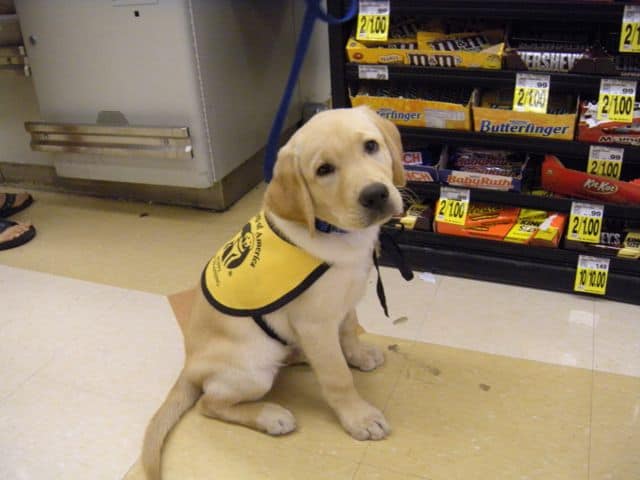
It took nearly 6 years before I had a puppy in training graduate and become a working guide dog. Dublin was my first guide dog graduate last April. The numbers are always changing, but I’ve heard that approximately 40% of our puppies in training become working guide dogs. That means that 60% are dropped from the program.
Our guide dog trainers always tell us that our pups will choose whether or not they want to work as a guide dog. Some dogs love to work while others do not. Usually a puppy that does not want to work will exhibit signs of stress during the intense 6 months of training and who can blame them? It’s a lot of pressure making life and death decisions with their visually impaired handlers.
I’ve had three of my puppies in training dropped from the program:
- Stetson – he went to formal training for 2 months and ended up getting dropped for being too soft.
- Derby – he was in the program for 12 months and ended up getting dropped because he had trouble focusing in new situations.
- Dublin – my graduate! Working as a guide dog!
- Apache– he was in formal training for a few weeks, but didn’t pass the health screenings.
Some dogs are not made to be guide dogs, but sometimes they can still become working dogs. We’ve had career changed dogs from our group move on to search and rescue and Apache moved from the guide dog program to a service dog program called Canine Support Teams.
Fenton A Former Guide Dog Puppy
A few days ago I was scanning through my RSS feed and came across a post from the Poodle and the Dog Blog about Fenton the black lab and his viral video. Of course, I love Labs and I had to check out any viral video about a black Labrador Retriever. Check it out:
I guess this video has spawned all kinds of memorabilia including mugs, t-shirts, and even a book!
How does this relate to today’s post? It was reported that Fenton was a dropout from a program that trains guide dogs for the blind. Obviously Fenton did not have the desire to be a working guide dog. However, after watching the video he may have a career as a herding dog 🙂
Puppies in training with high prey drive do not make for good guide dogs. Could you imagine a guide dog working with his blind handler and then suddenly darting to chase a squirrel? I’m sure Fenton is having a good life as a family pet. It looks like he’s probably getting plenty of exercise!
Have you raised a career changed guide or service dog? Why did your dog decide to change careers? Tell us about it in the comment section below.
Top Picks For Our Puppies
- BEST DOG CHEW
We Like: Beef Collagen Sticks - All of our pups love to bite, nip, and chew. We love using Collagen Sticks to help divert these unwanted behaviors. - BEST PUPPY TOY
We Like: Calmeroos Puppy Toy w/ Heartbeat and Heat Packs - Perfect for new puppies. Helps ease anxiety in their new home. - BEST DOG TREATS
We Like: Crazy Dog Train-Me Treats - We use these as our high-value treats for our guide dog puppies. - BEST FRESH DOG FOOD
We Like: The Farmer's Dog - A couple months ago we started feeding Raven fresh dog food and she loves it! Get 50% off your first order of The Farmer's Dog.
Check out more of our favorites on our New Puppy Checklist.


Hi Clare, sorry for the late response. I bet Jazlyn is doing awesome! Hopefully we’ll see you at one of the GDA events before she starts her formal training. Take care!
I’ve always found it fascinating that the dogs decide if they want to be guide dogs. I’m very curious to see if Jazlyn wants to be a guide dog, especially with her 9 month evaluation coming up.
Hi Angel,
Congratulations! I hope Volt is doing well in his formal training. Apache is in formal training too, but he got career changed from guide dog to service dog.
Thanks for stopping by!
Colby
Our first puppy- Volt- went back to SA Guide-dogs on October 19th to start his formal training, so I am waiting with baited breath to hear how he’s doing!
Yep, every once in a while we have dogs that act like that and just love to chase the ball. Those are the ones that get transferred to the Search Dog Foundation.
I usually try to refer to them as career changed dogs, but people often don’t understand so I revert back to calling them guide dog drop outs–it sure doesn’t sound that good though 🙁
I have a question- Is it possible to train an old dog on how to behave or change its behavior?
There’s a black Lab in the Search and Rescue group my husband and Kuster are with who is a career change dog. I’ve never seen a dog with such high ball drive, and we laugh about the idea of some poor person at the end of his harness if a ball were tossed across the street in front of him. It wouldn’t be pleasant! lol I’m still giggling about Fenton!
I’ve stopped calling them Guide Dog dropouts like I used to and now refer to them as Career Changing dogs. 🙂