
How To Potty Train A Puppy
This post may contain affiliate links. We may earn money or products from the companies mentioned in this post.
Picking up your puppy is probably the most exciting part about puppy raising, but as soon as all the cuteness has worn off (actually some of the cuteness will wear off the first time he piddles in the house or perhaps a little poopie accident on the car ride home…YUCK!) one of the first things you will think about is how to potty train a puppy.
When we first started raising guide dog puppies over ten years ago we received a guide dog puppy manual on how to raise and train a puppy.

As guide dog puppy raisers, we follow all the rules and puppy training guidelines outlined in our puppy manual and when it comes to potty training our puppy we simply turn to page 42 in our manual and follow the instructions on how to potty train a puppy.
So today we’re going to discuss how we go about…you guessed it…potty training a puppy!
QUICK TIP: You likely don’t have access to a Guide Dog Puppy Manual. Luckily we’ve read many books on puppy training and one of our favorites, Puppies for Dummies is an easy read that will give you a solid foundation for raising and training your puppy.
How To Potty Train A Puppy
QUICK ACCESS: If you’re having puppy training problems then you should join our Puppy Training Tips email list and get instant access to our New Puppy Owner Checklist PDF. To get started CLICK HERE.
Here are some of the basics we’ve learned over the years on how to potty train a puppy.
Potty training is obviously one of the first things you’ll want to teach your puppy. If done properly, potty training is not difficult. The key is to be consistent.
Never allow YOUR puppy to be unattended or out of YOUR sight. If you are unable to do this remember to use confinement as a means of prevention.
QUICK TIP: We highly recommend crate training your puppy as a primary means of confinement. We’ve been using the Midwest Life Stages Double Door Crate w/ Divider since we brought home our first puppy, Linus over 15 years ago.
Keep your puppy on a schedule. Feed him at regular times and always give him a chance to relieve himself right after being fed. (we feed our puppies Wellness Core Puppy Formula)
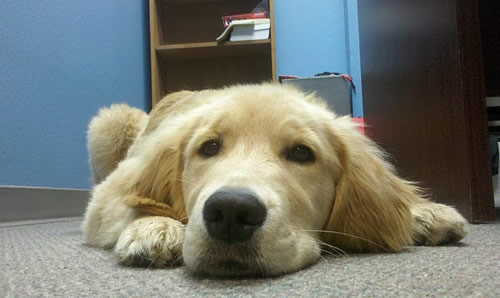
Using a designated area in your yard, let your pup have plenty of time (fifteen minutes) to relieve itself.
Encourage the puppy to go by using words such as “Get Busy”. This is the command used at Guide Dogs of America. We use the same command with all of our puppies in training.
When the puppy has done his business, praise him lavishly. A good rule of thumb to follow is to give your puppy a chance to relieve himself at a minimum of these times…
When Should I Take My Puppy Out To Potty
This is uber important. Anticipating when your puppy will potty should be something you know like the back of your hand.
Always take your puppy out to his potty spot:
- First thing in the morning.
- After each meal.
- After a nap.
- After playtime.
- Right before you and your pup retire for the night.
Remember your puppy should always relieve on a leash. It is important to train the puppies to relieve on leash on a variety of surfaces (grass, gravel, cement, etc…)”

Many of these potty training tips are from our guide dog puppy manual and don’t need to be followed to a “T” if you’re training your puppy as a family pet.
One thing I wish I would have known sooner is to train my puppies to relieve on different surfaces.
My rescue pup, Linus learned to pee and poop on the grass and was potty trained in less than two weeks. However, when he was nine months old we took him camping and he would not go potty on the dirt.
There was no grass and we were worried that we’d have to drive into town (about an hour away) to find grass for him to pee on.
After holding his pee for over 24 hours he finally relieved in the dirt and pee’d for about 2 minutes straight (think Tom Hanks in A League of Their Own).
The moral of the story? It’s important to train your pup to pee on a variety of surfaces.
All of our guide dog puppies have learned to pee and poop on cement, grass, gravel, rocks, wood chips, dirt, and any other place you might imagine.
Potty Training Tips For Your Puppy
One of the great things about being a guide dog puppy raiser is the incredible network of knowledgeable puppy raisers and guide dog trainers we have at our disposal.
Some of the members in our Orange County Group have been guide dog puppy raisers for 20+ years and have raised a dozen or more puppies!
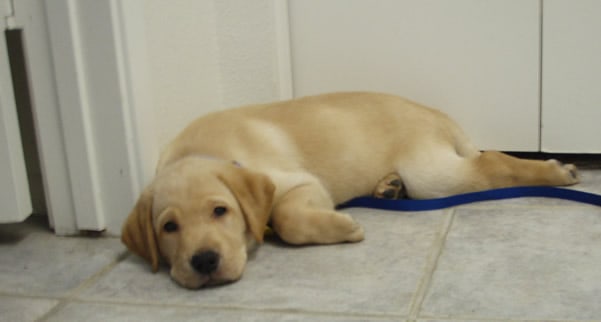
I guess we’re relative neophytes as Dublin is only our third puppy in training and this is only our fifth year as guide dog puppy raisers.
UPDATE: as of today we are entering year 18 as puppy raisers and we’ve raised 17 puppies for multiple service dog organizations.
As guide dog puppy raisers we are required to enroll our puppies in a minimum of one puppy kindergarten and one basic dog obedience class.
One of the first questions we are asked at puppy kindergarten is how are you doing with potty training your puppy?
Even our most experienced puppy raisers will still sometimes have questions on how to potty train a puppy.
QUICK RECOMMENDATION: We recently started training our puppies to alert us when they have to go potty by using a potty-training doorbell called the Smart Bell. It requires a little bit of training, but it’s a good alternative to your dog scratching up the backdoor.
Here are some of the puppy training tips and hints I’ve learned over the years when working on potty training with my own puppies:
1. Keep an eye on your puppy
We learned pretty fast that it’s important to keep a constant eye on your puppy. Use puppy gates (same as baby gates), tie-downs, and leashes to make sure you can always see your puppy.
If you see him start to sniff around, circle, whimper, or squat then quickly scoop him up and take him out to his designated potty place in the yard.
Give him a ton of praise when he potty’s in his spot. It’s important to keep your puppy under constant supervision not only for potty training purposes but to keep him out of trouble in general.
We’ve found many a chewed-up shoe, cell phone, or remote control because we didn’t keep a close eye on our puppies. This can be both costly and dangerous for your puppy.
2. Keep a puppy potty schedule
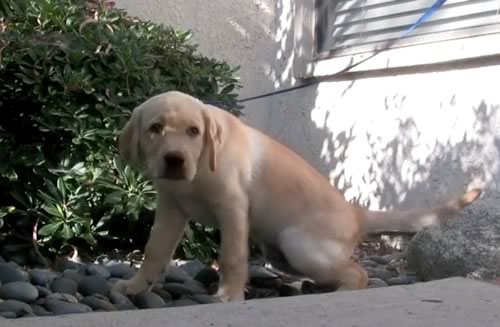
If you keep a puppy potty schedule you’ll notice your pup can be fairly predictable with his potty times.
We just use a sheet of paper and write it down every time our puppy goes pee or poop (you’ll start to notice trends in your puppy’s potty schedule). Here are a few potty times that should automatically be on your schedule.
- Your puppy will always need to go potty shortly before and after eating or drinking water. We feed our pups twice a day (our young puppies eat three times a day) at specific times which helps control the times they go poop.
- As soon as your puppy wakes up. Puppies almost always go potty right after waking up.
- As Linus’s dog trainer used to say: “Play makes pee!” It seems as though every 10 minutes or so your puppy will pee when playing.
3. Be Consistent
stay free from variation. Stay consistent so your puppy knows what you want him to do. Be consistent by taking him out the same door to the same potty spot.
Be consistent with your puppy’s potty schedule.
Be consistent with your puppy’s feeding schedule.
Be consistent and make sure everyone in your household abides by the same puppy potty training rules. If you do not stay consistent then it will take longer to potty train your puppy.
4. Be Persistent
continue firmly with your potty training your puppy in spite of any difficulty. At times it may seem like your puppy just does not get it, but don’t waver and be persistent.
It took our Aussie mix, Linus less than 2 weeks before he was potty trained. It took about 6 months to fully trust Stetson with his potty training. Stay persistent!
5. Be Patient

defined as the ability to suppress annoyance…puppies are adorable, but they will also test your patience.
Try to remain calm and don’t get upset with your puppy. It takes time to potty train a puppy.
Be patient and you will be rewarded. If you feel yourself losing your patience step away for a while and let your puppy have some alone time in his crate with his favorite KONG or chew toy.
6. Praise Your Puppy
The most important thing when we raise our guide dog puppies is to give your pup tons of praise every time they do something right.
Don’t forget to give your puppy a ton of praise every time he goes potty in his designated potty area. This will help reinforce the behavior with your puppy.
7. Crate Training Puppies
we crate-train all of our guide dog puppies in training. (if you’re looking for a crate we recommend the Midwest Life Stages Double Door Crate w/ Divider).
Many people feel like crate training is like imprisoning your puppy. However, crate-trained puppies enjoy the safety and security they feel when in their crate as they will find it much like their den had they lived in the wild.
In fact, many of our puppies in training have grown so accustomed to their crates that they will often go to their crates and sleep any time they are tired.
Crate training is great for potty training as it’s your puppy’s natural instinct not to potty where he sleeps. For more information on crate training check out our page on crate training puppies. For starters here are a few basics on crate training:
- Place the crate in your bedroom where the puppy can still see and hear what is going on.
- Put a blanket or towels in the crate for bedding. A pup will rarely soil the crate, however, if he does, try removing the bedding.
- A crate should not be too big, but large enough for the puppy to stand, stretch and turn around.
- When placing the puppy in the crate, use the word “kennel” or “kennel up”.
- If he should happen to fall asleep somewhere else, pick him up, place him inside, and quietly shut the door.
- Don’t use the crate for punishment.
- Take your puppy outside to potty before putting him in the crate.
- Take your puppy outside to potty as soon as you take him out of the crate.
Puppy In Training TV Episode 2 reviewed several puppy training basics including a short clip on taking your puppy to his potty spot (approximately 2:15 in the clip below).
Check out our other Puppy In Training TV episodes. If you’re interested in sponsoring an episode please let us know by sending us an email through our contact form.
Do Not Rub Your Puppy’s Nose In His Accidents!
We need to reiterate…Do not Rub Your Puppy’s Nose In His Accidents! Do not hit your puppy after an accident! Do not punish your puppy if you find an accident!
Never punish your puppy after the fact. Your puppy will think you are punishing him for whatever is happening at the time of the correction.
Your puppy will not make the connection that this is an area that he previously soiled and that is why you are punishing.
Full Disclosure: When I was in college (Holy Crap! Over 25 years ago!) my roommate had a dog and instructed me to…rub his puppy’s nose in his accidents to teach him not to potty in the house.
Guess what, his puppy never connected the dots and continued to have accidents in the house every day the 1+ year I lived with this poor little puppy.
Puppy Clean Up

If your puppy pees or poops on the floor or carpet make sure you clean it up immediately (I’m sure I didn’t have to say that).
Your puppy’s nose is thousands of times stronger than your nose.
If your puppy smells the pee or poop on the floor then he will return to this spot to pee again.
We like to use an enzyme-based odor remover to remove all the stains and odors. We created our own formula: Puppy In Training Stain & Odor Eliminator.
Our spray will go deep into surfaces to digest and eliminate organic stains and odors caused by urine, vomit, feces, and other stinky sources
Remember, your puppy’s nose is thousands of times more powerful than yours. If he smells a trace of urine, he’ll feel compelled to potty in that spot again, so make sure you find a good stain and odor remover.
One final note: If your designated potty spot is in a public area (or even at home) make sure you bring potty bags (we like these mighty paw poop bags made from recycled materials) or a pooper scooper to clean up your mess.
One of our biggest pet peeves is the person who does not pick up after their puppy.
It’s bad for the environment and for some reason, the bottom of my shoe seems to always find the dog poop that was left behind.
I hope this little guide helps you with your puppy potty training basics.
Quick Recap
If there are 3 things I’d like you to remember when potty training your puppy:
- Puppy Management – Keep an eye on your puppy 100% of the time and when you can’t let your puppy have some quiet time in his crate (Midwest Wire Crates are our favorite for crate training puppies). – the fewer accidents your puppy has in the house the sooner he will be potty trained.
- Clean Messes – Any time your puppy does have an accident clean thoroughly with an enzymatic cleaner like Puppy In Training Stain & Odor Eliminator.
- Puppy Potty Schedule – Get out a piece of paper and start writing down when your puppy sleeps, eats, drinks, plays, and goes pee/poop. Keep your puppy on a schedule and you’ll start to notice a pattern.
That’s a wrap!
What questions do you have about potty training a puppy?
Let us know your thoughts in the comment section below.

UPDATE: This post was originally published on July 11th, 2011. We periodically update blog posts with new experiences and information to keep them as relevant as possible.
Top Picks For Our Puppies
- BEST DOG CHEW
We Like: Beef Collagen Sticks - All of our pups love to bite, nip, and chew. We love using Collagen Sticks to help divert these unwanted behaviors. - BEST PUPPY TOY
We Like: Calmeroos Puppy Toy w/ Heartbeat and Heat Packs - Perfect for new puppies. Helps ease anxiety in their new home. - BEST DOG TREATS
We Like: Crazy Dog Train-Me Treats - We use these as our high-value treats for our guide dog puppies. - BEST FRESH DOG FOOD
We Like: The Farmer's Dog - A couple months ago we started feeding Raven fresh dog food and she loves it! Get 50% off your first order of The Farmer's Dog.
Check out more of our favorites on our New Puppy Checklist.


Unfortunately, I haven’t raised a Boxer. Based on my experience with my dogs most 6-8 week old puppies will have plenty of accidents during training. Most puppies that young do not have full control of their bladder and often won’t know they have to potty until it’s too late. If you’re having any specific problems with potty training your Boxer pup then let me know and I’ll try to get you an answer.
Colby,
Hi and thanks for all the great training advice. Are Boxer dogs/puppies more or less easy to Potty train? Especially wend they are over 6-8 weeks old.
Mark – A lover of BOXERS
My little teddy bear pup is doing the same thing we put her on a lead and stay out with her she will pee but goes in a poops we are out min of an hour
Hello!
After about 10 minutes or so having my puppy outside in a designated area to do her business without success, why does she go in the house after about a minute or so of coming in? So frustrating!
Thank you, Cynthia
Crazy me fell in love with 2 brothers and couldn’t separate them, so I’m house training 2 puppies at the same time and never know who did the poop when I find it. You offer the best suggestion “keep you eye on them”, which I have not done, and I think they know that. By chance do you have any recommendations for potty training 2 pups (3 months old)?
I would love to hear the outcome of this situation. Has it changed? What did you do? I’m having the same issue!
I’ll go back through the article and try to clarify. Here’s what we do with our puppies: When we first get them home we get them into a routine of using the same door and take them to the same potty spot every time until they start getting the hang of potty training and understand that the outside spot is the place to go. Once they start to “get” that outside is the place to go potty we start introducing new surfaces. Our current puppy, Anna first learned to potty directly on the concrete in our side yard. We like starting with concrete as our first surface because puppies usually have a more difficult time going potty on concrete vs grass. After about 2 weeks we started taking her to the grass to potty then later we started taking her to a gravel area in our backyard. Since then we’ve also had her potty on the blacktop, mulch, and artificial grass surfaces. Thank you for bringing this up. I’ll go back through the article and make clarifications.
You say to train them to go on a variety of surfaces but then later say to take them to same spot every time?
This blog post is one of the best resources, other than buying a book, we have found for puppy owners to learn the basics of potty training a puppy. Taking your new puppy out every 10 min while they are actively playing is a great idea to start to build the habit for them to go potty outside. We will share the link to this blog post with new puppy owners.
Sorry for the confusion. You want to take your puppy out about every 10 minutes (sometimes more often) when they are playing. If they are quietly relaxing or chewing on a toy they usually won’t need to go out as often. I try to extend the amount of time between potty breaks in the first week, however, every puppy is different. Some will pee more often while others will be able to hold it longer earlier on. Keep an eye on your puppy and you’ll start to notice their pre-potty behaviors and that’s when you want to be sure to get them outside to their potty spot. Good luck with you training!
Hi, your info is so helpful. You mentioned when your puppies are young you take them out every 10 minutes? So you mean take them out every 10 minutes, every day, all day. ??? How long do you stay out each time. Also how long does this 10 minute schedule last?
Thank you so much
Congratulations on your new puppy! You’re right, you don’t want your puppy to get separation anxiety. We make sure our puppies get time away from us by using our crate. When they’re young every time they fall asleep I either move them into the crate so they can get used to being on their own. When we have to leave the house we’ll crate our puppy but not for more than 1-2 hours. If you’re not using a crate you can try using an ex-pen in the same manner. Good luck with your training!
You want to watch your puppy constantly for accidents, but you also don’t want her to develop separation anxiety while you watch her all the time. How do you strike the right balance? She is becoming increasingly attached to me as I am trying to potty train her and I believe that I am giving her separation anxiety since I keep her with me all the time when I’m home.
I have an 18wk old puppy and training was going very well and as soon as he received full vaccinations (and able to go on walks) I had a family emergency that required driving for 3 days, staying in hotels and now staying with my parents while they recover. So his schedule was messed up, his first experiences outdoors was on the road and a strange house. PLUS this house has a kitten about the same age. They get a long but all training has gone out the door! He constantly pees and poops in the house on the carpet, any carpet, any room. I clean the mess, stain remover, deterrents, oder eliminators, nothing works. I also made the mistake of grass training so I have to take him out back to the grass. He is okay with wearing his harness and patient with a leash but will not walk. If the grass is wet, forget it. Any ideas would be greatly appreciated!
When we work with our service dog puppies we have different people work with our pups so they don’t get overly attached. If you have others in your household you can ask them to help by supervising your puppy. Also, it’s helpful to have others puppy sit your pup from time to time. We mainly raise German Shepherds, Labrador Retrievers, and Golden Retrievers. Usually the German Shepherds become most attached to their raisers. In our experience Labs seem to be the least attached which makes it much easier when we have to turn our puppies in for formal training.
How do you walk the line of watching your puppy all the time and keeping her with you to watch for accidents but not having the puppy develop separation anxiety? My 4 month old has become increasingly attached to me while I’ve been trying to potty train her and I think she is developing separation anxiety because I keep her with me all the time when I’m home.
After watching our 12 week old pup circle, etc we take him outside for up to an hour then he comes on within minutes he poops.
Now he has started coming in from a pee and peeing in the house
I have raised 3 other dogs successfully but this guy has me stumped
Any suggestions
I’m a first time brother and sister puppies adopter. She is just about trained, but he is another story. He will hold his poop for hours outside or in his create overnight and not poop, bring him in or let him out of the create and he will poop in the house. How can I get him to stop.
This was interesting. Jacques is 15 months old. He goes outside now on his own and actually runs outside if it is urgent…. with the exception of when it is raining. He doesn’t like to get his feet wet. He has been so good except this week. The downpour was too much. We go out with him and try to entice him….. He strolled back in. He pooped on al old spot in the house. I picked it up and put it on a peepee pad as the rain was to continue 3 days. I threw out the pooped, put the smelly pad down in the spot. During the evening while we watched TV, he pooped on the paper. BTW…. he usually would ring the bell if the door is locked. What to do. Allow this habit when it rains? o
It’s important to manage your puppy when he is young. We keep our young puppies on a leash and by our side at all times that we will notice when our puppy has to go potty because he’ll show pre-potty behaviors like circling, sniffing, or squatting. Also, it’s very important to get your puppy outside often. When our puppies our young we take them outside about every 10 minutes when they’re awake. Hopefully that helps. Good luck with your puppy.
Yeah , My pup is about 3 and half months now and he pees and poop inside the house , even on bed also sometimes , Plz I need to know how to train him well , is it compulsory to caged him ?
My puppy will only pee/poop on puppy pads bc when i got him it was below 0 and then the snow hit. He’s now 3.5 months old and he has no concept of going to the bathroom outside. Help!!! (I’ve even taken the puppy pad outside). I live in the city so lots of distractions and not a lot of grass.
A few years back when we adopted our Great Pyrenese/St. Bernard, we almost lost her to a chicken hawk circleing the back yard. He swooped down and fortunately I was close enough to scare it off so, the hint about keeping the puppy or small dog on a leash is a great idea. Thanks for all the info.
My 11 week dobie mix hates going in the cold and most especially in the evening. I don’t think we’ve managed a single accident free evening in the two weeks we’ve had her.
It usually goes like this
-last feeding
-out to pee/poop on leash in potty spot
-I wait 15 min while she yelps and cries, shivering at my feet
-enter house, she starts to squat
-interrupt, and take her out again
-I wait 15 min while she yelps and cries at my feet
-repeat (literally have spent hours doing this)
-resign to give up as I am usually cold and tired by now
-walk her upstairs and in the time it takes to open my bedroom door she has pooped in the hallway. (Seriously the fastest pooper ever)
-place her in crate while cleaning up poop and after it is clean I find she has peed in the crate.
🤦🏼♀️
I have tried
-last meal earlier in the evening
-copious praise during the day (when she has a lot of wins)
-a jacket
-an alternative potty spot on the covered porch out of the rain (which she uses just fine during the day)
-“warm reward”: she could care less about treats or praise actually. The real reward is time on the heating pad. This was the method that worked in the middle of the night and early morning.
-pretending to head up to bed and then turn around and go back out
At this point I am really concerned because just the act of going outside is seen as a punishment now. She starts to cry on the way to the door and spends the potty break curled up at my feet or tugging on the leash to get back inside. I’m not sure she even understands what we want her to do. I don’t know if she can even relax enough to go when she is shivering.
Random other quirk: she has an adorable routine that she does when she’s settling down to nap. She bites and paws at her bed playfully, sucks on the blanket, then flops dramatically down to curl up and fall asleep. We noticed that this little dance meant naptime right away and assumed it was nursing related. But, sometimes (only sometimes) the routine ends with peeing in her bed. Then I’m torn; do I take her out to potty and disturb her nap? We’ve changed the bedding, washed, used enzymes, tried no bedding. Eventually she will have one of these “accidents”. Is she marking? Does she pee because she’s more relaxed? Was this taught to her by her siblings (she was the runt)?
Sorry this is so long, I’ve read all your posts and tried the strategies
Very helpful information. Been a long time since we had a pup.
It’s up to you how you want to potty train your puppy. We put our service dog puppies in the crate beside our bed at night. You do not want to put the puppy pads in the crate because you don’t want your puppy to pee or poop in the crate. Bedding in the crate is optional, but we sometimes remove it because some puppies like to pee/poop on it and other puppies end up shredding it.
We usually don’t use puppy pads, but you can train your puppy to potty on them. However, most puppies won’t instinctively pee/poop on the potty pads, you will have to train them to go on the pads. FYI, when leaving a potty pad in the play area most of our puppies enjoy shredding them to pieces rather than using them for pee/poop.
Good luck with your training!
Questions…I have Midwest crate and exercise pen set up in our living area. Should I place puppy pads in the exercise area at night? Or should I detach the crate and bring it into my room at night? Our living area is tiled, bedroom carpeted. If I bring the crate into the bedroom do I use just bedding or a puppy pad in case of accidents? I obviously will take her out before bed and during the night if indicated…not sure what these puppy pads are for? Thanks
We usually use just one crate and keep it in the bedroom. However, in the past we’ve used two crates or moved one crate around the house and we haven’t had any issues crate training our puppies.
We just adopted a 12 week old lab mix puppy. I want to try crate training but advice is to have a crate in a quiet but not secluded area. So when puppy is in crate during day for naps etc the crate may be in an out of way are an dining room or family room but for night time we have our dog whining and howling. I’ve seen advice have crate in bedroom for night especially for very attached puppies. Should we have two crates or move the one crate between the two areas for day and night time
You should try using separate crates for your two puppies. Here’s an article on raising sibling puppies that you might find helpful: https://pawsnpups.com/raising-sibling-puppies-successfully/
We have 2 pit terriers and they have a doggy door to go outside anytime they want. The problem is that they both stay in the same crated area, they are like twin brothers. They came from the same batch of puppies surrendered to the pound. My husband and I decided to adopt 2 of them. My problem is that one of them or both of them poop in their room. And we definitely take them outside to potty before they go to bed. When I get up at 6:00am every morning routine I let them go outside to potty only to find poop and pee on their blanket. Can you give us any suggestions the pups just turned 5 months on the 4 of December 2020.
I have a new Black Lab pup, she is 3 months old and as many times as I take her out, to different places on our land, she will be in the house in no time and pees on the kitchen floor, which is the only room she has access to. I have not had any trouble with potty training before she came along and made a fool out of me. I do not get upset and use a reliable scent killer to clean up her messes. She knows she has done wrong because she goes under the chair after she does it. Our older pup, eight month old Lab was the easiest dog to train, but she is a hard nut to crack. Hopefully, after reading your tips on potty training, we will be successful. Thanks!!
This was really helpful I have a two year old dog who pees and poops everywhere and I don’t know what to do to stop it thanks
Start over from the beginning with crate training. Thoroughly clean your crate with an enzymatic cleaner to remove all smells and odors. Keep crate training sessions short and make sure your puppy doesn’t have an accidents whether that’s 30 minutes, 5 minutes or 30 seconds, make sure she is successful. Slowly start to increase the amount of time she can stay in the crate without an accident until she understands she’s not to potty in the crate. Also, make sure you have the right size crate. It should only be large enough that your puppy can stand up and turn around. If it’s too large then your puppy may continue to potty on one side and sleep on the other. Good luck with your puppy.
My 10 month old female teacup yorkie is peeing and pooping in cage ever since getting spayed beginning of August. Had to keep in cage for 10 days because she is low to ground so could not take out and also because she is an extremely active pup who likes to jump per vet keep in cage/crate so as not to get an infection in incision area or rip sutures, etc. Prior to spaying she was 95% trained. Have been trying methods I used before to get her 95% trained but to no avail. Seems she thinks it is ok to pee and poop in cage/crate now because of doing that for 10 days after surgery. HELP!!!
You may have given your puppy too much freedom too soon. I’d recommend take a step back with his potty training and try to make him successful again. We limit our puppies freedom by keeping them on leash and by our side when they are in our house. That way if I see any pre-potty activity I can get them outside before any accidents. Good luck with your puppy!
My 8 month old dachshund learned VERY quickly how to use dog door, thanks to a senior dog who also lives here. Now, however, puppy is having “accidents” in the house! Is he “marking territory”? How do I get him to stop? (Fortunately senior dog is not following suit!)
I don’t have an article that teaches how to get your dog to ring the bell to go outside, but I’ll add it to my to-do list. When teaching our puppies to ring the bells to go potty we first teach them to target the bells with a cue like “touch”. After our puppy knows how to target the bells we then teach our pup to target the bells only when they have to go potty. As I said I’ll try to get a more detailed step-by-step post together.
I am struggling getting my puppy (8 mos old) to ASK to go out. She is well aware of what to do when I take her out, but does not take the initiative to let me know she has to go. If I keep track of her and take her out, she has no mistakes, but if I get busy she has no problem going on the floor. I have the bell by the door and ring it every time we go out, but she still doesnt use it herself. HOW DO I GET HER TO LET ME KNOW SHE HAS TO GO OUT??????
HELP!!
Congratulations on your new puppy! Being able to hold it for a good solid hour while awake at 4 months old is good. You have to remember your puppy is sleeping most of the time at night and when he’s in the crate during the day and therefore will need to pee less often. When he is playing and awake during the day he will have to pee more often. It similar to people. Most people will sleep through the night without having to pee. However, during the day most people have to pee regularly depending on how active they are, how much water/liquids they are drinking, etc.
I have a 4 month old Golden Retriever and he does good about letting us know he needs to go out, he will go sit by the door or sniff around by it. The problem is that he is still letting us know he needs to go out about every hour (if he’s not napping). How do I teach him to hold it for longer? I know that he can because he sleeps through the night and has been in his crate for a few hours on multiple occasions with no accidents. I’ve tried to distract him by playing with him but he either just continues to signal or has an accident.
Congratulations on your new black lab! We just brought home an 8 week old black lab puppy.
I think a lot of people make the mistake of having their puppy play outside and consider that a potty break. Here are a few things I’ve notice with my puppies. Yes, they will sometimes pee when they are outside, but when a puppy is playing they will often pee much more often then when they are more sedentary. Also, if you don’t observe them going pee then they may not have pee’d during that time outside. If this were my puppy after she played for 30 minute I would have taken her to her potty spot and made sure she pee’d before leaving her alone in the house. If she didn’t pee when taking her to the potty spot I would put her in the crate for 10 minutes while I went down the street to air up a tire.
A pee spot at the front door is actually a good sign because it probably means she went to the door to be let out, but there was no one home to open the door.
If she’s still having accidents in the house then you need to be more diligent about monitoring her when she’s in the house. I use constant supervision or confinement with my puppy. If I can’t watch her 100% of the time then I put her in her crate.
Hopefully that helps. Good luck with your puppy!
Hi there! We have just adopted a 4 month old black lab. She’s pretty great so far. We’ll go about 3/4 days without an accident but the last few days have been maybe 3/4 in a row with accidents. I’m getting a little impatient because today we had her out for 30+ minutes while we worked on the yard. We came back inside and left to go down the street to air up a tire. We were gone for maybe 10 minutes. When we came back, low and behold! There was a pee spot by the door. This isn’t the first tome she’s gone in the house after being let out on a normal schedule that she’s used to. We’re feeling a bit discouraged. We reward her with treats and praise her when going potty outside, and have been using an enzyme cleaner like suggested. However we have not been extremely strict on crate training, maybe that’s the issue?
When our puppies don’t go potty after bringing them outside we’ll put our puppy in the crate for 5 minutes then try again. Here’s another post we wrote that might be helpful: https://puppyintraining.com/my-puppy-pees-outside-then-pees-inside/
I have a 15 week old puppy that has been with me for two weeks. I normally bring her outside downstairs during the mornings and evenings before bed to go potty and she does so outside no problem. But during the afternoons, whenever, I bring her outside to go potty so doesn’t go, even if I have to wait more than 5 minutes, and I bring her inside she immediately goes potty within a minute. This has been going on for several days already. Any tips?
Your puppy is still very young and probably needs a few more weeks to make the connection. Peeing in the middle of playing is totally normal. If your puppy is playing in the house I’d recommend taking him out every 5 minutes while playing. One of the trainers I used to work with used to always tell me “Play Makes Pee!”
Hi,
I have an 11 week old lab mix puppy. He is very good in his crate (never had an accident) and in his pen. He goes in the pen when I am at work (I work in a barn) and goes out probably every 2 hours or so. In the house he will have random pee accidents. Usually in the middle of playing. He will give no warning and just sit down-not normal squatting that he does outside. He is always in my sight or sometimes even directly
Next to me and doesn’t seem to connect that peeing in the house is bad. He does pee basically as soon as he gets to the grass outside every single time so clearly knows his potty spot. I take him out every hour he is awake and always watch him. What else can I do?
I prefer taking my puppies outside to their regular potty spot when training. However, we’ve had several friends use the grass potty pad and it has worked well for them.
Hi! I have an adorable 2 month old lab husky mix. It took us about a week to go potty outside, and even since then he’ll go hours playing outside without peeing, and waiting until we get inside. Part of the issue I think is that I live in an apartment and by the time I harness him, take him downstairs, and out, he’s forgotten why we went down there. I got one of the puppy grass pads for our balcony, and was wondering if it would be counter productive to teach him to go on that? That way if I catch him needing to go, I can quickly put him in that pad so he can go right then and there. Do you think I should persist with taking him downstairs, or do you think the patio is good until he’s house trained or on a better schedule?
Hello, we have a 9 week old puppy we’ve had him a week now. No accidents for a whole week then the last two days weeing in random places in the house even after being out or the door being open.
We have a designated pen area outside (it does have a gate so we shut the gate whilst he does his business) we take him to it hourly and he does wee/poo when put in there and he gets a lot of praise and a treat. He wont go in on his own, to be honest it seems he tries to go anywhere but in there. Any advice please?
Congratulations on your new dog and puppy! If these were my dogs I’d start from the beginning with crate training and make as positive experiences as possible with the crate and obviously never use it as a form of punishment. Our friends at Labrador Training HQ have a great post on how to crate train a puppy that takes everything slowly and step by step. I think you’d find this article very helpful. Hopefully that helps. Good luck with your training!
Hi. We just got 2 american bullies. They are amazing. One is female, she is a year and 4 months and the other is male, he 6 months…they are both from the same home and have the same mom. So far the older dog is doing good with the house training, very few accidents, she goes to the back door to let us know she needs out…except for overnight. We are still working with the puppy. My question is on crating them at night. I know where they came from, the owners used the crates as a form of punishment…they would make them go in the crate for a “time out” if they did something wrong…how do I overcome this?
Congratulations on your new puppy! Yep, it’s very important that your puppy learns to potty in different places and surfaces. The best way to do this is by practicing. When it’s time to potty at new places make sure you get her outside to a potty spot and wait until she does her business. Patience is key. You may have to wait a little longer than normal. After she goes give lots of praise.
Hi we just got a 4 month old puppy and she is doing great potty training however when we took her over to our friends apt even though we took her outside to pee she didn’t and then pee’d inside his apartment. How do we get her to pee in other places besides our backyard? Thanks!
Congratulations on your new puppy! Here’s a post you might find helpful on raising a puppy while working full time. One of the main points of the article is if you have to be away from home all day then try to find some help whether it be a friend, family member, neighbor, doggy daycare, or pet sitter. Our friends at Labrador Training HQ have an extensive step by step article on potty training your puppy that includes a section on using a small confinement area and paper training that might be helpful. Hopefully those links help. Good luck with your puppy!
Our new lab is 8 weeks and he has a decent schedule , we’ve had him 4 days so we’ve been able to take him outside to pee after every nap and food . But now we have to work. I notice he pees every 30 min if he’s not napping . How do I make him hold his pee for two hours for when I come home to let him out every two hours til I’m off work? he pees after 30 min regardless if we take him out or not .
Congratulations on your new puppy! Take a look at our sample puppy potty training schedule. Here’s a great step by step guide on crate training:
How To Crate Train A Puppy
How To Stop A Puppy From Barking In His Crate
Hopefully that helps. Good luck with your training!
Hello. We just got a 8 week Aussie and need some advice on getting her on a schedule for potty training. We live in an apartment and have a play pen set up as well as a designated potty area with pee pads on the patio. Any advice would be appreciated. We are also trying to crate train her.
Some puppies have pee accidents when they get overly excited. If this is the case the goal is to try and keep your puppy as calm as possible before going outside. We’ve had puppies that have trouble holding it through the night and set our alarm once or twice to get them outside for a potty break at night. Finally, we’ve had puppies who have had urinary tract infections which has made it difficult for them to hold it resulting in accidents.
Hi! We picked up a 5 month old puppy from the shelter about a week ago. He’s done fairly well at not having an accident throughout the day, but every morning he pees right as I take him out of the kennel (even if I pick him straight up & run him outside). I also have problems with him running away from me when I let him out of the kennel (this again results in peeing).
I’m not sure how to stop the morning pee episodes?
We always train our puppies to potty in the same spot on leash. You might try doing the same with your puppy designating a spot for your pup to both pee and poop. Start by taking him to his designated potty spot on leash as you would on a walk and make sure he does his pee and poop. After he gets used to going in the same spot you can start walking him to his spot without the leash and having him potty at his spot. Finally, once he’s consistently doing his business at this spot off leash with you there you can start trying to let him go to his spot on his own by letting him out when you know it’s time for him to potty. Hopefully that is helpful. Good luck with your puppy.
My 6 month old schnauzer will not poop outside on his own, he will only go if we walk him. At times he will go out and pee, and then come in and poop on the floor. Any suggestions on how we can stop this?
Congratulations on your new puppy! We live in California and the weather never gets too extreme. It did rain for two weeks when we brought home Linus and he refused to go outside. Lucky for us all we had to do was pick him up, place him on the grass, he’d pee, we’d pick him up, and bring him back inside. Of course heavy rain is nothing compared to the weather conditions your facing. If it were me I’d probably consider setting up an indoor potty and place it in the garage. That would give your dog a spot to potty during extreme weather. Hopefully that helps. Good luck with your puppy!
My 4 month old rescue pup(hound/retriever) was doing great with potty training but now it has snowed and the wind is crazy and it feels like it’s in the 20’s so she won’t pee or poop outside!! I have stood outside for 30 minutes and within 30 seconds of coming inside she will pee and poop, mostly poop! Tonight she finally pooped 3 different times came inside and STILL POOPED IN THE DEN!! At wits ends!!!!
You might want to consider consulting with a certified professional dog trainer for an in home evaluation. Number 1 on my list would be to thoroughly clean any spot your dog marked with an enzymatic cleaner like Nature’s Miracle or Rocco & Roxie. I would also take a step back in your training and monitor your puppy’s behavior more closely so you can catch your puppy in the act of marking. Try to catch him anytime before he marks and bring him outside to his regular potty spot.
We have a 10 month old ShihTzu which for the most part is completely potty trained accept for marking he is a boy and he will go into our bedroom at pee just a tiny bit how do I stop the marking so he can have free run of the house.
Congratulations on your new puppy! We have an article that might help. Take a look at: https://puppyintraining.com/my-puppy-pees-outside-then-pees-inside/
Hopefully that helps. Good luck with your training!
My 4 month old female Dal is partially house trained; but an issue is she will go outside and the 10 min later go in the house. Need some suggestions.
You’ve taken on a tall task fostering a litter of 8. Thank you!
We used to volunteer with a local rescue and fostered two litters. A litter of 2 plus mom and a litter of 7 without mom. We’ve also raised litters of 6, 8, and 10. I’ve talked to a few friends who have successfully worked with litter box training with their litters to get them a start on where they need to potty. Unfortunately, I haven’t had the same success with the litter box. I’ve tried with two of my litters and both ended up more interested in eating the litter and tossing it all over the place. I’ve never really tried too hard to potty train the large litters (7+ puppies), but as they start leaving the house and the number of puppies becomes more manageable I do start working with getting them outside to do their business then bringing them back to their play area.
At 2 months old with 8 puppies it’s just tough keeping the puppies fed and their sleeping area clean. If these were my puppies I wouldn’t concentrate on potty training until some of the puppies start leaving the house. Maybe when you’re down to 4 or less. Good luck with your litter and thank you again for fostering.
If you do start potty training and you have success I’d love to hear how/what you did.
I foster and currently have eight 2 mo pups. I also work nights so crating while I’m gone isn’t an option. Understand no easy solution but would appreciate some guidance on these pups. My first with a liter.
Help, I got my puppy at 8 weeks … now 13 weeks. We have tried everything… so much praise and we have to wait for him to wee 3 times before he is done outside however straight after when we bring him inside within 5 mins he does another wee??
One thing I noticed with both our dogs an puppies is if you let them outside for 15-30 minutes to go pee then let them back into the house they often don’t pee during that time. They just run around, play, sniff, etc, but not pee or poop. When we raise our puppies we always take them out side on leash until they go potty. Honestly we should probably even do this with our older dog, Raven because she will sometimes go outside and just sunbathe for 30 minutes. It’s not until I go outside with her and tell her to “Get Busy” that she goes potty. Good luck with your puppy!
My 6 month old Boston terrier messes and pees in the house, AFTER he has been outside for 15-29 minutes. We have 2 adult dogs in the home as well, but…
I am cleaning up messes several times a day.
Help
Nancy
while crate training is good for short term but its not a long term solution and i also use it for initial time with my new puppies at home. the type crates that companies are making so good. i like those where there is a water arrangement for the puppy with the crate.
One of my 14 week pups has been clean within a week of getting her. I’ve just rehomed her brother with us and although his previous owner said he was clean he isn’t. He ONLY pees and poi’s in the house no matter how hard we try and we’ve tried EVERYTHING
Hi! I have a 5 week old puppy, would he be able to be potty trained within his “baby” stage or would he have to be older? He’s a bulldog and lab mix
Hi, I have golden retriever max normal dog now 5week old. 2 days didn’t poop poop so what I should doing for my puppy?
thanks.
My dalmation puppy is almost 5 months Olds.. He goes outside for the most part but has accidents while he are petting him and in our bed which is very frustrating.. Is something wrong with him
Does the use of training pads in your home confuse your dog about where to go “potty” and increase accidents indoors?
Congratulations on your new puppy! Start from the beginning and work through the steps we have in this article.
Hi, I was reading your stuff on potty training. My dog is 6 months, I just got her from a breeder far away. She was flown here and has no training at all. She has no idea to go to the bathroom outside, I feel like she doesn’t get it or why we are out there. Any advice would be greatly appreciated!
Good article but I’d like some feed back -were house training our puppy GSP and so far her signals have varied. Sniffing & walking around, sometimes a sharp bark, she gets the idea of going outside-when we take her out, as she does go to the bathroom. But we also find puddles!! Any ideas?
I have a 2 month old puppy and i place puppy pads and I taught her to pee on the puppy pad and she was doing good only when i would pick her up and place her on the pad but on her own she pees and poops where she pleases…. How can I teach her to just do her business on the puppy pads only?? Also she likes to bite how can I make her stop biting?
Help!! 9.5 weeks old German shepherd/Yellow Lab.. she is in a fenced in black gate area with her kennel inside.. there’s a big pillow in the fenced area that she sleeps on.. when I go out I put her in kennel (she whines) I take her out to do her business each time throughout day and she will go.. but she also will poops/pees on papers in fenced gate area (5by5 area).. when does she realize not to do that in the house and only outside and her designated area ?
Great article! We’re trying to train our puppy and it’s not going well. We have the carpet cleaners over for the second time this month to clean up accident spots. I will definitely use your tips! I especially like to train them to use a variety of surfaces. I have never tried to train him to go anywhere other than grass but now I’mm change it up so that doesn’t happen to us. Thank you for sharing all of your expertise!
If this were my puppy I’d take her to see the veterinarian.
Great post. When I adopted my pup they told me he was potty trained. That was not the case and soon my apartment paid the price. Apartment living with dogs can be challenging because you want to stimulate and socialize them but sometimes the dog rest area has too much activity for a pup in training. We weathered the training storm so to say. I read lots of blogs, ebooks, and other sources. I am thankful to you for this blog post because there are people out there like me that seek aid with dog training. Keep up the great posts!
My puppy is 11th month old, and she use to pee and poop in her potty tray but now she suddenly stop using it, and she never pee and the whole day. I think its 2 days now without a pee. What should I do now? Any advice or suggestions?
Hi
We have a 9 week old corgi puppy who is having challenges. She peed 3 times in an hour and a half despite having been taken out each time after her accident and peeing outdoors. She stays in my office with me all day since I work at home She is sleeping through the night but doesn’t seem to get the daytime potty training. Also should I carry her to the front door or have her walk? Thanks. This is the first puppy for us
We have a 9 week old labradoodle that doesn’t mind peeing in her crate, there have been several mornings where we wake up – only like 6-7 hours – and she’s covered in pee. Are we supposed to wake up several times in the night to take her out? Honestly we did at first, but if she wasn’t ready right then she would just go back to sleep in the grass or want to play and not go. So we would put her back to bed and would still wake to find her in pee. Suggestions?
I have a English bulldog and bit bull mix puppy , I feed her twice a day at the same time and walk her immediately after she eats to go potty . She still potty’s on. My carpet after bringing her back in . She has a potty pad , but she only pee’s on it and poops’ in the carpet . I am following your guidelines please help ..
Do you suggest using potty pads for training?
When you have a moment take a look at our article on puppies peeing in their crate.
I have a Yorkie puppy and no matter how late I take her out for the last time she will go poop and pee in her crate . I take her out at 6am and she will go poop and pee again. I have try everything? She is fed twice a day 7am and 4pm. Can you please tell me what I am doing wrong She isn’t my first puppy.
Please help, my 5 month old chihuahua did pipi on the grass for a few days, never #2 caca. Now she won’t do anything outside. She was originally peepad trained by the breeder. Now she can hold it all night, but waits to do both as soon as we come inside after waiting quite along while outside !
This article is great and I’ve been following these guidelines for my puppy except for leashing him to potty (I’ve had him 1 week, he is a west highland terrier). My puppy is 12 weeks old and he won’t go potty while leashed. But he goes right away when I put him in his outdoor playpen. Is it okay for him to use this for his way of going potty outside?
My dog doesn’t poop in the house when I am home of when I go on short trips. However, when I am gone all day at work she poops in the house. She is 2.5 years old how do I fix this. I hate crating her all day.
Hi, I’ve been having the same issue with my puppy. I don’t know what else to do.
Hi,
we just got a second puppy (husky/lab mix) and it seems impossible to poppy train him. He is 3 1/2 months and we have had him for about a month now. We work full time so during the week days we keep him in a large room. During the night and weekends I’m doing crate training and potty training. But when he goes in the crate at night after I take him out, it does not take him more than 10 minutes to pee and poop. then I have to get up and clean cause he will not stop crying. during the day on weekends I leave his crate door open and sometimes he goes there to sleep but sometime without any sign he goes there and pee. he needs to be taken outside every 30 min so he won’t have an accident and even though I’ve been taking him so often he still finds a way to do it inside. Any advice? I’ve been wondering if he has some separation anxiety. How can I work with that?
Thank you.
My male Rottweiler pees so much that it’s very difficult to potty train him. We’ve had him since he was 6 weeks old and he’s 11 weeks now. I’ve never seen a dog pee this much before. Many times he pees so much that we will notice pee puddles on the hardwood floors without seeing him in action. I immediately say NO loudly and take him to the backyard where sometimes he finishes his business and sometimes he no longer needs to. I’m so worried he’ll never learn!! We’re moving in a week to a new house where all rooms are carpeted except the kitchen. I cannot have him poop and pee on the carpet. When will he learn, if ever??? He feels like it’s okay to pee/poop in the house as well as outside. It’s like he doesn’t care where he’s at, as long as he gets it out.
Hi! We have a 9 week old French Bulldog. We have tried taking her outside but she seems so scared and just shakes/shivers then runs to the door to be let in.
She was trained by her breeder on pads which we want to change but do it slowly so we moved it closer to the door and hopefully outside. She does pretty well with the pad but seems to do little mistakes here or there on purpose.
So how do we get her to not be afraid outside? We have her on a great schedule but she is really head strong for so young.
I have a question. My puppy is 3 &1/2 months old, he was doing great at house training but has since started peeing in the house or in his crate. Why did he start this??? He still poops outside.
It’s never a good idea to punish your dog especially if it’s after the fact. The best thing to try and better understand your dogs behavior and habits and prevent accidents before they happen. There’s a lot of good information in this article that should help. Good luck with your puppy.
how do i punish or let my puppy know it isn’t good when he pees inside? i know i’m not supposed to rub his nose in it, but without some type of punishment how will he know?
Hi, we have a four month old cockapoo and since we brought her home she has been peeing in her kennel, both overnight and during the day while we are gone. We have thoroughly cleaned her kennel with the nature’s miracle solution. We have also taken out the bed and blanket that were in there. But she is still having accidents and we don’t know what to do to stop this behavior. She is also still having accidents in the house. We have bells on the back door for her to ring, but sometimes she runs to the back door and immediately starts peeing, before we can get over there. Do you have any suggestions for these two behaviors?
I have a 10 week old Shih Tzu and he does pee half the time on the pee pad but he seems to hold his poop until I release him on the carpet. I tried keeping him on the floor area most of the day with quick play times but he won’t go on his pad. I would love to train outside but he is still getting his rounds of the Parvo shots he needs and our area is bad with Parvo with wild life and loose animals.
Hi! We got a puppy a week ago. I have two little boys – ages 8 and 5 – who are taking him out very consistently. We also keep him in a crate when he’s inside unless he’s eating or we’re playing with or holding him. The problem is that we will take him out for 15-20 minutes and when we bring him back in he goes in the crate within just a little bit. We’ve tried to let him go and then go again like you said to do. I got a smaller crate in hopes that that would help, but so far it hasn’t. Should I borrow my sister in law’s carrier for her dachshund so that he is in an even smaller containment area? He’s a beagle so he’s only about 12 pounds right now. He is already 13 weeks old so I was hoping he’d catch on quickly, but we can’t seem to get a handle on it.
Will my puppy be influenced by other dogs that aren’t potty trained?
Hi there! I just got a 8 week old puppy. We are trying to potty train her using pads because the vet told us she’s can’t be outside until all her shots are finished. We want her to learn to go outside, but also don’t want her to get sick without all of her shots. We haven’t gotten a crate yet so she is peeing and pooping all over the house. What are your suggestions until we get a crate for potty training and sleeping?
I have an eight week old shih tzu that I’m potty training. whenever I take him outside, he does not like to pee or poop. but as soon as he is inside, he pees and poops. I don’t understand. I read your blog “my dog pees outside and inside” and he doesn’t do that. the outside surface is cement an some grass, he barely runs around and mainly likes to stand or hand around my feet. How do I get him to pee?
I’ve got a 11 week old cockapoo who I have had since 8 weeks. I work for Home so with him majority of the time, I take him out on the hour every hour (supervised) , after play, food and sleep, give him loads of praise after going but he will still randomly go in the house. He holds his bladder through the night, I put him out before bed and in the middle of the night once again supervised. When I go out (tops 2 hours) he never goes in the kitchen which he is locked in. I just worry he won’t get it, what can I do?
I got a half corgi/Springer spaniel male that was around 8-9 weeks old. I had three weeks to get him going with potty training before school started and I would have to make other arrangements depending on his potty training status. I can officially say that I have no idea what to do. He pees all the time. In his kennel, as I bring him in, as I go to take him out, when he thinks I’m not looking. School has started and it has been almost 3 month. at night he stays in his kennel for 7 hours and he generally pees in it. it is also where I feed him. I now have to leave him outside till I can return home in the afternoon where I let him run around then try to let him inside where he then almost always pees in the entry without slowing down. I put him in his kennel to eat for two hours then outside to pee then inside the house with me on a tether where he will pee at least once depending on how long I have him in. which is at most two hours. I then have to put him back outside until I return home in the evening.
it’s now getting winter and he would be able to go to my mother’s or with me in the evening if he was potty trained. some days I don’t get home till after 9. his motion for peeing is the same as what he does for pointing and sometimes he doesn’t even stop moving as he’s peeing. and he does a lot of sniffing and circling right before he lays down to sleep. so I think we are both a little paranoid of each other at this point. and I don’t even know what to do anymore. I thought he was going to be spending a lot more time with me instead with the trees in the backyard.
Hi, I have a 4 month old puppy who sometimes pees in her crate or the dog bed we have for her in the family room. She’ll just get right in her dog bed and pee! Why is this and how can we stop it? Aside from this behavior she is generally doing ok with potty training as long as we keep a good eye on her. How can I get her to start letting me know when she has to go out? At what age will she be able to hold her potty through the night? Right now she sleeps from 11:30 at night until 5:30 in the am before she barks barks to get out of her crate and go potty. Will she eventually be able to wait longer? I’m not enjoying the 5:30 am wake up calls so much…
Hi. I have a English bull terrier 6 months old. I’ve followed many methods to train him but he still has pee “accidents” inside of the house. I’ve owned many dogs (boxer, shepherd, bulldog, staforshire terrier) and never had a pee problem beyond 16-20 week. Do you think is a matter of patience or health condition? I believe he is too old for pee issues.
Thanks a lot for your answer.
I have a now 9 month old Havanese puppy, Skooter. He was at another home with 2 Shelties before they returned him to the breeder cause they said they couldn’t handle him! Potty training has been a problem, I got him at 6 1/2 months old! He was never trained at anything! So to untrain and retrain a puppy at that age has been a challenge! I take him out at all the times u suggest but still find “accidents” in the house! Sometimes if I take him out and he does nothing even after a 10 minute walk he does it inside almost right away! It’s a challenge retraining an untrained older puppy! But I love him to bits!
I have an 11 week old golden puppy and a 1-1/2 yo golden. The puppy did really well initially with potty training, with few accidents the first week. After that, however, she started to do this strange thing where she would pee 5 or 6 times in a row when I took her out, then she would often pee in the house as well, even every 8 or 10 minutes. I took her to the vet- she doesn’t have a UTI. She and my other dog often play like crazy and then she drinks some water and falls asleep. I take her out when she wakes up, eat, drinks, and after playing but she often piddles multiple times after she just went out. I always clean with enzyme spray. She sleeps in her crate and I take her out to pee once in the middle of the night. I can’t keep a leash on her because my other dog grabs it. It doesn’t seem like she’s marking, because each time she pees it’s a long (like 10 second) affair.
What else can I do?
I have a 9 month old Chihuahua (he weighs about 3 1/2 lbs) we got him at about 9 weeks old we put up a pen for him with pads and at first he did went pretty good only had problems with him pooping on floor, we now have him pooping on pads but now he wants to pee in random places throughout the house. We reward him when he goes on his pads but nothing seems to be working. Help !
I got a reg yorkie 5 mo. And started to relieve with puppy per pads in every room by previous owner. She could not keep and I got her and can’t break pad habit. Will go out some but so.etimes waits till I side on pad. What do u suggest?
Hi we took our puppy out every hour , who ever went to the loo had to take the puppy out as well. ,she got use to it a few mistakes it only took her a month to learn she had to go outside she would sit at the back door and gives a yelp and scratches the door to go out
We have an 8 week old pomeraniam cross shitzu and i am going back to work next week. We have been taking him outside to go the toilet and he is going well although sometimes there is accidents in the house. He is an inside dog. At night he sleeps in the laundry with a couple of pee pads at one end and his bed at thhe other end and he will use these pads at night so my dilemma is when i go back to work he will stay inside and im not sure where to leave him.
In the kitchen and loungeroom and close all other doors or in the hallway with access to the laundry so he can do his buisness on his pee pads. I hope this makes sense and thanks for youur time.
Yes! Patience is key! Every puppy is different some will do well after about 4 weeks while some will take more time and others less. In general we noticed most of our pups seem to get it at around 4 months old (starting potty training at around 8 weeks old). Thanks for sharing your experience.
Congratulations on your new puppy! 6 weeks old is very young we don’t usually get puppies until they are closer to 8 weeks old. Our puppies don’t seem to have full bladder control until somewhere between 10-12 weeks so you should expect at least a few accidents here and there. As far as curbing the behavior of walking in the crate and peeing? Supervision and prevention. As long as you keep your puppy from having accidents in the crate (and inside the house) and get her to her regular potty spot she will eventually understand she’s supposed to potty at her designated spot and not in the house or crate.
If you think the bedding may be triggering the accidents then I would remove it entirely and not add a towel or anything else to the crate.
After 4 weeks of consistent training, I can safely say that our dog is toilet train. You have to be very patient with this process as our puppy didn’t quite get there yet in the first 3 weeks.
Hello, we have a 6 week old German shepherd. We have had her for a few days now. She does pretty well sleeping in her crate. She whines for a little bit but then settles down and goes to sleep. We made it through last night with no accidents in her crate so that was awesome. I take her outside a lot during the day too so I feel I am giving her a lot of opportunities to go outside to potty. My question is, she has walked in her crate twice and tried to pee. I caught her both times and brought her outside but there was still a little pee from when she started. How do we get her to know this behavior is not okay? It’s during the day too, not ovenight.
So we have a lab puppy that turns 10 weeks in 2 days. I thought she was sleeping through the night because she hasn’t been whining or crying. This morning I discovered that she peed in her crate. I think this is the first time. (I would have hoped I would have noticed because we do have a divider so the crate isn’t that big.) So I thought “Shame on me….I should have put her out one more time last night.” So I removed the bedding, washed it, and moved the divider to make the crate even smaller. Not long after we put her back in to the crate with the bedding, she peed in it again. I am thinking we need to remove the bedding. Should we put a towel in there or anything? Any other suggestions?
I’m not sure what area of the article you are quoting, but if you stay consistent with your feeding schedule and keep a written journal you’ll notice that your puppy pees/poops at similar times in relation to when she eats, drinks, plays, and sleeps.
Thanks! This is quite a helpful tip in teaching your dog how to do the potty. But I am wondering what you mean by being consistent and schedule as dogs, like with humans, have different digestion time or duration that you can’t actually control when your dog will go.
Thank you and more power! Goodluck to your dog!! 🙂
Congratulations on your new puppy! Anytime you know it’s time for her to potty (after meals, anytime she wakes up, after/during playtime, etc) take her to her potty spot, on leash and wait with her until she goes potty. Same thing if you see her doing pre-potty activities like circling, sniffing, etc. immediately take her to her potty spot and wait tell she goes. Hopefully that helps. Good luck with your new puppy!
We have a 6 week old golden retriever and she sniffs and walks sometimes circles, but how do we get her to use the puppy pad or know to use it until she a little bit older to go outside. She sniffs around cause shes new to our house but i sit with her in one room trying to make sure she goes but she just falls alseep.
My puppy is 7 months old. She sleeps in a crate. My problem is after I have walked her and let her relieve herself as soon as I get back home she’ll pee again on the training pad. She doesn’t hold her pee. Throughout the day she continues to pee and poo on the training pad. How do I get her to stop peeing on the training pad and pee outside only?
Hi my husky puppy was closed to 4 months when we got from a breeder. The breeder said it was NOT trained and he owned a lot of puppies. This puppy was kept in 10×10 place, I guess it is outside and puppy got used to stay pee poo at same place.
This puppy now with us for about 2 weeks. He is pretty good at his poo since that is more predicable. The problem is his peeing, there are times we walked him out for closed to hour without peeing once back peed in his crate right away. Or, right after he drank some water, within a min, he came to his crate / pee right away. After reading your helpful articles, I know I should not have shout at him or hit lightly on his head to express this is NOT allowed here (like before). Then how should I let him know this is NOT allowed? Say No loudly ( can that stop his peeing?) and take him out to his potty spot after the accident?
Plus, he usually does not pee or poo in crate during the day time when we are not in house. Do we still need use separator to limit his crate room during day time?
Hello,
I just got a Bugg puppy is Boston terrier mix with Pug , I start potty training , she poops outside but she still pee inside , she is in a schedule I don’t know what to do?
We got our first puppy at 3 months old when we lived on the 6th floor of a condo, and after several elevator accidents and a near catastrophe trying to run down 6 flights of stairs holding him, I decided to pad train him. We would still take him out regularly, but any time I saw him sniffing I would guide him over to the pad. It worked perfectly for us! We moved to a house when he was 11 months old and it only took a week or so to transition him from the pads to the yard.
My 11 week old puppy is able to hold it in the crate for hours and will go outside as soon as I let him. The problem I’m running into is that after coming inside (not immediately) he will piddle on the carpet. It’s a though water runs right through him. I know he can hold his bladder but once he is out of the crate despite having gone outside he will still pee a small amount. He also seems to not want to hold his bladder at night in the crate… I’m not sure if the piddling and this have anything in common but basically when I’m home he seems to not be able to hold it, in or out of the crate. He seems to want to pee a quarter size amount several times on the rug despite being taken out several times. I just don’t understand since we are following all the typical potty training guidelines (no nose rubbing, taking him out frequently, water restriction etc) . I am so confused as to why he’s having this problem.
I’m having the same problem and i don’t know what to? I need help and advice too..
So I have had a 8 week old puppy for about a week now, I take him to the bathroom outside every couple hours, seems like before I take him out he pees in my house or will go outside but then per and poop again the second we get in my house I live in a apartment up stairs and am 9 months prego so it’s hard lol, I’m also trying to puppy pad train but he refuses to use it i catch and correct and take him to the pad but he just plays with the pad, I’m getting so frustrated and can’t get him to use the pad and stop peeing everywhere… help I’m at a loss and don’t know what to do… I’m about to have a baby soon
My girlfriend and I just bought a new puppy two weeks agao. 18 week old pitbull mix. We take her out regularly but she pees constantly. For instance, we gave her a bath and immediately after she pee’d on the floor in the bathroom. Then right after that went right into the living room and pee’d on the rug. Hour later she pee’d on the rug again. We scold her and she immediately runs away because she know she did something wrong. It seems at this point she should be able to hold it longer but she still squats and pee’s with no warning…
Any advice would be appreciated!
Hello!
I hear that I have to get up at night immediately once I hear the puppy waking up in the crate and take it out to pee. The problem is we live on the 6th floor and I was wondering if it will make it downstairs on time – get up, call the elevator, go down and out?! Or will it pee on me on the way?
Thanks for your help!
Juli
Hello! We have had our puppy a little over a week, and she is now almost 10 weeks old. We read up a lot on house training and have been very consistent with bringing her out frequently, having our potty spot, crate training her etc etc. Our issue is that she is still have several pee accidents inside a day. She doesn’t seem to have any “tells” – sometimes she sniffs around first (hard to differentiate from her other, frequent sniffing), sometimes she pees as she is playing. We try to take her out every time she changes activity (eats, wakes up, plays, etc) but we just keep having accidents. We catch her in the act 99% of the time, but clapping or yelling “ep! ep!” doesn’t seem to really startle her. Today we took her out, she successfully pottied, then 10 minutes later with no “tell” she peed inside as I was right next to her. 5 minutes later she had another accident (which I admit I missed because I thought there was no way she could pee AGAIN in that time frame as took my eyes off her for a second) I’m feeling a little lost – is she just too young to really make strides with house training still? I can’t go outside literally every 10 minutes all day, and I do crate her when I can’t be watching her but she manages to have accidents every day with me watching her like a hawk. Advice before we all go crazy?
Hey. Me and my boyfriend got a Labrador Retriever for almost a month. Normally, he pees in the right spot, he has these absorbant towels, that are special for dogs, but, i don’t know the reason, few days ago he started to do otherwise. When we are with him at home, doing our chores in the house, he NEVER pees there, he pees wherever he wants. But, at night, when we go to sleep, in the morning we see his pee on those absorbant towels. Is something wrong with him? He started to dislike us or something? Can you help us?
One thing you might do is try to make the transition to the larger crate not as abrupt. Maybe only use the large crate for short periods while your puppy gets new to the new environment and slowly extend the amount of time he stays in the new crate. Hopefully a smoother transitions will help him adjust more quickly to the new crate.
Hi! So we just got a Great Pyrenees/ Collie mix puppy. We’ve had her about a month now and are having a few difficulties in the potty training area. Our first week we got her she did pretty well. She would let us know when she needed to go out, slowly accidents in the crate stopped even when in there for long periods of time. However, she all of the sudden relapsed and we did find out she has a urinary tract infection. She is being treated for it now with antibiotics, however she’s not doing so well in the training part anymore. This evening, right before putting her to bed for the night, I found that she did potty in her crate at some point last night, or even possibly since bringing her home earlier today from a day trip we made from visiting a relative. We didn’t think to check her bed being wet because even before her UTI diagnosis, she hadn’t been wetting her crate. It is only pee accidents that she has. She has not pooped in house since her first week with us, and she sleeps through the night in her crate just fine. And even during the work days where she’s in the crate from 10am to 4:30pm she’s done fine again even in the days right before we found out she had the UTI. She seems to mostly only have an accident when we are there. What can we do to get the peeing in the house to stop?
Congratulations on your new puppy! Here’s a post I wrote on raising a puppy and working full time:
What do you do with your puppy when you work full time?
We’ve never attempted to potty train a puppy while leaving the puppy home alone for 8 hours. Hopefully some of the tips mentioned in the above article will be helpful.
Here’s an article that might help:
How can I get my dog to stop peeing in her crate?
One thing that we stress when raising our puppies is puppy management. If our puppy does not yet understand the rules of the house then we manage their behavior by keeping our pup on leash when indoors at all times. This allows us to catch pre-potty behaviors like circling, sniffing, squatting and get our puppy outside before he has an accident. If we catch our puppy in the act of going potty then we’ll usually clap our hands to try and get the puppy’s attention then immediately get him outside. Hopefully that helps. Good luck with your training!
Thanks for your help. Hoping you will be able to give some suggestions, so my puppy has been very particular not to soil his crate for sometime. As he is growing fast, I moved him to a bigger crate, I made sure I put the crate divider to keep the crate smaller so that he can move and stand and sleep. now last week, he has soiled the crate twice. I put him back in the smaller crate that he was comfortable with. But I still think the bigger crate is more suitable for his height. What do you think is the best way to keep things positive for him?
I recently rescued a Pit Bull puppy from an acquaintance of mine that is known for not properly taking care of their dogs. My first plan was to have my roommate take him out while I was at work. That plan has fallen through and I can’t find anyone else to replace him and can’t leave work early to take him out. I am typically gone for 8 hours at a time. What is the best way to handle potty training when I can’t be home?
Hello! I recently received a 2 month old girl Pyranees puppy. She’s great but awful when it comes to going to the bathroom of course. She goes in the crate during the day on her own to take naps and we take her out as much as possible but she’s still having bad accidents. I took her out for a good half an hour tonight to try and get her to go to the bathroom and she didn’t. We come back inside and we start folding clothes in the bedroom and she jumps on the bed and immediately starts to go to the bathroom. How do I get her to stop going inside and using the bathroom outside when we are out there? And I know you are not supposed to be negative with the puppy but what do we do if we see her and catch her in the act?
Thank you for your time!!
By the way, here’s a post on crate training that may help:
Crate training your puppy
When I first started raising puppies I lived in a condo with thin walls between myself and my neighbors. Back then I did my best to try and keep the noise to a minimum, but that’s difficult when a puppy is crying. For me the best thing was having a good relationship with my neighbors and letting them know that I would have a puppy and there would likely be some barking, crying, howling at odd times, but it should die down after a few days to a few weeks. Luckily for me my neighbors were very understanding hopefully yours are too. By the way, one other thing I did to try and minimize noise was to try and keep the crate in an area where it would affect my neighbors the least.
I got him from a farm so his schedule was waking up around 4 and my neighbors are starting to complain about the early hours. He loves the crate when the door is opened but cries as soon as the door closes. Any suggestions?
Hello, I got my puppy on Saturday and I live in an apartment. He is a shih chon and I understand we should crate train him and try ignore the whining for him trying to get out. However, my walls are somewhat thin and I don’t want to wake any of my neighbors. How would you recommend I create train him without disturbing my neighbors at night?
Thanks for the update. It sounds like potty training is going much better. Puppy management is one of the most important things when teaching your puppy potty training and it sounds like you’re doing a great job with managing your puppy when in the house.
It has now been a week since I posted my first comment. I have now gone to using a crate, which I had a hard time doing at first. Things are going along quite well. I go home every day at lunch to let her out. After I get home at night, I put a gate up so she has to stay in the kitchen, and I stay in there while she eats, and then watch for when she needs to go out. She has actually started to give a few barks, so I take that to mean she is ready. She also now stands at the back door while I get my coat on and get her hooked up. She goes right out and usually does what she needs to do right away. She then runs to the back door so we can go back in. The rest of the time when I am home, I keep a leash on her and hook to the coffee table in the living room so she is never far from my sight. The few “accidents” she has had have been our fault as we weren’t keeping as close an eye on her as we should have been-it only takes a second to go where she shouldn’t. I am much more encouraged than I was a week ago. She even got to come to work with me yesterday, where she was on her leash and hooked to the leg of the desk. Again barking when she needed to go out. My boss was quite impressed with that idea of tethering her and how well she did all day–no accidents. The most confusing thing for me right now is knowing when the bark is that she really needs to go out–she has never really been a barker up to now–and occasionally when I take her out and she goes, we will come back in, and within a few minutes she does it again-and waits at the door, but doesn’t necessarily go. It is still pretty cold where we live-so I can’t see that she wants to be out there too long. I think in about a week I will let her be a little freer in the house-I keep the bedrooms doors, and the bathroom door shut so it is just the kitchen and the living room.
Congratulations on your new puppy! I’m not an advocate of allowing a puppy to sleep on one side of the crate and potty on the other. Here’s an article we wrote on working full time while raising a puppy:
What do you do with your puppy when you work full time?
Leaving a puppy in the crate for long periods of time can cause behavior problems. If you have to leave for 5-6 hours during the day you might look for help from friends, family, neighbors, pet sitters, or doggy daycares. If none of those are options then I’d recommend creating a confinement area over crating your puppy for the majority of the day.
Congratulations on your new puppy! One thing that puppies are good at is staying in routines. When your husband comes home you might consider trying to keep your routines with your puppy the same. Since your puppy seems to have regressed in her training take a step back or even start over again and constantly manage your puppy’s behavior when in the house. Once your puppy starts understanding the rules for potty training again then you can start giving her more freedom around the house.
Hi. Thank you for the article! I am a second time puppy owner so I feel I have gained much more experience and am ready to tackle all the mistakes I made with my first dog (now 2yrs) haha however I still am learning more and more everyday by reading up. I am just curious if you think it would be a good idea to make a separation in my puppy’s kennel, similair to the technic of a whelping box I think its called, one side to sleep and is cozy and one side to pee? He is already seemingly very comfortable sleeping in his kennel and retreats there when tired or scared. The reason why I ask this is because unfortunately there are days where I am gone in the morning for work for 5-6 hours. So I want him to at least know which part is okay to pee on because he will obviously need to relieve himself several times while I’m out.
I have a 6 month old Yorkie Poo I have had 2 months. Up until last weekend she was about 95% per pad trained. My husband is a truck driver. Gone 6 days home 2. When he was home last week there were several more accidents than usual but everything was back to normal the next morning after he left. This last weekend things went completely downhill and never got better. She has completely stopped using the pads and never improved after he left Monday night. She is peeing and pooping wherever she allowed to go which for now is the kitchen only. She will go when taken out but will come in and go again. My main question is- why the sudden change? I believe it has something to do with his schedule. He spends a lot of time with her when he is home and would never hurt her. Getting very frustrating.
Congratulations on your new puppy! Here are my answers to your questions:
1. Moving as related to potty training? We moved when Adelle was a puppy and the main thing we do anytime we are working on potty training is stay in routine. When we moved with Adelle we made sure and got her on a routine as soon as possible taking her out the same door the the same potty spot on leash every time. Puppies learn a new routine pretty quickly.
2. Here’s an article on raising a puppy and working full time:
What do you do with your puppy when you work full time?
3. I highly recommend not crating your puppy for long periods of time during the day. The best thing would be to get help from friends, family, neighbors, pet sitters, doggy daycare etc to give your puppy stimulation, exercise, and training during the day. If this isn’t a possibility then you might try creating a larger confinement area somewhere in your house.
Good luck with your training!
Hello! I really appreciate your article. Our lab/ first fur baby is about 3 now, and it was nice to refresh on the dos and donts of potty training. Our lab is not a service dog, but does do therapy animal work in hospitals! I think the work you do is awesome! I have a couple questions that I’m hoping you might have some advice for. We found our puppy (dream dog breed) and for a great price, so we have decided to get him. Unfortunately, we are going to be moving in just a couple days. Pretty poor timing, we thought we were going to close on our house earlier 🙁 Would you have any suggestions for moving with a puppy?
Also, when we potty trained our last puppy I only worked half days and was able to let my dog out at least every 3-4 hours no matter what. I have a week and half off, but then work three 10 hour days a week (often less). Do you have any suggestions for the workday schedule and potty training?
My husband works too far to let him out on his lunch break and I am a nanny (so it would be hit or miss if I would be able to come home). I’m assuming most people run into this problem, it’s just foreign to us because we were still in college when we got our lab. We are crate training him, just like we did with our other dog (my lab loves his crate, it’s his safe space). So we are planning on having him crated while we are away. Would you have any suggestions for us?
Congratulations on your new puppy! Some puppies start to experience anxiety when they spend too much time in the crate during the day. Usually 2-3 hours during the day is about the maximum I like to keep my pups in the crate during the day time hours. If you have to be gone for long periods of time then this article might help:
What do you do with your puppy when you work full time?
Good luck with your training!
Does your puppy ever pee regularly at any of these times?
First thing in the morning.
After each meal.
After a nap.
After playtime.
Right before you and your pup retire for the night.
If theres a time when you know your puppy will pee like when he first wakes up then I’d make sure and get him in a routine of going to the same place to potty every time when he wakes up. Eventually he should start learning where he’s supposed to potty.
My Terrier Yorkie mix puppy does pretty well at night. We wake up in the middle of the night to let him go potty, and then, of course, right away in the morning. However, after already pooping in the morning when I leave he poops again in his crate. Even if I’m only gone for a couple of hours. Help!
I have the exact same issue. Pet store puppy, holds his pee all day. I feel like he’s spending his whole day in the crate because he doesn’t pee so he goes back in the crate. We’ve taken him to the vet, he’s healthy. We’re out of ideas!
Every puppy is different so it’s difficult to say exactly what would be best. After reading your follow up comments I think it’s going to be at your discretion after you get your puppy home. It sounds like you have experience with puppies and can probably make a decision based on your puppy’s behavior when you get home. If it were me I’d assess whether or not I thought the puppy could handle the crate. If I thought she was too traumatized I’d opt for the ex-pen for the first few weeks. Hopefully that helps. Good luck with your new puppy!
I’m sorry to hear about the conditions your puppy grew up in. We try to discourage people from buying from pet stores here in the United States and it sounds even worse in China or at least the store you are referring to. I do not like letting my puppies sleep in bed with me for the exact reason you mentioned that the puppy may soil the bed. If the crate is out of the question I’d probably consider using an ex-pen to contain my puppy. You are correct using by using an enclosure like an ex-pen there would probably be accidents, but that is the option i would choose. Hopefully that helps. Good luck with your new puppy!
It may take longer to transition your dog to potty outside you should be able to get him to do his business outside when the weather gets warmer. Good luck with your training!
I also read the puppy’s first night page, but I am not sure I should allow the puppy to use the crate if she thinks it is her bathroom, or if she made a deeply negative association with it (i.e. if the pet shop owner used it as a form of punishment for nipping at her. She nips at me constantly because she desperately wants to play, and I certainly think being in the crate for nearly 72-48 hours, except when your new mommy visits you, is punishment). She is probably already traumatized, I don’t want to prolong any bad crate habits or neurotic tendencies she may have developed the past few days. What do you think?
By the way, I already read the “How Can I Get My Dog To Stop Peeing In Her Crate?” page. That’s how I got to this one. You redirected someone to the crate training guide and potty training guide. I know how to crate and potty train, I need to know how I should handle her time outside of the crate, especially during sleep. Should I put her in the crate overnight, and just wake up in the middle of the night, like I was initially planning? Or should I just forget the crate all together for the first few weeks, while I take a step back to teach her not to pee in the house? If the latter of the two, how should I arrange her sleeping situation? What would be best for her to feel safe and comfortable in my home?
Hello, I am getting a puppy in a couple of days. I already bought the puppy, and I had to keep it at a shop for its vaccinations. I bought the dog in China, and apparently the custom is to keep the dog in a dual grooming center / puppy shop for a couple of days to get shots. I am really upset, though! I visit the puppy for a few hours every single day before work, and for the last two days, I have noticed my dog is covered in its own urine and feces when I come to visit. It is being left in its crate far too long. I think maybe they leave it in the crate all day, every day, when I’m not there!
I wrote to the pet shop owner, and asked that she make sure the dog is taken out to use the bathroom at LEAST every three hours. She responded by telling me, “her schedule is unreliable, so it is impossible to make sure her crate is clean.” UHM, REALLY?!! No, more like you leave her there for hours, and don’t clean up the waste when she uses the bathroom. Today, I noticed there was a pool of pee, and no less than three pieces of stool. That tells me when I am not there, the dog is fed, then put back in its cage without relief. No wonder the poor thing doesn’t like going back in it when I leave for work, and acts like a maniac every time I visit. The poor thing is probably neurotic by now from being in the crate, and definitely developed bad habits from it. To me, keeping her in there for such a long time at only seven weeks old is nothing short of abuse. This person was supposed to be a knowledgeable pet caretaker, but it seems like she is not interested in actually keeping her dogs in a sterile environment. I looked at the crates of the other dogs at the shop, and most of the crates had pee in them. I am so angry. I was told to keep her there for vaccinations, and I find out she is trained to sit in her crap because the shop owner won’t let her out to potty.
The question I have for you is: if I keep the dog out of the crate entirely for a few weeks to retrain her, where should I let her sleep? I plan to keep her on leash next to me while I work, since I work from home. I also plan to spend a week learning her pee schedule and habits by taking her outside every thirty minutes. If I let her sleep on my bed with me, by moving my bed to the floor to keep her from falling, I am afraid she may soil the bed while I am asleep. I have a sleep schedule planned out, allowing 3-3.5 hours between overnight potty breaks. I am also a little wary of letting her sleep on the floor, in case she feels too cold at night. I could possibly keep her in a harness while she sleeps, but that’s about 2/3 of the day. I think maybe it isn’t a good idea to keep her in the harness longer than necessary. If I set up an enclosure, I am afraid she also might decide she thinks it is a suitable area to use the bathroom. She is a Husky, and I don’t really think they are the type of dog who should be allowed to train with a puppy pad. She should be taught correctly from the start. I used to train guide dogs, and I am shocked by the way she is being handled at the shop. All the advice the woman at the shop gave me is mostly garbage. She said it takes at least six months to teach a puppy how to use the bathroom, and I know from training dogs in the past it should most certainly NOT take that long. She is either coming home with me tomorrow or on Monday. I am free all day on Monday to watch her, but tomorrow I work. I need to know how I should go about retraining her, and how I should handle her time with me while she is not using the crate. It is expected that she will have accidents, but I want to keep them to an absolute minimum.
My MaltiPoo will not go outside, he weighs 1.6 lbs and it is 10 degrees outside. We are training him to go on pads, will we be able to train him to go outside when it gets warmer?
Thanks
Congratulations on your new puppy! If your puppy is drinking plenty of water and not peeing then you should probably take him to the veterinarian to rule out any health concerns.
We have a 4 month old puppy that we got from a pet store so he isn’t used to going outside. He can go hours without goin to the bathroom. I have him tethered to me all day and have been taking him out probably every 15 minutes and he doesn’t go. He has went 8 hours without peeing today. I don’t know what to do, I feel like I spend all day trying to get him to pee.
Your routine is exactly the same as what we do with our puppies (besides the pee on the floor part). Fortunately for us we have mild weather so it’s not too bad for us to go outside multiple times. If you could stick to your routine of taking her outside then taking her back to the crate that would be my recommendation.
Hi. My girl is having a “I want to play” attitude, everytime I take her out. It’s below zero, so getting her to GO, is my problem. We an stay out for 15 min(me standing saying, go potty) like a robot and nothing… so I bring her back in in..to her crate and wait a few… repeat all over and it is not until I finally give up, does dhe come back in and pee on the floor,
Any suggestions on getting them to “GO”? She’s almost 3 months.
Congratulations on your new puppy! If your puppy is crate trained you might consider bringing him back to his crate and crating him for 10 minutes then bring him back to his potty spot. If your puppy is not crate trained you might try keeping him on leash by your side (so you can catch him before he has an accident) for 10 minutes then try him at his potty spot again. Good luck with your training!
Something we do when potty training our puppy is stick to routines. We take our puppy on leash out the same door to the same potty spot every time. We don’t allow our puppy to play during this time. If you’re letting your puppy out to play, before bringing her inside you should put her on leash, bring her to her potty spot, and give her 5-10 minutes to go potty.
I have a 9-10 week puppy who was doing quite well with his potty training, waiting to go outside. But the last 2 or 3 days he has changed. We will take him downstairs for his business, he won’t do anything but as soon as we bring him upstairs he does it immediately. I usually wait downstairs for about 15-20 minutes.
Can anyone tell me why my puppy will go outside and play but not go the bathroom and as soon as we go inside she poops and pees
Here is another potty training article that might help with accidents in the crate:
How can I get my dog to stop peeing in her crate?
One thing we do with our puppies when working on potty training is we keep an eye on them at all times when in the house mostly by keeping them on leash by our side. This allows us to catch pre-potty behavior like sniffing, circling, squatting and get our puppy outside to her potty spot before she has an accident. Hopefully that helps. Good luck with your training.
We have a beagle-mix rescue pup that we adopted around 3 months of age. She’s now around 7-8 months old and just doesn’t seem to be getting it, despite consistency and routines. She goes pee/poop outside most of the time, but still pees in her crate and around the house. Occasionally she will also poop in her crate (left alone for no more than 4 hours at a time and taken out prior to our departure) or around the house. No sniffing, no signals, just squats and goes. Anything else to try with an older puppy?
Take a look at this post when you have a moment:
My puppy pees outside then pees inside
Having the same problem with my 12-week old lab, going outside and then inside. It almost seems as if he has taken to peeing inside, due to boredom.
He walks around, but not sniffing. Then he looks for a toy, not finding the right one, goes pee.
Congratulations on your new puppy! Your puppy has just started her training. It takes time, persistence, consistency, and patience when working with your puppy. As long as you stick to your guns your puppy will eventually figure it out. Good luck with your training!
My puppy is a 13 week Havanese. I am so frustrated with her because I will take her out in the freezing cold when I am fairly sure she needs to go (I have either caught her sniffing or squatting or it’s just after a meal). We go out the same door, to the same spot and she just sits there looking at me. Then she will bolt towards the door and want back in. After 5 rounds of this, I will finally take her in only to have her potty inside! I always stop her and take her back outside to finish in the correct spot, but we repeat the stare town. It feels like a battle of the wills, and I’m usually too cold or too afraid she will run into the street rather than to the door, to wait her out! When I take her out in the mornings, we do the same routine but she goes immediately! I’m just unsure why she chooses when she wants to follow the rules and when she doesn’t. She gets a special training treat and knows that she gets one (after she goes, she runs and gets a treat and a lot of praise- she now expects this!) how do I crack her hard-headedness?!
If you’re just starting out with potty training a puppy learns a lot quicker if you follow a routine and take him to the same spot every time. A great way to keep your puppy from going potty on places you don’t want is to keep your pup on leash when taking him out to potty. Good luck with your training!
Why do you have to take your puppy out on a leash to go potty? My puppy already has a designated spot and will go on his own. Another question what is the correct way to stop a puppy from going somewhere you don’t want them to, like a garden area. Mine is so stubborn and it is frustrating to repeat them stop command over and over.
Here’s an article that might help: https://puppyintraining.com/my-puppy-pees-outside-then-pees-inside/
You might have him checked out by your vet. One thing you should try to do is don’t let him sniff on his way to his potty spot. Also, be hasty and don’t linger at all when it’s time to walk him out to his potty spot. Hopefully that helps. Good luck with your training!
We haven’t used a dog doorbell, but it is something we’ve been considering using with our dogs.
Help! I need potty training guidance. My 16 week old Lab pup keeps peeing in the hallway/ stairwell of my apartment. I’ve done all of the potty training guidelines – strict schedule, consistency, constant watching, etc. – and he is great about not peeing anywhere inside the apartment. However, as we are walking, like mid-walking, through the hallway and down the elevator or stairs he pees while walking. He knows its bad, as I’ve startled him enough times that he now looks at me and puts his ears back submissively when it happens.. But all the little droplets through the hallway have surely left him spots to come back and mark – even though they’re tiny and unnoticeable to me. I don’t know what else to do.
Great training guide! Do you recommend using a dog doorbell as a communication tool?
Congratulations on your new puppy! Here are some articles we’ve written on crate an potty training that may help:
https://puppyintraining.com/how-can-i-get-my-dog-to-stop-peeing-in-her-crate/
https://puppyintraining.com/my-puppy-pees-outside-then-pees-inside/
https://puppyintraining.com/crate-training-puppies/
One thing I would think about is how to continually make your puppy successful in his crate. If our puppy has accidents in the crate we usually take a step back and work with small successes. First, trying to make him successfully stay in his crate for 10 minutes without an accident then release and praise for a job well done. From that 10 minutes we gradually increase the time until he can successfully stay in the crate for a few hours at a time. Unfortunately, this can take a lot of dedication for a period of time. For instance, when I was working with Stetson I was grounded for nearly a month getting him used to his crate.
Hopefully that helps. Good luck with Avalanche!
You can start potty training at 5 weeks old. However, they will probably not have full bladder control at that age. The good news is your puppy will start to understand where he should go potty. The bad news is he may not be able to hold it. Stick to the guidelines in this article and eventually your puppy will start to understand where he’s supposed to potty.
Thank you for rescuing your puppy. Something we do if our puppy has accidents at night is we set our alarm clock to go off a few times at night so we can take our puppy outside to relieve himself. As our puppy gets better at holding it through the night we gradually start letting him sleep longer through the night by reducing the number of times we have our alarm clock go off. Hopefully that helps. Good luck with your training!
I have a 3 month old male Great Pyrenees puppy. He is crate trained sortive that is. I say kennel up and he goes into his kennel BUT he will pee & poop in his kennel. Not only that but his water & food dish as well. So much for not eliminating where dogs sleep and eat. He’s very good about going to his potty spot outside and uses the potty with the command go potty for peeing & pooping but as soon as I bring him in he’ll go to his kennel and pee in it. I don’t keep his food or water dish down for him to use whenever. I take him right out after his 2 meal times, when he wakes up, during play time and every 2 hours between as I set my phone alarms to go off every two hours. he’s crate is just enough for him to turn around and lay in. I clean up his messes properly. Infact I’ve spent hundreds of dollars on different cleaning products along with a dog training door bell to let me know when he’s got to go out that he sometimes uses. He has his daily walks and plenty of toys as he too has a major chewing problem. I’m a stay at home wife to a 1st grader. The puppy is supervised at all times and when I’m busy he gets crated. I’m at my ends wits with this puppy. I’ve raised many puppies before as I was a breeder for golden retriever’s and 90% of these puppies would be potty trained and crate trained between 8 & 10 weeks before leaving. But this particular puppy doesn’t care where he marks and seems to actually enjoy it as he will roll around in it! So I’m not just cleaning up piddles everyday many times a day I am also giving him numerous of baths and doing many loads of towels a day as well. My vet won’t fix him for another 3 months as he needs to be 6 months and even then the vet said it probably won’t help the marking behavior because he’s used to making in the house already. I’m not sure what the problem is with avalanche, that’s his name. The vet gave him a clean bill of health. Tried him on anxiety medication to see if maybe it was an anxiety issue but the problem continued actually increased more with him being medicated. This marking behavior started the day we got him. Not sure if it has anything to do with the fact he was born and raised in a barn stall for the first 9 weeks of his life on straw that him and litter mates messed on? So maybe he learned hey its normal to lay, play, eat and sleep where I potty. On a good note Basic training he’s got down pact. Actually the dog trainer we use was very impressed with avalanches obedience considering he’s a great Pyrenees and they typically have a mind of their own and can be rather difficult to train. He’s a wonderful dog and we love him dearly but getting him house broken has been a complete nightmare and no specialist seem to be able to help. Any ideas or advise???
HI! I was given a 5 week old golden retriever puppy at work from a lady that could not take care of him. I was wondering if it would be to early to start potty training? We have a strict schedule with him but he very rarely goes potty outside even when we are out there for 30 minutes, but the second we get inside he goes potty. is he to young to train? HELP!
Hi I need help. I have a 19 week old pup, got her at 5 weeks as the person was going to dump her at the pound. She is 100% toilet trained during the day but she still poops inside at night no pees just poop. I take any food not eaten during the day by 7pm away (she has access to food from 7:30am) , I take her out every 30min to her area until 9:30pm-11pm she is let out at 6:30am/7am. Please help what am I missing? What am I doing wrong?
I am having the same issue with my 14 week Cavachon. I take her out and she doesn’t do her thing. I got her only to pee 3x on pee pads on patio. All her poo, she has to go to the pee pad in her pen for some reason. We wake up to a lot of poo because she seems to hold it when we take her out.
I’m glad you were able to resolve the crate issues. Hopefully the other comment I left will help you with your other potty training frustrations.
Not going potty from 6:15-10am is very unusual. Every puppy we have raised has gone potty immediately after waking up in the morning. Two things you might look into are:
1. Vet check to make sure your puppy doesn’t have any bladder problems.
2. Check your designated potty spot. Is there any reason why you puppy is refusing to use that area?
Here are my answers to your questions based on our experiences with our puppies:
1. How long should I wait there for her to go? We usually wait about 10 minutes for our puppies to potty. If they don’t go then we bring them back to their crate for 10 minutes then try again.
2. Should I expect her to go each time and if not, how long should I wait to bring her back out? In our experience once our puppies start to understand the command “get busy” they will try to potty even if they really don’t have to go. To answer the first part of your question I do expect my puppy to go at the times mentioned in this post.
Hopefully that helps. Good luck with your training!
When our puppies aren’t completely potty trained we will keep them on leash at all times unless we are working on crate training. I’d recommend doing the same with your puppy anytime she leaves her pen area that way you can catch her pre-potty behaviors (circling, sniffing, etc) and get her outside before she has an accident.
Two things I’d recommend. First when your puppy is in the house and not in her crate I’d keep her by your side on leash the entire time until she understands she’s only to potty outside. This way you can catch her pre-potty behaviors (circling, sniffing, etc) before she has accidents in the house. Second, take a look at this article for the accidents in the crate: https://puppyintraining.com/how-can-i-get-my-dog-to-stop-peeing-in-her-crate/ Hopefully that helps. Good luck with your training!
Update – I have managed to resolve the crate issues, by reducing her water intake in the morning. But the potty training continues to be a source of frustration. Yesterday she went in the house more than she went outside!
I have a 9 week old lab/Rhodesian ridgeback mix. I have been taking her out to,her designated spot and very often she won’t go. She will just sit there and try to move away from this area. I have her leashed so she can’t get far and often starts to whimper. How long should I wait there for her to go? Should I expect her to go each time and if not, how long should I wait to bring her back out? I have been waiting about 5 minutes and then trying again after 15 minutes but we’re having quite a few accidents. This morning she got up at 6:15, I brought her out about every 15 minutes and she did not pee until I put her in her pen around 10:00.
We have a 4 month old teacup Chorkie. He was paper trained by breeder and does well when in his pen area. However, whenever he is out of his pen area, he will pee and poo anywhere in the house. We attempt to keep a close eye on him but there seems to be no rhyme or reason to how often he goes. He will pee on the paper in his pen but will go within minutes of coming out of his pen. What can we do?
Hi, I have a 5 month old female Soft Coated Wheaton Terrier. She is the latest in a long list of fur friends in my family, and our second Wheaton, so I am not new to training. This little monster has me frustrated though. She goes potty outside 95% of the time, but goes pee and poop in the house at least once a day. She is barricaded in the room and only goes potty at the back door. She does not ask to go out, I’ve tried bells, etc. If I see her go in that direction, I will ask if she needs to go and immediately get up, only to find she has eliminated before I even get there.! Grrrr. Just this past week, I put her in her kennel for a nap, she settled down in a few minutes, but I later found she had peed. It was soaked up by her bedding and she therefore ended up sleeping in it. Ugh. Unfortunately, I discovered the same thing happened again today. It disturbs me that she has now twice been okay to sleep with her pee soaked bedding and am worried about this now setting a precedent. Please help, as I am out of ideas!!!!
Take a look at this article when you have a moment: https://puppyintraining.com/my-puppy-pees-outside-then-pees-inside/
Hopefully that helps. Good luck with your training!
Hi,
I just adopted a 12 week old Australian Cattle dog mix. Her first day home she peed outside I praised her and gave her treats. Second day same thing. However yesterday I noticed that she was just squatting outside and not actually peeing but then when we come inside the house she will pee sometimes on the wee pad sometimes not. Is this something that’s common?
Most puppies we’ve known are not fully potty trained at 3 months. When we potty train our puppies we keep an eye on them 100% of the time when they are in the house. We do this by keeping them on leash by our side at all times when indoors. This allows us (the humans) to keep a constant eye on our pups and if they show any signs (circling, sniffing, etc) that they have to potty we immediately take them outside.
Hi,
I got a terrier mix about 3 months ago and he persists in peeing and pooping in the house. He seems to know better as he sneaks off to do it. And does it the majority of the time when I’ve left (the rest of the family will be home but he’s attached to me much more so than them). He gets into hysterics when I get home and he’s in his kennel. And when he’s with me he stares me down and barks at me to get my attention to take him outside.
What am I doing wrong?
Try working on limiting your puppy’s freedom and managing her environment. When she’s in the house keep an eye on her 100% of the time and watch for her pre-potty behaviors like circling, sniffing, squatting, etc. Try to catch her before she has an accident and take her outside to her potty spot. If she starts to potty in the house then try to catch her before she finishes and bring her straight to her potty spot outside. If she finishes up outside give her tons praise. The fewer accidents she has in the house the quicker she’ll master potty training. Good luck with your training!
Please help! I got my puppy at 4 months old, she’s now 6 1/2 month’s, she is peeing and pooping more and more in the house as time goes. I know she can hold it because she goes all night, and she knows she’s not suppose to so now she hides to do it. I’m very frustrated because I love her to death. Sometimes she pees or poops right after coming in the house. Please help
You should check with your vet on how much to feed your puppy. When we first bring home (7-8 weeks old) our Labrador Retriever and Golden Retriever puppies we feed them 3 times a day. Here’s an article we wrote about feeding our pups: https://puppyintraining.com/how-much-should-i-feed-my-puppy/ In general we notice our puppies getting very good with their potty training at around 4 months old. It is normal to see some regression along the way. Good luck with your training!
We collected our 6 week old shihtzu last week. I have done so much research prior to having her but I’m getting mixed advice on feeding. I was previously feeding twice a day, however someone informed me, I was doing it wrong. Feeding twice a day is unacceptable for a puppy and it should be three a day? Which one please? Also how long roughly untill she is toilet trained? There are days where she happily goes outside and relieves but then other days not. It seems as if sometimes she’s going backward with her training. Any advice would be really appreciated. Thank you in advance.
The biggest thing I’ve noticed when training my own puppies is limiting a pup’s freedom until the puppy is fully potty trained. Basically you want to keep an eye on your puppy 100% of the time when he’s in your house that way you will see his pre-potty behaviors (sniffing, circling, squatting) before he has an accident. Hopefully that helps. Good luck with your training!
I adopted a beautiful nine week old cream Shiba Inu about a week ago. He is a smart little guy and I can see him getting braver and noticing more of the world around him every day. Up until yesterday he was doing great with potty training. I take him outside and he makes his little piddle and we run around the yard a bit and he may squat two or three times. He always gives me some result when we go out for him to potty, but yesterday he peed inside four different times. The previous day he peed twice on the rug by the backdoor (it was my fault I didn’t realize he was waiting to go out). Yesterday though, I took him out and he peed and not five minutes later inside the house he peed on the rug by the couch. As the evening wore on he peed in the dining room floor, the hallway, and the floor in the living room. I was taking him out every 15 minutes! Now he was running around and playing with my cat so I don’t know if he was just super distracted by play and didn’t realize he had to pee until it was happening. I just know that Shiba Inus are willful dogs and I don’t want to make a battle over him peeing outside. I’m also afraid he thinks he can pee on the rugs thinking they are like grass. He has never pooped inside or in his crate. He always poops outside. I also haven’t seen any puddles in the floor in the morning (he has been sleeping on his little beg through the night in the floor of my room). I don’t know how he can hold it all night and not for 15 minutes during the day (unless he is peeing on his bed and still sleeping on it). Please give me any help you can. I read the article about pees outside then pees inside so I can see where he might be still developing since he is so young. I’m also leash training him and I plan on starting basic obedience today. I think I might start limiting his water intake as well. I just want him to be a happy well adjusted guy.
We recently made an eight week Yellow Labrador puppy part of our family. He’s finally sleeping through the night in his crate, but has no problem peeing in his crate every now and then. He has no interest in puppy pads and because we live on the third floor of a townhome, by the time he is seen having or in the process of having an accident, we are too late to get him outside to fully relieve himself. He is peeing freely throughout the house and is causing tremendous stress for us. We have read up on everything, but it seems to be getting worse each day. What do we do here besides wait it out?
Thank you for your response. I don’t always catch all of the comments that come through to the blog. I removed his comments.
To Curtis: I don’t think it’s very nice of you to mock these people who may not be able to speak proper English. Everyone coming to this site is obviously looking for assistance of some sort and by making fun of them you’re just advertising how horrible of an individual you are and discouraging the purpose of this blog. If you’re not going to try to help or possibly inspire someone, go mess with others on a blog where they invite spite. Very cruel!
Congratulations on your new puppy! Something you might consider is limiting your puppies freedom. We keep our puppies on leash by our side when in the house until they are properly potty trained. Keeping an eye on your puppy 100% of the time helps you to identify potty warnings (circling, sniffing, and of course squatting) before your pup has an accident. Another thing we do with our pups is we do not allow them on the bed or couch until they are potty trained. Take a look at these articles for more information:
https://puppyintraining.com/crate-training-puppies/
https://puppyintraining.com/my-puppy-pees-outside-then-pees-inside/
https://puppyintraining.com/how-can-i-get-my-dog-to-stop-peeing-in-her-crate/
Good luck with your training!
You might start over with your crate training by only associating positive things with the crate and never forcing your puppy inside the crate. Take a look at this blog post when you have a moment: https://puppyintraining.com/crate-training-puppies/ Good luck with your training.
I am having the exact same problem with my10 week old lab. did you find anything that helped. I have limited her water. She pottys outside every time and I take her out ALOT. But she’s like a peeing machine and will pee a few minutes later
I am having the exact same problem with my10wk old lab. Did you find anything that helped.
hi, I have 10 week old bloodhound who can’t seem to get the peeing outside down. She knows to poop outside, but when it comes to peeing she has a hard time. I have a doggy door which my puppy uses constantly and learned how to use it the first week I got her. She does go outside to pee by herself but moments later she will pee in the house. She also pees in her cage where she sleeps.
She has now gotten to wear if she naps on my bed or couch she will pee on it.
I took her to the vet to see if she had a bladder infection and they told me she didn’t. I’m all lost and hopeless, can someone please help me!
We got a puppy 3 weeks ago, he was a private rescue. We took him to the vet with no history of what breed or age that he was. The vet said she’s unsure of breed right now but that if she had to guess defiantly a terrier mix and that then he was about 9 weeks. We crated him the first night and he barked, whimpered and peed every day in his crate. I understand he is young and his bladder is not able to hold it that long yet. Up until this weekend I’m lucky I had gotten 2 hours of sleep a night. I put him in my room with a shirt I wore, I lay on the floor with the crate door closed, I lay with the door open and he would just try to get out and still fuss. This weekend I put him on my bed with his bed and toys and he slept the whole time next to me. He cannot get off the bed so when he moved I woke up but it was just to change positions. No accidents at all so I know he can hold it from 10:30pm until 6:30-7am. But the minute I put him in his crate he pees within seconds of being in there. He’s done this since the day we brought him home. He is doing great with not peeing in the house. He is on a food and bathroom schedule. I need to get him use to his crate and I’m not sure how to. He is home with our 2 cats 8 hours a day. We bought gates and we are going to start putting him in the bathroom. I’m only problem is that he doesn’t hold it like he does at night and he doesn’t go on the pads since he started to pee/ poop outside. I need your help!!! Please
Yeah, sometimes your pup just wants to go outside and explore. Thanks for telling us your story.
Being on a schedule and going out after eating and drinking a lot of water are key. At first, the puppy really doesn’t know they need to communicate their need to go out.
It’s easy to forget how much work a puppy is – I love how we’ve settled down and don’t have to worry about accidents anymore. It tooks months for me to get my chihuahua mix accident-free, and having potty bells helped the most – she just didn’t realize she had to tell me when she needed to go. Now she abuses those bells!
Please help ! Just got my first puppy all on my own yesterday. She’s is 8 weeks old on the dot. I totally was expecting potty training to be an issue but I’m encountering issues I’ve never had with family dogs. Really hoping someone can give some insight or advice. I think it will just be easier if I do a quick run down list, the issue is listed first, the rest is just info:
She’s using potty pads in crate, but refuses to use outside of crate (please help !!)
There is no warning before peeing on carpet, just pee now
We are working on going outside but little leery cause only first puppy boosters in, plus she’s never been outside and unfortunately we’ve had 30 mph wind gusts yeatersay and today and needless to say terrify her.
Just can’t figure out how to get potty pads used outside crate. Even when gated in kitchen she won’t use just in crate. We can’t even play much for the fact she’ll pee on the carpet every 20 min.
So hoping to find some advice to help curb some stress we both are having !
Thanks !
If you suspect your puppy has a UTI then you should take him to the vet. Young puppies do tend to pee several times an hour when they are awake. However, at 16 weeks of age your puppy should be getting better at controlling his bladder. If you are having trouble getting him out to potty then you might have a friend, family member, or neighbor help you until your puppy has learned the rules of potty training. Good luck with your training!
We recently adopted a puppy who was trained to pee and poop in his crate. Have you heard of those puppy apartments? It’s like a space for him to pee and a space for him to sleep. That’s the way he has been trained and we just did what he breeder recommended. He’s only 16 weeks old, but I’m not sure how to break this habit. We live in an apartment and I have three little kids, so I can’t take the dog pee as frequently as he may need. He pees and poops very frequently. How would I know if he has a uti or just not learned how to control his bladder? its very regular for him to need to go multiple times within an hour. It’s unrealistic for me to constantly take him outside as I have to tote three littles with me to the dog park. Advice?
When our puppies are not yet potty trained we limit their freedom. For instance, if our pups are still having accidents in the house then when we are home with them we keep them on leash by our side at all times and when they show signs (circling, sniffing, etc) that they have to potty we immediately take them to their potty spot. Hopefully that helps. Good luck with your training!
Hi My puppy is almost 7 months old. We got her at 12 weeks and live in a 4th floor flat with a shared garden. We both work full time however we have had consistent walk times since she was a puppy and praise her massively when we are outside however she will still go in the house without letting us know. We do have puppy pads however recently she just destroys them so is going to the toilet on the floor where her pads have been. Can anyone help?
Congratulations on your new puppy! 5 weeks old is very young. We don’t bring home our puppies until they are around 8 weeks old. We keep our puppies on leash when they are in the house and keep an eye on them 100% of the time. If we can’t watch them then we use our crate. At 5 weeks of age your puppy likely does not have full control of his bladder and likely won’t for several more weeks so unfortunately there’s a good chance he will wake up several times a night for a while. Hopefully that helps. Good luck with your training!
Congratulations on your new puppy! If our puppy does not yet understand potty training then we keep him on leash by our side whenever he is in the house. This way we are able to see his potty behaviors (circling, sniffing, etc) before he has an accident in the house. Hopefully that helps. Good luck with your training!
Congratulations on your new puppy! When working on crate training we take our puppies outside on leash to the same spot every time. We don’t let our pups wonder around keeping them in the same general area. If after 5-10 minutes our pup still hasn’t gone potty we bring him back in the house and crate him for 5-10 minutes. Then repeat until he goes potty in his spot. Hopefully that helps. Good luck with your training!
i just a 5 weeks old beagle. Every time I see him sniffing, or after a nap i take him right away to his potty spot and he does it right. i give him a treat, and tell him “good boy”.after that I play with him and i get distracted for 5 minutes and pees on the carpet. what should i do? put him back in the crate?? i tell him “NO” but he thinks I am playing. And also, During the night he wakes up at least 5 times and i find poop and pee everywhere. this is getting frustrating.
My 18week old puppy, who is a Maltalier seems to have no idea on toilet training. If she needs to go and I take her outside on the grass she will oblige, but at other times she will wee or poo anywhere in the house but only on carpet. It is very difficult to watch her every move since our house is open plan and I am not a fan of crate training. Does anyone have any ideas? Our house is completely carpeted, apart from the laundry, kitchen and bathroom.
Hi there, we have a 12 weeks old German Shepherd puppy who has been with us for just over a month. Toilet training still a big issue, Backyard is on ground floor and living is mostly on level 1, bedroom on level 2. We take him outside after meals and often during the day, the problem is that no matter how long he is outside, more than half the times he will relieve himself as soon as he gets back inside. Any tips???? Thanks
Congratulations on your new puppy! Every puppy is different when it comes to training. I recommend being consistent, persistent, and patient with any new puppy. We’ve had puppies learn potty training anywhere from a couple weeks to several months. It definitely varies by the individual pup. Good luck with your training!
I just purchased a new puppy she’s 19 weeks old she goes potty outside when I take her but will still go on puppy pads in house my dog passed away three weeks ago I had her eleven years so its been awhile since I’ve training a puppy I’m always home verses before when I worked and crate trained she’s a very tiny dog and likes to be where I am I thought at least by now she would maybe not be telling me but controlling it better am I naive I know with my poodle she was easily trained she is a chihuahua poodle Shirleyfayetaylor123@gmail.com
Thanks Barbara! A puppy potty schedule is very helpful for predicting a pup’s potty times.
Great post! I used to keep a puppy potty schedule for quite some time, and it really helped me get my two pups house trained in no time.
Congratulations on your new puppy! Take a look at this article: https://puppyintraining.com/how-much-should-i-feed-my-puppy/ Hopefully that helps. Good luck with your training!
How often should I be feeding my puppy? I want to feed her at specific times in order to avoid her pooping in her crate, which is an issue. I try to wake up in the night every couple of hours to let her out but it does not seem to avoid her pooping in her crate. I feel like feeding her at certain times might help, but since she is so young (almost 7 weeks) I don’t know if I should restrict when she eats. If I were to feed her at specific times, any suggestions as to when?
Same thing, but extreme patience. The younger the puppy the less bladder control. A young puppy may not know he has to pee until he’s already peeing 🙂 Good luck with your training!
Thank you! This all seems very helpful. Any tips specific to a young puppy? Our puppy is 6 weeks old.
Until your puppy is fully potty trained it’s important to keep an eye on him 100% of the time when in the house. Every time your puppy goes potty in the house he is learning that it’s okay to go inside the house. Also, if you don’t thoroughly clean your rug ideally with an enzymatic cleaner or some other type of cleaner that will remove all traces of urine then your puppy will be attracted to potty on the same spot. Hopefully that helps. Good luck with your training!
Hello I have a 6 monthe old goldedoodle I take him out side first thing when I get up then i would take him out about an hour later after he eats I take him out for about 15 to 20 minuts at a time when we come in if I dont pay attention to him he pees on the floor I take him out 6 to 7 times a day how do i get him to stop peeing on the rug out of spite thank you
It’s very difficult to raise a puppy when working a full time job away from the house. Puppies require a lot of attention and if you’re looking at Golden Retrievers they are a high energy breed and would also require a lot of exercise. If I were away from the house for the full work day (I work from home most of the time), but still wanted a puppy I’d have a friend, family member, neighbor, and/or pet sitter help by giving the puppy plenty of attention during the day. Also, another thing to consider is puppies can be very destructive with their chewing especially when they are bored and Golden Retrievers are a mouthy breed. I’m not sure how old the “already trained puppies” are, but you might ask to see some of the “already trained pups” to make sure they are well potty trained and well behaved. Another thing you might want to consider is what type of training the breeder employs (a lot of people prefer positive reinforcement training). There are a lot of things to consider before bringing home a puppy. Sometimes an older dog can be a better choice. There are thousands of great shelter dogs looking for homes and if you’re looking for a specific dog breed you can check out the breed specific rescues. We found our Aussie mix Linus on Petfinder.com. Hopefully that helps. Best of luck to you!
My husband and I have talked about getting a puppy for a while now, and I think we are finally going to do it. The problem is that we both work full time. I don’t think we would be able to potty train our puppy very well with both of us being gone all day. We might look into getting a puppy that’s already trained.
Congratulations on your new puppy! Take a look at this article when you have a moment: https://puppyintraining.com/my-puppy-pees-outside-then-pees-inside/ Hopefully that helps. Good luck with your training!
Sorry for the late response. Every puppy we’ve raised has been different. Our current puppy, Archer slept through the night from day 1. It took Stetson over a month to get used to sleeping through the night in his crate. Having a urinary infection can throw a wrench into training. Until she is clear of the infection I would not dismiss that the infection is causing her to wake up at night. When we potty train our puppies we sometimes have to decide if our pup’s are waking up because they have to go potty or because they want your attention. Of course if it’s the latter then you want to ignore it and let them go back to sleep. Hopefully this helps. Good luck with your training!
Hello, we’ve recent got a 10 week old puppy, when she first arrived she was slightly sad as she’d gone from s house of 5 other dogs, to just her. She is a lot happier now but she’s struggling with pee pads, she weed on the pad at her old home, and here she did a couple wee’s outside, but now whenever we take her out. No Wee’s at all, and as soon s we come back inside she does a wee. Not even on the Pee pad, we’ve put them around the place where she usually goes, but no luck, she just goes somewhere else! Please help
Hi Colby. We spoke a bit a few days ago when I joined the blog. Things are starting to regress. I took her to the vet and she had a small urinary infection. So she has been on medicine for 5 days now with no difference in her behavior.
At one point, she was going 5 or 6 hours during the night before having to go out. Now she is down to 2 to 3 hours before she whines to go out. Actually, it appears as though she is training us to come down and give her attention. Sometimes she only has a small amount of pee. Like she couldnt hold that?
Lately, she would whine and I would come down to let her out and she would just sit there. Then bark like she wanted to play. Has no intention of going to the door. When I finally coax her to the door, she squats right before the doorway. UGH!
Gretchen is about 10 weeks old now. Never had this much trouble before with pups. Getting very frustrated and starting to lose patience . Lack of sleep for several weeks is not helping. I need help.
Congratulations on your new puppy! We train all of our puppies to potty outdoors. We have used the fake grass potty pads, but we kept it outside on our patio.
I forgot to say that the grass toilet will be in her L shaped play pen, with the grass being on the end of the short side of the L, and her crate at the end of the longer side of the L.
Hi we’re going to be picking up our bulldog puppy soon. We bought one of those fake grass things made for dogs to pee on indoors. I was just wondering if we train it to pee on those first and then slowly train it to pee outdoors, or do both.
thanks 😀
It sounds like you’re following most of the suggestions in our post. One thing we like to do when our pups are first learning where to potty is we keep them on leash and by our side at all times both inside and outside the house. Once our pups start “figuring it out” we start giving them more freedom. Hopefully that helps. Good luck with your training!
My 5 month old Jack Russell puppy does the same thing. She goes in and out a doggie door all day long, has a spot to poop and pee outside, but still poops and pees in the house. I take her outside on a regular basis and stand with her, she will use the bathroom sometimes. We have been working with her for a month and very little progress. She goes all night without going. We praise and give treats, do not punish after she has had an accident, we tell her no and take her out right away. We don’t know what to do, we are getting very frustrated. Any suggestions will be greatly appreciated.
When we teach our pups “Get Busy” we don’t differentiate between poop and pee. One thing you might try if you want your puppy to poop at different times is change his feeding schedule. Changing the feeding schedule will usually change the times your puppy poops and pees. Hopefully that helps. Good luck with your training!
Posting hoping someone can help. My 7 month old pup has been peeing and pooping on pad first thing in the morning and a pee with an hour of bed. As it gets colder, I’d like him to go on the pad more but he won’t poop on it so he lands up having last poop around 3pm then not again until morning. Is this harmful? I’d almost be happy if he had an accident because then I coukd address it. He understand going poop on it sometimes but how can I shift that to “on command” no matter if outside or in?
When you have a moment take a look at this article: https://puppyintraining.com/how-can-i-get-my-dog-to-stop-peeing-in-her-crate/. Hopefully that helps. Good luck with your training!
Hi I’m extremely desperate and I really need all the help you can provide!! I have a 4 months English bulldog that now pee in his crate all the time.! He was being good at the beginning with his schedule but now he just pee whenever he wants and especially in the crate.!! I clean it every time with the product you mentions and with other brands that has the same enzyme concept but nothing seems to work! I really don’t know what to do! I understand that all dogs are different but my other bulldog took 3 weeks to be trained and with him I’m already 2 months of trying with any result! I will appreciate your help! Like you can see I’m desperate!
More detailed information would help quite a bit in helping assess the situation.
However, one thing that might help: If you haven’t thoroughly cleaned your dog’s bed with an enzymatic cleaner (or another cleaner that completely removes the smell of urine) then there’s a good chance your dog can still smell the urine in the bedding which could attract her to use it as her potty spot.
Hopefully that helps. Good luck with your training!
At night my dog will go on the puppy pads but during the day it will go in it’s bed. She just started doing this about a month or so ago, how do I correct this.
Congratulations on your new puppy! Take a look at this blog post: https://puppyintraining.com/my-puppy-pees-outside-then-pees-inside/ Hopefully that helps. Good luck with your training!
I have an almost 3 month puppy and I’m potty training him. He barely does any poops inside the house but he pees a lot. I will take him outside and when he pees outside I praise him and give him a treat but there are times where he doesn’t pee inside and once he goes inside the house he pees right away. What can I do or what am I doing wrong?
Like my past mentor used to say: “Play makes pee!” At your pup’s age it’s not a surprise that she has accidents while she is playing. In my experience most puppies drink and pee more often when playing and at random times. I do a couple things: first keep a close eye on your puppy so you can see any signs that she might potty and second just take her out every once in a while when she is playing. Hopefully this helps. Good luck with your training!
It might be a good idea to contact a professional dog trainer for an in home evaluation. If this were my dog I’d try stepping back with his training. I’d try leaving him at home for a much shorter period of time maybe only 5 or 10 minutes and then work forward from there. Good luck with your training!
I’m so glad I found your site (wish I had a month ago!). I have a 13 week old yellow lab named Gambol. She is almost completely potty trained. She does really well with her crate and is fine overnight from 9pm to 4am when our alarm goes off and we take her out. The only time there is an accident at home is if no one has heard her go to the front door. She doesn’t make any noises and eventually gives up and pees there at the front door. I have bells on order to see if she will start letting us know she is sitting there patiently waiting for a human help her out.
She comes to work with me every day. She has a crate here too and is pretty much potty trained here. Two weeks ago my sister (who works here too) started bringing her 1.5 year old chocolate lab, Max, to work a couple days a week so Gambol could start socializing and would have someone (other than Nicci and myself who actually need to get some work done) to play with. When Max is here Gambol does her business as usual but also randomly throughout the day. She won’t stop walking/playing but just pees as she’s moving. She only does this when Max is around. Thoughts?
So, my five month old terrier puppy was for all intents and purposes potty trained, and then me and my girlfriend had a business trip and were gone for a week. We had a person house-sit for us and our other dog was with him the entire time. Now that we are back (and have been back for a week), our puppy seems to have pretty bad separation anxiety. He pees or poos every time we leave him now, and we haven’t left him more than three hours. What to do?
Congratulations on your new puppy! One thing that helps me is taking my puppy out the same door to the exact same spot every time. My pups seem to pick up on it much quicker this way. Hopefully that helps. Good luck with your training!
I got my puppy from the shelter at about 14 wks. She is now 5 mths. When crated she is fine. I take her out in the mornings, after meals, before bed, & in the evenings & wkends we’re in & out all the time. Sometimes out for several hrs…..she will come inside & pee or poop! When I take her out esp. for her to do her business I give her plenty of time. Sometimes I just have to crate her again because I have to get ready for work or whatever. Never in crate for long period except when at work. She can hold her urine for hrs!!!!!!! Not because she isn’t given the chance to pee, she just doesn’t seem to get it when I take her out! I don’t know what to do……… As I sit her typing this she is gated in the rm w/me so that I can watch her. I so hope that things are going to change. Any suggestions?
Hi, my family and I just bought a 2 months year old golden retriever and he poops and pees everywhere! And we live in an apartment so we don’t have an easy access to the outdoors plus the doctor told us that he’ll have to be 3 months old to start walking outside. Anyway, we bought these pad so he can poop and pee on them but he still doesn’t. What should i do? My parents aren’t really patient and they starting shouting at him when he does this, they don’t listen to me when i tell them this is wrong. The pad is placed in the bathroom so when we feel that he wants to poop we put him there but still he waits for the moment he goes outside to poop. Help please
Hi! I see your comment is now a few months old and I was wondering how things turned out for you. I just recently got a new puppy. She is 12 wks old and is doing the exact thing you described. I constantly keep an eye on her, put her in the crate if I can’t, take her out A LOT but she will still go in the house not even 30 minutes after she just went outside. I praise her when she goes outside and even bought some of those training treats. If I catch her going inside I tell her no and immediately take her out. Nothing is working! My hope is that she’s still just a little too young and will get it eventually but I don’t want bad habits to form in the meantime!
i adopted a 6weeks caucation and we are having problems with spotting…he pooes everywhere on the house and wee as well, im trying my best to house train him but still not working…help pls.
Hi crystal,
We don’t let him have free access to water anymore which seems to help. Instead we give him a cup or so every few hours which has reduced accidents. I hate to do it but he’s only had 2 accidents this past week so it seems to be helping. Otherwise he will sit there for minutes just gulping it down!
Annalisa, we are in the same situation, our puppy is 9 1/2 weeks old and does the exact same thing. We’ve even tried letting her out every 30 mins. Most of the time its just tinkling! she doesn’t hold it at all! Have you found anything that helps?
Well I saved a germane shepherd from a family that wasn’t feed the dog & God no what else? He about 6 months he was really skinny .since I brought him home a week ago I take him after he eats and does pood or peed I take out at least 5 time day.but when I try my back he use the house pood & peed .and also he wan t to drink lots of water like every hr.and one thing I don’t have a cregeth .so please hep.thanx.
Hello,
We just brought home a 10 week old golden retriever pup and are having a difficult time with potty training. We are doing everything suggested. We watch him at all times, take him out when he wakes, after he eats, practically every hour to prevent accidents. Despite this, he will go in the house even only 20 minutes after being taken out. He goes right in front of us. He always goes when we take him out and we always praise him. Any suggestions? We are desperate! Thanks!
Sounds like your doing all the right things it could be that since your puppy is 4.5 months old that the people who previously had her may be to blame, she was probably kept in a crate and felt safe to go potty in there and wasn’t taught any better, I myself just got a puppy that I was told was 6 weeks old, then I asked for her birthday and given 10/31 well if that’s the case she was only 5 weeks and 3 days old when I got her, way too soon to be away from her mom and litter mates, I am puppy pad training her and have now had her for 3 weeks, she is doing very well, but there have been some accidents in the crate due to me not being able to watch her every single second, it’s pretty frustrating at times, it really is just like having a new baby in the house.. Hopefully you will get your accidents figured out, as will I .. Best of luck 🙂
Hello I have a 8 week old french bulldog and i am trying to pad train him while he is unable to go outside, he is not wanting to poo on his pad, peeing he is getting a bit better however the pooling he will not do on the pad because he is wanting to eat it. We are consistent however we miss him pooing or peeing some times
Sorry that I made a mistake on the previous comment (as my husband corrected me. He was the one who sent the puppy to school and he waited and hoped she would poop before leaving the house)–
On Tuesday, we fed her 6am and took her out every 30 minutes from 7am-9:30am. she did not poop. but as soon as she gets into the car, she pooped again. around 9:30am.
So, on Wednesday, we fed her 5 am. took her out every 30 minutes from 7-10am. still, she did not poop. she just waited until she gets into the car and pooped right away around 10am…
It is only 15 minutes ride to the puppy school. But she always poops within 3 minutes into the car… No problems when I picked her up from school and back home in the afternoon. She does not peep, nor poop…
Is there anything we did wrong??
Thanks!
Carol
Hi,
We just adopted a 4.5 month old Lab mix from a shelter last Saturday. She is doing great and she loves her crate right after we put it there. She even got the “peeing on the potty spot” thing the first day she came home with us. The only problem we have is that she does not seem to get the “pooping” part…
We are trying to find a schedule that will work for all of us, since we have to be out of the house ~9am to work and send her to puppy day school.
We took her to her potty spot (where leaves piles under a tree) several times (always 10 minutes if she did not “do her business”) during the first day and 9pm before bed. She did great. No accidents first night in the house until 5:30am I woke up and took her out and she peed again.
On Sunday, we fed her 8am. took her out every 30 minutes. She peed around 8am. but then she pooped around 9am– right after 10 minutes on the potty spot outside, rushed back in and pooped in front of her crate. We said “NO” and she stopped. We took her out again. she did not poop… took her out every 30 minutes, she peed couple times, but no poop. So we figured, she will need to go about 1 hours after meal.
On Monday, we fed her 7am and took her out every 30 minutes until 9am. She did not poop. We put her into the car to take her to puppy school. She pooped in the car around 9am. So we figured, she will go maybe about 2 hours after meal?
On Tuesday, we fed her 6am and took her out every 30 minutes from 7am-9am. she did not poop. but as soon as she gets into the car, she pooped again.
So, on Wednesday, we fed her 5 am. took her out every 30 minutes from 7-9am. still, she did not poop. she just waited until she gets into the car and pooped right away…
We are not sure why she is doing this. She does not have any problem peeing at the spot but just does not want to poop there… and she holds until she gets in the car… We are afraid that she thinks the car is her pooping spot so she holds for that…
Please help!!
Thanks!
Carol
My 15 week old German Shepered is potty trained, crate , no bite trained and doing great on commands . Gunter still wakes up at a few times at night to go pee pee. I feed him at 5:30 am and 5:30pm. He lets me know he has to go with a slight whimper so I get up….. What should I do, his bladder should be strong by now.
Help:)
Hi Colby,
I just spent an hour browsing your answers learning all I can but still have a question. I just got a 12 week old puppy , I take her out at all of the appropriate times but most of the time she refuses to pee or poop outside, I will sit outside with her on a leash in the same spot for up to an hour. As soon as we set foot inside on my enzyme cleaned floors, she pees. I can catch her pooping and run her outside but she pees without much warning. She is mostly crate trained so I tried putting her straight into the crate when she doesn’t pee outside but she has no problem peeing in her bedding. It’s the right size and fresh bedding. Any tips you can give or anything to suggest to 1. Get her to go outside so it’s not such a standoff and 2., not have her pee in her crate? Any help is super appreciated, you’re awesome!
Hello,
My puppy is 3 months old. He spends 3 hrs in his crate while I’m at work, but when I come home, he can go wherever he wants in the house. I’m usually use the kitchen and close the doors to limit access to other rooms in the house, but I find that he has started to chew on everything! A friend of mine told me he should stay in his crate all t he time and just go outside to do his business and get some exercise. Is that true? Should the puppy be inside his crate while he’s inside the house? Thanks!
Hi, Really useful tips. We have a 5 month old puppy who is very good with housetraining throughout the day. We have a bell on the door and he asked to go. However, at night he typically goes on the kitchen floor. Have tried feeding him on a tight schedule (now twice a day) and recommended quantity but he seems to go at various times of the day. Not necessarily after he has eaten for instance.
Question: Should I be restricting his access to the garden during the day so he holds on for longer? And what about at night, should I get up before he goes on the kitchen floor or will he eventually hold for longer at night?
I am getting conflicting advise from professionals, and some clarity would be really helpful. Thanks Jeff
What’s with all this crate training? I would never ever keep my dog in a cage / crate / whatever. Crate training a pup after it’s spent the first 19 months of it’s life never being in a crate!? Why bother getting a dog if you’re going to do this to him / her?
Congratulations on your new puppy! It sounds like your doing a good job with your puppy. When we work on potty training as our pups get older we work on extending the time they have to hold it before we take them out again. It sound like your little guy has pretty good control of his bladder at a very young age. If this were my puppy I would stick to the schedules, but also work on extending the time between his potty outings.
Hopefully that helps good luck with your training!
Congratulations on your new puppy! You made a very good observation. A puppy as young as yours does not have very good control of his bladder. Here are some tips on what you might try for a puppy having accidents in his crate: https://puppyintraining.com/how-can-i-get-my-dog-to-stop-peeing-in-her-crate/
Hopefully that helps. Good luck with your training!
Congratulations on your new puppy! This is a very common problem. Most young puppies don’t have full control of their bladder so even though they go outside once they don’t always get it all out. One thing we do is we give our puppies some extra time outside at their potty spot after they initially go potty. While it won’t solve the problem every time it does help quite a bit. As our pups get older this becomes less of a problem. Good luck with your training!
Hi Madalina,
Congratulations on your new puppy! One thing I do with my puppies is I keep them on leash for the majority of the day that way I can control the interaction between my young pups and older dogs.
Regarding the potty training. You’ve already identified one of the problems in you should either purchase a smaller crate or put a divider in your current crate. As you mentioned if the crate is too large it will not help you with potty training. Crate training can take a while and every puppy is different. If you have more questions on crate training take a look at this post: https://puppyintraining.com/crate-training-puppies/
Good luck with your training!
Colby
Hi, we just got our new lab puppy; Quint a week ago. He’s now 9 wks old. I’ve been diligently taking him out in the morning at 6:30, feeding him at 7 then out again at 7:30 into his crate while I take the kids to school. Lunch at 11:30 and last meal at 6:00pm. But many times he won’t do his business and once he’s in his crate, he’ll just fall asleep and he sleeps a lot. Last night, after his last meal at 6pm, he slept until 9. I woke up him up twice to go potty. He would pull the leash very hard, growl, bite my leg and race back home. I would have to pick him up and take him back to his spot again. He’s so small I’m afraid to hurt him if I keep yanking his leash, but he is very determined. I’ve been making endless potty trips with this little guy and sometimes during our walks he’ll potty but rarely where and when he is suppose to. Last night he ended up pooping and peeing at 11pm. He’s happy in his crate and does sleep all night usually from 10-6:30 without any trouble. He’s had a few accidents in the first couple of days, first on the carpet. After I cleaned that area, He moved it to his playpen and then the kitchen floor. Now he’ll just hold it for as long as he can without going. I hope to avoid these accidents. so I crate him each time he doesn’t go and he’s fine with it. Should I just take him out less and just keep him crated longer or what should I do? Please help!
All great advice but dog poop is NOT bad for the environment. lolllllllll
I have an 8 week old puppy that seems to pee in house even after he goes out and pees he will pee again in house in a short period of time in crate floor or wherever he is he does not seem to be able to control his bladder at all. Please help
Hi , my name is Madalina I liked your article and I would love if you can give me some personalized tips about the following situation . I have an almost 6 months blue nose pit bull (girl) lovely adorable and very responsive to commands ( I’m not a trainer or anything else just trying my best to teach her good and right ) . Her name is Eva and she was more then perfect and still is but 2 days ago it happen for me and my husband to get also a very young puppy about 6 weeks ( it’s also a girl … A mix between Rottweiler and lab golden retriever her name is Sophie ) . I know that 6 weeks is way too soon for her to be apart from her mother and brothers and I tried to talk to the person who was selling other 3 puppies in the parking lot of a petsmart store but people already were buying her brothers and I just couldn’t resist so we just payed and took her home …. And that was the moment when Eva just went wild …. I knew it will be a lill bit of jealousy but I just didn’t realize how much I’ve spoiled my pit bull . She is not extremely aggressive with Sophie but still their “playing” is with bites and Eva keeping Sophie down or following her around every move she makes …. I love them both and re home is not an option … Both now are my responsibility and I would love to know what should I do for them to get along and push away this jealousy . Plus Sophie seems to not responding to the classic way of potty training with the crate because it’s a lill big and she pees inside anyways …. She cries a lot when I leave her in the crate no matter my efforts to reassure her I will be back ( usually is about 15 minutes 3 times a day when I have to take Eva out) . I have all day for them currently I’m not working . What should I do for Sophie potty training and for them to get along . Please help …..
A couple things we do that you might try is first is keeping track of your puppies poop/feeding schedule. Puppies are usually fairly predictable as to when they potty. Try keeping him on a strict feeding schedule and write down every time he poops, pees, and eats. A second thing we do that you might want to try is keeping an eye on your puppy 24/7 or crate him when you can’t watch him. We do this with all of our puppies until we are sure they are potty trained. Hopefully that helps. Good luck with your training!
Every once in a while our pups get a stomach bug and it’s not fun. Hopefully yours is feeling better now.
Hi my dog is about 19 months old and I take him outside every hour to let him pee and poop well he’s been going into the bathroom and poops in my bathtub everyday! When I take him out we ushually stay out for 20 mins sometimes longer. My husband is getting fed up any advice?
Thanks for this. I think her crate was too small for her so that may have created anxiety. But she also must have had a stomach bug as I soon realised she had diarrhoea for days. That’s all treated now, so sh’e a happy pooch again
Thanks
Congratulations on your new puppy! First of all, remember that every puppy will be different we’ve had some that have taken a week or two to get used to potty training while others haven’t quite mastered potty training after several months.
If your puppy is pooping 6-15 times a day then your should probably contact your veterinarian. As far as rolling around in her poop some things I’d recommend is:
1. Always keep your puppy on leash whether she’s in the house or your taking her out to potty.
2. Keep an eye on her 24/7 or use your crate. However, it seems your having some issues with the crate as well.
3. Thoroughly clean your crate with an enzymatic cleaner.
4. Make sure your crate is the proper size. Just large enough for your puppy to stand up and turn around.
5. Here are some other things your can try with your crate: https://puppyintraining.com/how-can-i-get-my-dog-to-stop-peeing-in-her-crate/
Hopefully that helps. Good luck with your training.
I have an 11 week old labradoodle puppy. Her name is Lilly. I have been doing everything listed above, Lilly will purposely go potty in her crate, then purposely roll in it… since the day we brought her home she has pottied then rolled in it, and not just in her crate, on potty pads and on the floor. She has gotten bathed every day for 3 weeks… which I know is horrible for her skin, but warm water does not take the poop off… I would greatly appreciate any advice. My other dog ( Lucy, pitbull mix) took literally 4 days to potty train, the only time she has ever gone potty in the house was when she was sick and had diarrhea and the poor pup couldn’t run outside fast enough…
her poop and feeding schedule is off. she will eat at 5am and poop at noon. then eat at 5pm and poop anywhere 6-15 times before 5am… She will go anywhere, then immediately lay in it or roll in it. I also read that dogs wont potty where they eat or sleep, so i have been feeing her in her crate in hopes for discouraging going potty in her crate. So far this has done nothing to help… I take her to her potty spot every hour and wait 20 minutes. after not going I let her roam around the house and wait for sniffing and circling, immediately grab her and run to potty spot, she then sits and looks at me, I wait 20 more minutes, still no potty, I take her back inside and then repeat the process. come back inside as soon as we walk out of our potty place she squats and goes… then lays in it then stait to the bath tub she goes…
Its like she has no instincts at all… is there something I am missing or doing wrong??? She went potty on her potty place a few times and everytime i have rewarded her with tons of praise and a treat even. but still nothing… PLEASE HELP…
Hi Laurie,
Early congratulations on your new puppy! I don’t think you should have a problem using two crates. Good luck with your training!
Colby
Congratulations on your new puppy! This is a very common behavior and can be very frustrating. Unfortunately at such a young age your puppy does not have the greatest bladder control so this may continue to happen for a few more weeks. However, one thing you can do is stay outside a little longer even if your puppy has already gone potty. A lot of times they just don’t get it all out in one squat. Good luck with your training!
Congratulations on your new puppy. We keep an eye on our puppy pretty much 24/7 when they are out and about that way we can always catch them in the act if they have an accident. If this were our puppy we’d probably do the same thing and keep an eye on the puppy, when she starts pushing around the pee tell her “no” and keep doing this until your puppy stops doing the unwanted behavior. One of the keys here is you really need to catch your puppy ever time she does the unwanted behavior. Good luck with your training!
We will be bringing home a 7 1/2 week old golden retriever puppy from a breeder in about ten days. This is my question, is it confusing to have two crates? Since we spend most of our time in the kitchen (and there is even a built in spot for a dog crate/bed that the previous owners put in, it seems a natural place for her. But it is too far from where we sleep to leave her there over night, at least in the beginning. The other choice would be for me to sleep on the couch in the kitchen, but that might be TOO close, or not far away on a couch in our den, where I could hear her when she whines but she probably won’t be able to hear any reassuring sounds from me. Day crate in the kitchen, night crate in the bedroom? Thanks so much!
Hello, I just adopted my austrailian shepherd/ red heeler about 4 days ago, I have had lots of success with teaching her how to sit and lay down and what not. I knew it would be a problem potty training her so i decided to see where she relieved her self so i could get an idea were to lay down the potty mats i bought from walmart and it worked great for the first 2 days. Don’t get me wrong i’,m pacient and I get it takes around 2 weeks to a month to potty train a dog. This pup sleeps alot, and i know that i should take her out everytime she wakes up so I did and she doesn’t go. but when i take her back inside she goes right infront of me about to feet away from her potty mats. I keep my eye on her 24/7 I play with her the second she wakes up. I dont have a crate or an excersise area for her so I put together one made of couch cushions so when she goes places shes not supposed to I dont hit her, I do put her in the place i made for her as a time out sort of thing. and now its like im placing these mats down in 2 different places cause i cant predict where she will go. It might be me trying to train her to go potty on the mats and to go outside but I have no clue on exactly how to punish her and where to start sort of thing, I get that they cant hold it and all but she went from constantly peeing on the mats to going where she pleases. she will poo on the mats but wont pee on them you know? I feel bad when I scold her because I dont know the proper way too. I usually grab her face with both of my hands and say no a couple times or give her a time out. I know its all wrong what im doing im just confused. hahaha. i dont want you to think im abusing my dog because im not i would never ever hit my dog I just dont know where to start. My grandparents used a method where everytime they relieved them selves where they werent supposed to they would pick the dog up and set them by the door and grab there paw and scratch the door so if they needed to go they would scratch the door and we would let them out. I dont know if it would work on her. I want my dog to love me, not fear me because i scolded her a couple times you know? thanks for your time man
I’m currently crate training my 9 weeks puppy and i’m getting frustrated. I take her outside to do her business and stay outside for awhile then as soon as I take her inside for 2 seconds she pees again. What am I doing wrong.
Hi. We have a 21 month old Maltese. We got her just 3 weeks ago. She is pee pad trained and always goes inside. A few times she appears to try to push her pee around on the pad after going. Mostly like she is pushing it into the center of her pee circle, if that makes sense. Ever heard of that? What does it mean and how can we stop the behavior? She will stop when we say no, but if we aren’t right there, she may keep going. Thank you in advance!
Take a look at this post: https://puppyintraining.com/how-can-i-get-my-dog-to-stop-peeing-in-her-crate/
Also, until our puppy is fully potty trained we keep an eye on him 24/7 usually by just keeping him on leash at all times when he’s loose in the house.
Hopefully that helps. Good luck with your training!
My husband and I brought home our lab mix puppy from a shelter about three weeks ago. Currently, he is about 12 weeks old. We are having some difficultly completely potty training him. He wakes up every 2-3 hours at night but still continues to have accidents in his crate. We continuous watch him and let him out when he sits by the door, but if we do not see him there right away, instead of whining or barking to let us know, he goes and pees/poops in the house. His crate is not in our bedroom, it is in the living room, I am not sure if this makes a difference or not, but we are at a loss of what else we can do. We try to follow timelines, praise him and keep an eye on him. The vet I work for told me he should be holding his urine for about 5-6 hours at this point, but at night still has accidents even when I let him out every 2-3 hours. Any suggestions?! Thank you!
One thing we learned after raising several puppies and puppy sitting countless others is that every puppy is different.
Something we do with all of our puppies is keep a constant eye on them 24/7 (we usually just keep them on leash by our side throughout the day) or use our crate. This minimizes the number of accidents in the house and helps our puppies learn more quickly that it’s not appropriate to potty in the house. I’m not sure if you already do this, but it might be something you try to help potty train your puppy.
Good luck with your training.
We have a Rott puppy that we adopted at 5 weeks old. We have a 4 year old husky which potty trained very quickly, no problem. Doing the same things with the puppy whom is now 3 months, he won’t use a mat, he chews them up instead, we take him out every hour during the day, he’ll go play outside then come in and pee on the rug, One day I took him out, and seconds after coming in he pee’d. He does pee outside just fine too, so I can’t figure out why he’s determined to pee so much inside and it’s not in just one spot, it’s anywhere he happens to be at the time. We take both dogs out together, the puppy will follow the older one around everywhere, watches him pee, smells the area, but never tries to copy, he just seems to pee, wherever is convenient for him at the time. He’s very good about letting us know when he has to go out to poop, but not for peeing. Any suggestions on how to break him of it.
You might try keeping a strict feeding schedule and also charting the times of day she goes #1 and #2. We’ve found in general most puppies are fairly predictable as long as we stick to strict feeding schedules. Also, from what you wrote she could be experiencing anxiety. One of my dogs would have unannounced accidents due to anxiety. If you think it could be from anxiety you might want to have a professional dog trainer come in so he/she can professionally evaluate your situations with your puppy. Good luck with your training.
I have a 5 month old female Bichon frise who has not yet been fixed (that happens next month). For the most part she is,reasonably good with her toilet routine. we take her outside first thing in morning and last thing at night and she wees and usually pops. She takes herself out during the day and if I’m with her I will take her out hourly for wees. I crate trained her and she still sleeps in a small crate. Ever since 9 weeks of age she slept through the night with no mistakes in her crate. For the last 4 nights she has pooed on her crate and is covered in it when I take her out in the morning. She poked before bedtime on most occasions. The only big change occurred a few weeks ago when she was left with a friend for 10 days as we went overseas. She had free reign of the house and easily send between house and yard as it was all very open. Our place on the other hand only has a smallish paved courtyard. We take her for walks every few days in the morning and she has occasionally pooed during that but more often just sees. She is a needy dog….hates being alone, follows us from room to room, cries when we aren’t home and goes crazy when we walk back in (we both work from home). She is fed morning and night (dry food) but seems to have gone off her food recently. I’d love any tips to help us through this. Thanks Donna
You might try working on leaving your puppy alone outside of the crate for shorter periods of time and working up to 5 hours. Maybe start by leaving her alone for an hour or even just 30 minutes. If she does fine you might try incrementing the time a little bit until she can stay home alone for 5 hours without an accident. Good luck with your training!
Until a puppy is fully potty trained you need to supervise him 24/7. If for whatever reason we cannot keep an eye on our puppy we use are crate. If you’re not crate training your puppy you might try doing that in conjunction with potty training. Here’s an article we put together on crate training: https://puppyintraining.com/crate-training-puppies/
Good luck with your training!
Congratulations on your new puppy! We live and southern California and the weather is usually very mild although it did rain for about 2 weeks straight when we brought home Linus as a puppy.
It sounds like you are doing a good job with your puppy. Your situation is very common. Something we do when having a similar issue is we bring our puppy outside to potty and wait about 10 minutes. If he does not go potty then we bring him back in and put him in his crate for about 10 minutes. After about 10 minutes we take him back out to his potty spot. We repeat this exercise until our puppy goes potty.
Hopefully that helps. Good luck with your training!
One of the things I’ve noticed with my puppies is if they are not totally potty trained then you need to keep an eye on them 24/7 or have them in their crate. It’s very common that puppies will have to potty as soon as they wake up. Here are times most puppies will have to potty:
First thing in the morning.
After each meal.
After a nap/sleep.
After playtime.
Our puppies stay in their crate at night until morning and then we immediately take them out to potty. During the day we watch our puppies 24/7 and occasionally use the crate. However, during the day you do not want to use your crate for extended periods of time or your puppy may have accidents in the crate.
Hopefully that helps. Good luck with your training.
Hi,
I have an 1.5 year old rescue that we’ve had for 6 months. She is crate trained and goes to the bathroom outside just fine when we are either here during the day or in and out during the weekend (and she’s not in the crate). As well, at night time she sleeps in our bed and never gets up to have an accident. However, I would like to move past the crate and leave her out while we’re at work. I’ve tried a few times but she always has an accident on the floor. She’s fine when left in the crate for the same period of time. Is it possible that’s she’s not fully crate trained? She does excellent when we’re in and out even if it’s for 5 hours, but while we’re at work and she’s not in the crate is another story.
Hi,
I have a 8 month puppy and he constantly pees and poops in the house. We have followed most of the tips but he goes in the house. For example, I stood outside for 35 minutes waiting for him to go. What should I do?
I have an 8 1/2 week old coonhound/heeler mix puppy. I’ve had her for about 4 days and have started crate training and potty training. I feed her on a schedule and take her outside often. Sometimes when I take her out, she’ll express no interest in going potty. Instead she’ll whine, run back to the door, or just sit on my feet (I live in northern utah and its already getting pretty cold). I’ll wait outside with her for at least 15-20 minutes, I try and get her running around, I’ll use her commands, but she won’t go. I’ll give up, bring her inside, and she’ll go on the carpet. Is there any advice you have for me?
I have a 6month old beagle mix puppy. We are having problems with her during the night. She was in the cage and then caged all day so I thought I would give her the time out of the cage at night starting about a month ago. She did good the first couple of nights but now seeing she is down there by herself she pees on the couch. She has ruined my new couch that isn’t even two years old. I figured I would try and bring her upstairs with us but not in bed with us, and she pees up there as well. It’s like she just wakes up and pees! I try and hear for her when she moves but by that time I am too late she has already peed. She has been to puppy training class and I explained to her what was going on and she told me to make sure I am always taking her out and right before bed. I do all that and she is still peeing. I need help bc I don’t know how much more I can handle. TIA!
We don’t use pee pads, but we do use a specific area when we teach our puppies to potty and we’ve also used a potty tray to train our puppies. It’s easiest to teach puppies to do this when they are younger as they usually potty on schedule. I usually just stand with my puppy on leash for about 10 minutes until they potty if they do not potty I put them back in the crate for about 10 minutes then repeat until they potty in the designated area. Good luck with your training!
At night have you tried luring him out of the crate with one of his favorite things like a treat or a toy? He’s still fairly young so he may still outgrow the issues with peeing in his sleep. If this were my dog I would keep him to regular checkups with your vet to make sure the bladder infection is totally clear and perhaps just set my alarm a couple times a night to let him out and as I mentioned trying luring him out with one of his favorite things. Good luck with your training!
If she’s only going potty in the house then it’s possible that she has inadvertently learned that going potty in the house is the correct place to go potty You might try starting her potty training from the beginning using the methods detailed in this article. Good luck with your training!
Congratulations on your new puppy! We don’t leave water in the crate for our puppies at night. When we bring home our puppies at around 7-8 weeks of age they will usually sleep through the night after about a week. We usually only take our puppy out of the crate at night when he/she wakes up this usually happens about 2-4 times a night the first few nights then tails off. Hopefully that helps. Good luck with your training!
IF you haven’t already you might try crate training your puppy. Good luck with your training!
Every puppy is different. One of my dogs can hold his bladder for what seems like days while the other will go if you don’t let him outside within a few minutes of him waiting by the door. We’ve had a few puppies that have had bladder infections that caused them to urinate frequently. If you think this might be the case you should visit your vet. Also, if you haven’t already you might try crate training which might help you teach your puppy better bladder control. Good luck with your training!
Most of the puppies I’ve raised do this same thing from time to time. However, we have had puppies with bladder infections that also caused our pup’s to have unexpected accidents. All of our puppies have eventually outgrown this stage and learn to control their bladder. It sounds like you’re on the right track giving her constant supervision.
We have a 16 week old female Imperial Shih Tzu, have had her for two weeks. I am home all day and take her out approximately every 1-1/2 to 2 hours. When I take her out, we are out for about 5 minutes and she will pee three or four times and occasionally poop. The problem is she will come in and within 5 minutes she will pee in the house. We have been crate training her and only seems to urinate if we have been gone several hours. She is only left out when we are playing with her and she is being supervised. Any suggestion?
Thanks Dawn.
thank you for posting this out of your book I have found many struggles with my yellow lab mix that we adopted 6 months ago. I have had many experiences on potty training puppies and this one is my challenge she has a very weak bladder so even if she just went potty 5 minutes to go outside and got lots of praise she will then go potty inside I clean up the areas appropriately i run her back outside to finish her duty. she has been very inconsistent even when I have been very consistent on taking her outside and keeping her on a routine I don’t give her an abundant amount of water only because I know that right when she drinks it I’ll take her outside we will come back inside and 5 minutes later she’ll pee on the carpet.it’s very strange because I also have a boxer and she was potty trained within a month and she’s been doing excellent ever since then she is almost 2 years old, I was hoping this lab mix would be a lot easier than the boxer but she’s been a real challenge to the point where my husband is starting to think on giving her to a home that has more patience for her. Do you have any tips on puppies with very weak bladders? We do live in an apartment so that doesn’t help either but by now being 6 months old she should be able to hold her bladder a lot longer and she does. Grrr
Helo my pups is 18to19mouths an is pitball cross staff he ent seemd to be geting the pee poo sitriob very well he knows but dosnt like cold an nites an seems to do it in side I put him kitcken cus he will just do it anywere we ro I get cleaning stuff from as cant seems find noun like it his gd boi just bit hyper an nipy an were would I get a creat from all his to late to put him in one for try see if it works for his bisnise I dnt wat to do can worms slow it down an I thinking get him look at in case for blader infetion just keep my mide of that for one thank you
Hey I just got a puppy three days ago and was wondering if I should leave water in his crate at night and how often I should take him out of his crate at night to go out.
my dog Lilly wont go outside she can go for long walks only pee once and then see can be on her leash all day outside and wont go potty then we come in like two minutes later there is a big wet spot and poo on the floor in the living room or behind the dining room table she purposely hold it in until shes int he house i live with 3 other people who never let her out and i have school i am the only one to train her any suggestions
I adopted a puppy at 6 weeks old. Her name is Lily. She did ok with potty training at first. She would circle around and sniff. Even occasionally went to the door before circling and sniffing. At around 12 weeks it changed. She would just pee where ever she was. No circling, no sniffing, no visual clues at all. I have been very careful to watch her during the day and as soon as she wakes up from a nap, she goes out. When she is playing, I take her out every 10 mins. She will go outside. Pee and poo. However, she has no problems doing both in the house too. Poo is only in her crate and only when I leave her alone. I am a housewife so I am here unless I need to run to the store or I go to dog training with my other dog, Juneau. Lily is in puppy classes so she gets to go with me regularly too. She is not left at home by herself more than a few hours a week. She is left alone in her crate at night. I take away water 2 hours before bedtime. I feed her at that time also. Every night I take her out 1st, then take Juneau. When I get back in with Juneau, I take Lily out a second time. She always goes to the bathroom both times. Usually doesn’t poo on the 1st trip out, hence the 2nd trip. She will pee and poo in her crate every single night. If I set an alarm to take her out 4 hours later, she will have made a mess before I get up. From the half dry state of the pee, I would guess she is peeing roughly 2-3 hours after I go to bed. I started getting up after 2 hours and taking her out. I set another alarm for 4 hours but still find a mess despite her going potty at the previous alarm. She has also started peeing in my lap when she is curled up with me. Today she was asleep in my lap. She did not move. She opened her eyes and peed on me. How am I supposed to combat her total lack of signals? I am considering bell training but if she is going to just open her eyes and pee no matter where she is, will a bell help? I have potty trained other dogs and never had a problem like this. Juneau does not have accidents unless she is sick. Lily is 18 weeks old today.
get a warm sweater and a waterproof coat one with a warm hood. If the dog it warm it will go outside. PetValue has the best warm sweaters and coats for dogs. If there is a lot of ice and snow add socks with waterproof slip on boots
I have a coonhound and bloodhound mix. When we brought our dog home in May he was eight weeks. We crate trained but didn’t realize our puppy had a massive bladder infection when we adopted him. Even though we took him out every two hours during the night he stilled had accidents in his crates. Just peeing in the crate. It took the vet a little over a month to get the bladder infection clear. We had to go to another vet because the first one told us it was a birth defect and get rid of the puppy. Once he was better we worked on taking him out every two hours. He is now 7 months old and we try to take him out twice during the night. He refuses to come out of the crate and will growl and try to bite us. We have never used the crate as punishment but he sleeps hard and pees in his sleep. I have to watch him like a hawk when he is napping by me in the house. When I see him dripping I immediately take him out, but he just flops on the ground and sleeps and pees on himself. We remove water at seven and put him in bed at 945 pm because that is the last time he will go potty. He is hound and his nose is to the ground all the time and he doesn’t whine it is hard to get him to tell us he has to go. He will sit by the back door during the day and I let him out. I just don’t know what to do about the night when he refuses to go potty.
Hi there,
I have a 15week old puppy who has been trained to pee and poo on grass. Unfortunately he spend most of his time on the deck so I want to train him to use a pee pad but he refuses to go. He held himself for 6 hours yesterday before I had to take him to the grass because we were going to the vets. When I take him to the pee pad on leash in the morning he just stares at me and will eventually sit down. He has peed on the deck before I have managed to catch him. I have also tried using pheromones on the pee pad to encourage him to go. Any tips on how I can get him to go on the pee pad?
Hi Vani,
Congratulations on your new puppy! A lot of puppies like to play when they reach their potty area. We always take our pups to the potty area on leash, stand, and wait until they’ve done their business. If they are trying to play we typically don’t acknowledge them. If your pup is trying to play with his leash you might try using bitter apple spray on the leash.
Good luck with your training!
Colby
Hi Christianna,
Congratulations on your new puppy! Everything you need to know should be in this article. Let me know if you have any specific questions.
Thanks,
Colby
Hi, We just brought our 3mth old pup home. Since we stay in an apartment, we use the pee tray for his potty training. However, when we bring to the potty area, he thinks its time to play. what can I do
Hi….. I just bought a new puppy… She is a terrierpoodle and 2 months old….. How do I house train her to pee and poo fast because school is going to start soon and my whole family will be gone around 8 hours from home… Also I don’t have a crate but a closed up space with a bed…. She pees a lot and also poos around 3 times a day…. And almost always it’s around the house and it annoys my mother…. Pls help,…. My mom does not allow us to take her out because she will be cleaned again……..
Thank you…
Yes, we put our puppies back in the crate if they haven’t gone potty after eating exactly as you mentioned. However, you shouldn’t let your puppy out of the crate when she’s whining/crying this will just reinforce the bad behavior. You need to wait until she stops crying before you let her out of the crate.
One thing you might try is setting your alarm to get your puppy out of the crate before she has an accident. Also, make sure you thoroughly clean the crate with an enzymatic cleaner after any accident. You also might consider removing any bedding from the crate.
Hopefully that helps. Good luck with your training!
I also forgot to add that when I was doing some crate training research I found that after your puppy eats you should let her out immediately. If she does not pee or poo during that time she’s outside put her in her crate and wait 10-20 minutes and let her out again to teach her that in the crate you have to hold it in. When I do that she whines uncontrollably and I know I shouldn’t keep her in there if that happens. So how do I show her that being in there is not a bad thing? Also how to reinforce to hold it in while in the crate?
I just recently got a 6 week old chihuahua and I’ve been pretty consitant with her. I’ve read that very young puppies have to be fed 4-5 times a day so I’ve made her a feeding schedule and my family and I follow that pretty well. When she’s not in her crate she’s picked up the fact that if she’s not let out she can go pee on the puppy training pad. She does have her accidents around the house but if we catch her soon enough we quickly put her on the pad. This is her potty spot in the house. But recently after she takes her naps in her crate or after waking up in the morning she pees in her crate, and only after that does she whine to be let out. It’s happened a few times already and I always try to keep a close eye on her but sometimes she gets away with it. Crate size is not the issue. I’ve bought a bigger crate so she’ll have it when she grows up but it came with a divider so I sectioned off a big enough spot for her size and she has one or two toys in with her. Also when she does pee in her crate she will not go back in haha. So how can I properly train her to not pee in her crate so I won’t have any future problems when she gets older?
Hi Corinne,
Congratulations on your new puppy! Unfortunately, leaving your puppy home alone for that long a period of time is not the best idea. You might consider having a friend, family member, neighbor, or puppy sitter stop by throughout the day to give your puppy some attention. If your puppy stays home alone that long many days in a row he may develop behavior problems.
Good luck with your training!
Colby
We are picking up our six week old puppy tomorrow and I start school in 3 weeks. He will have to be alone for about 7 hours 2-3 days a week. We are going to leave him in our bathroom. What is the best way to not screw up our training efforts? They are trained to go on newspapers. Should I continue that until he is old enough to stay outside? I am not sure the best course of action. Thanks
Hi Sally,
Congratulations on your new puppy! If this were my puppy I would not increase the size of the crate and add pee pads. It’s tough to tell what’s going on without actually observing everything that is happening in your day with your puppy. We had a puppy that had unexpected accidents after she seemed to “get it” and it ended up being a bladder infection. We’ve also seen puppies have unexpected accidents in the crate when they spend too much time in their crate throughout the day. Also, make sure and thoroughly cleanup your crate after any accident with an enzymatic cleaner so your puppy can’t smell the accident.
It’s tough to tell without actually being there, but if you’re still having issues you may want to bring in a professional dog trainer for an in-home training session.
Good luck with your training!
Colby
We got my new Rottie pup 2 weeks ago at age 8 weeks. We started potty training and crate training immediately and although he had the almost expected accidents in the house, he would be completely dry in the crate in the am. All of a sudden for the last 2 or 3 days he has been peeing in the crate overnight. we had to remove his toys from the crate as they would get wet along with him and he needed bathed for the last 2 days. I’m wondering why this is happening. He was so good in the crate for the first 2 weeks. Should I open up the divider in the crate to give him more room and place a pee pad in the back of the crate so he doesn’t have to lay in it? I have always thought it was best to not give them too much room in the crate as that would encourage accidents in the crate. I’ve potty trained many pups in my life and thought I was doing the right thing. He has no problem going outside and seems to understand to a degree that going outside is the proper thing. I say to a degree as pups are like babies and will still have accidents until they are completely housebroke and old enough to hold it and understand that this is the only accepted behavior for going potty. Any suggestions would be helpful as I do not want him to be laying in his pee and having to have baths everyday. But especially don’t want him to have to lay there in it until someone wakes up to attend to him. Perhaps I should set an alarm at a certain time in the middle of the night to take him out. However, I personally am not here every night as I work night shift and the others in the house may not accomodate this. My schedule hasn’t changed since we got him so household schedule has been consistent.
Hi Erica,
You might want to bring in a professional dog trainer to assess your situation. In our experience 6-7 hours in the crate every day can be a problem. We’ve seen some puppies that have developed anxiety and will have accidents in the crate because of the anxiety. Another thing I’d like to bring up is every puppy/dog is different. Both of my dogs are potty trained. However, Stetson will occasionally have accidents in the house because he just can’t “hold it” sometimes. Linus on the other hand has not had an accident in the house since he was about 12 weeks old. In fact, we actually accidentally trained Linus to only potty on the grass. We discovered this when we took him camping. He did not poop or pee for over 24 hours because he refused to potty on the dirt. We nearly had to drive him back down the mountain to find a patch of grass for him. Luckily after about a day and a half he took the longest pee ever on the dirt! (think Tom Hanks in A League of Their Own).
This could also be a medical issue. If you think this is the case then you should take your puppy to the vet.
Hopefully that helps.
Take care,
Colby
Hi Charu,
When we work on potty training we always have our puppy on leash and walk them out to their potty spot. You might try doing the same until your puppy understands that she is supposed to do her business on the grass rather than the concrete.
Good luck with your training!
Colby
Hi Maria,
Congratulations on your new puppy! First, make sure you thoroughly clean any area of the house that your puppy had an accident at with an enzymatic cleaner like Nature’s Miracle. If your puppy can smell his accident there’s a good chance he’ll want to potty in the same spot.
When our puppies are young and they don’t potty when we take them outside we bring them back to their crate for 5-10 minutes and then try again.
It’s a good idea to practice crate training when your home with your puppy not just when you put him to bed and when you leave the house. I’m not sure if you saw our post on crate training, but just in case here’s the link: https://puppyintraining.com/crate-training-puppies/
Hopefully that helps.
Good luck with your training!
Colby
My dog is 9 months old and has been potty trained & crate trained for several months. However, she is peeing & pooping in the crate every day while we are at work. She is the crate for 6-7 hours, is this why or is it medical? Or could we be doing something else because she does not seem to mind “going where she sleeps,” and will sometimes even try to cover it up since she knows it’s wrong… Help!
Hi,
I have a 15 week old Shinese puppy..mix of shihtzu and Pekingese. I got her a week ago and love her to death! I used the pee pads since that was what she was used to. However, I would like to train her to eliminate on the grass outside my backyard. So I got rid of the peepads inside the house and she started using the outside pee pads and concrete to go potty. How do I get her to go on the grass? Should I move the peepad closer to the grass or get rid of them entirely ? Any help would be greatly appreciated 🙂
Thank you,
Charu
I have a 12 week old miniature schnauzer. He is not housebroken. I take him outside for 15-20 minutes so he can go to the bathroom, but he never goes. I bring him in and out him on the pee pad, he again won’t go and 30 seconds later he pees on the floor. I take him out every hour , after eating or napping, after playing and after being in his crate. He hates his crate and cries and barks incessantly. So far I have only used the crate at night or when I’m out of the house. I’m home virtually all the time. What am I doing wrong?
Hi Kathleen,
If he’s doing this on a regular basis a few things you might try are:
1. Thoroughly clean the area with an enzymatic cleaner. If he can smell the urine then there’s a much higher likelihood that he will want to potty there. A dog’s sense of smell is 1000’s o times better than humans so even if you clean it with regular cleaning product there’s a good chance he can still detect the urine.
2. Make sure your puppy has totally relieved himself. Puppies at this age will often potty, but not get it all out. I sometimes stay outside with my puppy for a good 10 minutes even after they’ve relieved before coming back in the house.
3. All of my dogs are potty trained and 2 out of 3 never have accidents. The third one has accidents because he has a weaker bladder and sometimes he just can’t hold it. When he does have an accident it’s right in front of the sliding door where I let him out to go potty. He’s obviously waiting for me to let him out. The same thing could be happening with your puppy.
I hope that helps. Good luck with your training!
Take care,
Colby
Hi,
I love your website and all the great advice! I have a 15 week old mini goldendoodle, I got him at 8 weeks old. He usually goes to the bathroom outside, we have had a few accidents, mostly human error because I wasn’t watching closely enough and missed the signs. He is crate trained, the crate is in the kitchen and I have baby gates at both doorways. My kitchen is fairly large and cozy, so I typically spend most of my time in there (not because of the puppy), and when I walk out of the kitchen, he will wait at the gate for me to return. Recently, when I leave the kitchen, he pees in front of the gate, and because he waits for me there, he walks in it. It is not every time I leave, but at least once a day, even if he just went outside to potty. Any thoughts as to why he is doing this? Thanks in advance!
Hi Becky,
Congratulations on your new puppy! We always keep our crate in the bedroom right next to our bed, but this is more because it’s a requirement from our guide dog school. A smaller travel crate upstairs would be fine as long as it’s big enough for your puppy. If the travel crate is made of mesh then there’s a chance your puppy will try chewing on the mesh if he’s bored. Over time all of our puppies have gotten used to their crate and it hasn’t been a problem crating them in other parts of the house.
Good luck with your training!
Colby
We are preparing the house for a puppy, but planned to have the wire kennel/den downstairs, since that is where we spend most of our time (kitchen, living area, etc.) However, both bedrooms are upstairs, and it seems difficult to haul a wire crate upstairs nightly. Snould we use a smaller travel crate for bedtime upstairs while the puppy is young? If so, will the dog be comfortable sleeping downstairs in the larger kennel once it can go the night without potty breaks? Any recommendations are welcome!
You might look into having a professional dog trainer come in to help you with your puppy’s training. I think you’ve hit the nail on the head with a few of the things you’ve described. We watch our puppies every second of the day until they are potty trained. Every time our puppy has an accident in the house we have taken a step backward on his potty training therefore it’s important to make sure they do not have accident by watching them constantly.
We’ve had similar issues with our pup’s not fully emptying his bladder. In this case we stay outside a few extra minutes to make sure our pup is fully relieved.
Verbal rewards instead of treat rewards for outside potty is a great idea!
Here’s a post on accidents in crate: https://puppyintraining.com/how-can-i-get-my-dog-to-stop-peeing-in-her-crate/
If we have to crate our puppy for more than 4 hours in a day we get a friend, neighbor, or puppy sitter to watch our puppy for the day. 8-9 hours in the crate may be too long for your puppy and he may be experiencing anxiety.
Hopefully all of that helps. Good luck with your training!
I have a 5 month old chocolate lab who will go potty and poop out side when you take him out and tell him to go potty, but still will go potty in the house if you dont watch him every second. He also just walks and pees and doesnt stop, it appears that he doesnt fully empty his bladder all the time when he goes out side. If i try to reward him with a treat for going out side the next time i take him out to go he waits for the treat and doesnt go potty he just stands there looking for a treat. so i stopped treats and just use verbally rewards. He also was good at night in the crate and now sometimes has accidents even thou he goes potty before bed. He is in a crate for 8 to 9 hours a day while we work and every day now it is poop and pee mess when we come home in the crate to the point where we have to give him a bath and completly wash down the crate, it is getting very frustrating. The other day my husband came home at noon and left him out to go and at 4 pm came home to a mess in the crate anyhow. It is almost like he does it on purpose. He will be 6 months old in a 2 weeks and i feel we should be further along than this. any suggestions ?
Hi Alyssa,
I had this same problem with my first puppy. I unknowingly trained him to only do his business on the grass. It was great because he was house trained faster than any other dog I trained. However, when he was about a 9 months old we took him on a camping trip where there was no grass only dirt. He seriously did not pee or poop for over 24 hours he was so adamant on not going potty in the dirt. Fortunately, he gave in and did go on the dirt and it took him about 2 minutes to get it all out (think Tom Hanks in A League of Their Own).
When we work with our puppies we do the exact same thing you are doing and work on getting them to potty on different surfaces by using times when we are sure they need to potty. One of the surfaces our pups usually don’t like to “get busy” on is cement/sidewalk. It takes some time and patience, but we shorten up our leash, stand in one place, issue our potty command “get busy” and wait for our pups to do their business. It can sometimes take a while and I know for an older dog it will be more difficult since they have much better control over their bladder.
Another thing we do with our puppies is if they do not go potty in a 10 minute window then we’ll bring them back in the house, crate them for a short period of time, and then bring them back out to their potty spot for another chance to “get busy”. Usually the second time they will do their business.
Hopefully that helps a little.
Good luck with your training!
Colby
Hi,
I have a rescue dog (she’s an adult) whose housetraining has been a slow going process – normally I don’t have issues housetraining as I have a service dog also who I trained with the support of a adi registered service dog training/placement organisation. This rescue is her companion at home as I started to find that my service dog was becoming a little bit too humanised and forgetting that she is in fact a dog and is sometimes aloud to do doggy things. – but to get back on topic, THIS RESCUE JUST WILL NOT GO TO THE TOILET ON ANY SURFACE OTHER THAN GRASS – I’m starting to use one strange surface at a time – and using the first pea in the morning as the training exercise and after meals as well – but she will not go unless she’s on grass… thankfully she does “go toilet” on cue as being a service dog handler this is how I’m used to training all my dogs – but it’s harder again given that this rescue is an adult – what suggestions can anyone give for encouraging doing her business *wherever* I ask her to? Nb: puppy pads don’t work as they too closely resemble the happy mat… I’ve tried that strategy.
following this post
Is it ok to use newspaper for a puppy pad ?
Your puppy is still pretty young so it’s not too surprising that he still hasn’t figured out potty training. A few things you might try:
1. If he’s going potty in the house right after he goes outside (this is very common for young pups). My puppy used to do this. I learned to wait outside a little longer after he goes the first time. Young puppy’s don’t always have full control of their bladders and sometimes don’t get it all out on the first go around.
2. At puppy class we always say play makes pee. When our puppies are awake and playing they seem to potty every 10 minutes. We keep a close eye on our pup’s when their awake and watch for signs that they have to potty like circling, sniffing, etc.
3. When our puppies are not yet potty trained we keep them on leash and within sight 24/7. If we are not watching them then we crate them.
Like I said your puppy is still young. Remain patient, consistent, and persistent with his training and he’ll get it.
I have had my puppy since he was 5 weeks old. He is 14 weeks old now and very smart. He know “sit”, “lay down”, comes when called but I can’t get him potty trained. Since he was so young when I got him I used puppy pads to start with. He would go every time to the puppy pad. Every time I take him outside he pees right away and he poops pretty much on command. The problem is after I take him outside and he pees, he comes back in and will pee in the house. Sometimes he can make it an hour or two and sometimes he will pee 2-3 withing the hour. He also doesn’t stop to pee in the house, he just pees while he is running; so I have a trail of pee to clean. The most frustrating thing is I stayed with a family member for 3 days at their house and he only had 2 accidents. I came home and washed my hard wood floors good and every time he has an accident I clean it right away with a good floor cleaner with an enzyme in it….Help. Also I should say that he is crate trained and goes 9 hours at night while I work and 4-6 hours during the day while I sleep with no accidents.
Whenever I play piano, Koko whines her head off. Some whines even turn into something like a howl. My mom and I don’t know why she does it, or how to stop it. Do you know why she does it?
Hi Julia,
We don’t bell train our dogs, but I’m sure you can find a good tutorial online on how to train your puppy. We use this site to talk about all of the things (training, socialization, house manners) we do with our guide and service dog puppies to prepare them for their jobs as working dogs.
Thanks for stopping by!
Colby
Hi Sam,
We’ve always crate trained our puppies and that is one way our pup’s are trained to “hold it”. If your puppy is having accidents at 5 1/2 months of age you might try rolling back on your house training. I would give her less freedom around the house and keep a constant eye on her 24/7 until she learns again that she’s not supposed to potty in the house. Good luck with your training!
Take care,
Colby
Koko now loves to play in the snow! Do you know how to bell train a dog? We are trying to bell train Koko but so far no luck. Also, do you give advice for other topics other than house training?
Hi there! We have a 5 and a half month old Morkie pup. She took to potty training really well at first – we would stick to her schedule and take her out after eating, and she also started to go to the door herself and indicate that she needed to “go”.
However, now she’s stopped being interested in her food as much (she used to eat it all in a few minutes, now it takes over an hour). And she’s no longer “going” according to her schedule – in fact there’s no rhyme or reason to when she’s going. I’m wondering if you have any advice about what do to to get her back on schedule?
Also, how is it that pups learn to “hold it” when they’re not let out right away? Our pup is really good at telling us she needs to go, but it happens so often- and if we don’t catch her signal, she goes on the spot! Is there anything we can do to teach her that if she doesn’t get let out immediately that she’s still supposed to hold it?
Many thanks!
When we first brought home Linus it rained for 2 weeks straight. Needless to say we had similar problems getting him to go outside during those first couple weeks. Back then we carried him out to his potty spot then carried him back into the house.
No problem. I have comment set to moderate before posting because of all the spam comments that come through. Thanks for visiting the site!
Hi Megan,
Congratulations on your new puppy! She’s still pretty young and probably doesn’t have great control of her bladder just yet. One thing you might try doing when you bring her inside is keeper calmer and under control instead of her run around getting excited. We keep a leash on our pups in doors up until they are fully potty trained that way we have better control of their activity and can keep them from getting overly excited.
One trainer I used to work with always said “Play makes Pee!” and she recommended taking your puppy out every 5-10 minutes when she is playing.
Good luck with your training!
We live in southern California and it’s been uncharacteristically warm this year and we do not have to deal with the extreme cold. However, if this were my puppy I would consider trying to find a place outside where it might not be as cold. We used to live in a smaller condo so we had our pups potty on the patio using the Urban Potty: https://puppyintraining.com/urban-potty-review-first-look-at-a-dog-potty-box-for-your-puppy/. You might try something similar to keep your pups out of the cold. Also, anywhere your puppy has had an accident you will want to clean with an enzymatic cleaner to keep your pup from going back and being tempted to potty in the same spot. Good luck with your training!
Sorry about the 2 almost the same comments. After I posted the first one, I checked for a reply a few days after. I didn’t see my comment, so I posted a new one. Then my old one showed up.
Koko continues to hate cold
Dear Colby,
I really appreciate your website…thank you for all your great information. We have a 12 week old female chocolate lab, Lucy. We have been trying to be really consistent and if she is not in her crate she is in a small “pen” type area by the laundry room. We have gotten pretty good at anticipating when she needs to go and helping prevent accidents. We have made big strides in the last week or so. However, in the evening we are trying to let her spend time with us after the kids are in bed by letting sit in the family room while we watch tv. She is under direct supervision and I take her out to her potty spot before we let her in the room. She will usually relieve herself outside, but usually within about 15 minutes she gets so excited from having the freedom and running around that she will have a small accident. We are catching her and saying no and then taking her outside… but wondering if you have any other suggestions. Thanks so much and have a great week!
We adopted a 10 week old puppy last week (when she was 9 weeks old) at a Petsmart adoption. She is crate trained, leash trained, and knows sit, stay, and down. The only problem is House training. She knows to potty when she’s outside, not to poop in the house, and that the bell means outside (since she always runs away when she hears it). We think it is because she hates cold. She always runs back to the steps, and shivers when we go outside. She also peed in her crate twice, even though we blocked off the back to make it smaller for her. We praise her when she goes out, but I think the cold overpowers the praise. How do we make her go outside?
Congratulations on your new puppy! If she’s still going on the deck you might want to try and thoroughly clean the deck with an enzymatic cleaner to get any scent of urine out. If she can smell the scent of urine she will want to pee on that spot. Again you will want to thoroughly clean her crate. If she’s having accidents in the middle of the night then make sure you relieve her just before bedtime. Also, you might want to remove any blankets or anything plush from the crate. One of our puppy’s has had accidents in the crate because she had a bladder infection which required a visit to the vet.
Good luck with your training!
Hi Shawna,
Congratulations on your new puppy! It sounds like you’re doing things right. In our experiences raising puppies it’s taken anywhere from a week or two to a couple months to potty train our pups. At 8 weeks old a lot of puppies don’t have full control of their bladders and sometimes seem to pee randomly. They also can’t hold it very long. At this time you probably need to be patient, persistent, and consistent with your puppy and her potty training.
By the way, to answer your questions: It doesn’t sound like you’re doing anything wrong. During crate training when our puppies do not pee we will sometimes put them back in their crate.
Good luck with your training!
Colby
I have a now 13 week old husky Shepard collie that we just adopted 1 week ago. She was doing great in her crate and an still struggling with her potty training. We are up in Saskatchewan abd it’s been extremely cold temperatures lately and she’s gotten into the habit of doing pee and poop on the deck/outside porch. Now the last few days I’ve been going out with her every time to show her where to go. She seems to get it when I take her but I have a 1 year old son so I’m now able to go with her every time and if I don’t go with her she goes right to the deck again. Any suggestions? Also she was doing extremely well with her crate training and sleeping all night with put whining to pee. Now the last day or so she’s peed twice in her crate. Once in the am and I just noticed it again in her crate. I’m taking her out every 20 min and she’s going every time so I have no Idea why she is starting this??? Thanks !
We just brough home our 8 week old retreiver/collie cross yesterday. She shared a crate with her siblings so is kind of used to that (it was kept open all the time I believe). They also used newspaper in the area near the door for the puppies to pee/poo on. They would also let them in the connecting kitchen and put paper down after they woke up from a nap. When we were there a week ago, our puppy (Ginger) jumped over the small board to get to the paper at the back door instead of using the ones in the kitchen. We leash her and carry her down the stairs to her potty spot which is some gravel/rocks beside the walkway that has/had newspaper that we brought from her home that had her or her siblings urine on it. She usually goes within 5 min. She had one accident but it was right at the back door. She did great after that.
Early this morning (2:30 am) she whined so we went outside. She pooed but didn’t pee. When I put her back in her crate and went to bed she whined and cried. I left her for about 10-15 min and then took her outside again. Nothing. We repeated this process a couple of times (with a couple of short naps in between) until 6:30. During these potty outings she would whineand tug at the leash, trying to get to the grass or sit and wash herself or shiver. After 6:30, which was her longest quiet/nap stretch) I took her out again and still nothing. I fed her and about 2 min later she peed near the back door before I could get there. For the next hour we tried going outside for 5-10 min and then in the cratefor 5-10min which is what i read that you should do. During this timeshe whines and cries. I wait until she is quiet before taking her out and taking her potty. She finally pooed again and then walked over to the grass and peed. She peed again an hr later just after her nap and has gone few times since. Just before lunch, after playing, we tried agan, no luck, fed her lunch, tried again, nothing. She had a nap and then peed farther away from the door before we got to her. Since then she has not pooed or peed, even with repeated potty outings. She does the same as in the early morning (shivering/whining/tugging/or just lays down between or on our feet). Had another nap and we immediately took her out upon waking. Now she is curled up in the wet newspaper (it’s raining) and appears to be napping. Is there anything we are doing wrong? Is it punishment to crate them after they haven’t “gone potty”? Thanks.
Hi Chris,
Early congratulations on your new puppy. I would check with your vet and a local dog trainer on the best ways to train and take care of your dog’s health in your area.
At our home we have an enclosed patio area that we allow our dog’s to potty on. We do not allow our puppies in areas where other dogs congregate until after they’ve completed their vaccinations. If you do not have a safe area to let your puppy potty then you might try something like the Urban Potty (https://puppyintraining.com/urban-potty-review-first-look-at-a-dog-potty-box-for-your-puppy/) in an area like your garage until your pup is old enough to potty outside. We’ve used baby wipes with our puppy, but we haven’t tried alcohol wipes. Your puppy’s skin may be more or less sensitive so if you’re using any products I’d make sure to keep an eye on their skin to make sure they are not having any kind of adverse reaction.
Hopefully that helps. Good luck with your training!
Colby
i am picking up a 8 1/2 week old puppy in December. it will not have completed its shots yet. so what can I do to prevent my puppy from getting any diseases. are baby wipes effective? if I wipe his paws with alcohol wipes, is it bad for him?
how can I house train it if I can’t take it outside?
thanks for your help
Congratulations on your new puppy! We don’t allow our puppies/dogs on the bed until after they are potty trained. You might consider doing the same with your pup. We also crate train all of our puppies which makes the potty training process much easier. Good luck with your training!
Our puppyn is 12 wks old and cannot sem to stop having accidents On the bed. We will watch a movie before bed sometimes and she will lay with us and chew her toy – we could have literally JUST taken her potty and she will out of the blue squat and POUR puddles all over the bed! She’s so good otherwise about telling us she needs to go out..help!!!
Hi Kimberley,
Congratulations on your new puppy! I’m so glad the website has helped with your puppy. Thank you for telling me about Peatsie. We’re currently working with our own puppy, Adelle who is 3 1/2 months old. She’s doing really well for us using the same tips from this article. She even goes up to our sliding door when she has to go potty. That being said every puppy I’ve had has been a little bit different with their potty training. Adelle seems to have picked up very quickly and so did my first puppy Linus. However, Stetson, my second puppy still had accidents up to about 6 months.
Good luck with your puppy potty training!
Take care,
Colby
I would consider taking your puppy to the vet. We’ve had dogs with urinary tract infections that sometimes cause potty issues. Another thing you might try is giving him less freedom around the house by keeping him on leash by your side when he’s indoors. Good luck with your training.
I stay in Scotland and have a 3 month old english springer spaniel puppy called Peatsie. I really enjoyed reading your website and have came across some good tips for potty training. I have had Peatsie now for just over 2 weeks and already using some of the techniques that you have mentioned above, however not all of them and will start to going forward. I have a crate but don’t use it as much I.e. I don’t lock the door, but understand going forward it will help potty training go faster. Peatsie is really good at night for potty training he goes to bed around 9/10pm in the kitchen with the crate door open we then take him out to potty at 12am, then at 3am and finally 6am when we get up for work. Before he heads off to bed at night around 9/10pm he is taken out to potty then, so during the night there are no accidents at all. During the day is a bit different as he tends to pee every 2 hours or after sleeping or playing, but has a number of accidents in the house for peeing. He never poo’s in the house which is good. On tip I am going to use going forward it taking him out on a leash to potty. He still can’t go out walks yet until another 2 weeks as he has yet to get his last vaccination. Just want to say that your website is good and really enjoyed reading it and thanks for all the tips. If you have anymore please send them my way as this would help. Thanks
I just adopted a 4 month old german shepherd mix who is amazing……except for the potty part……he has not had an accident in his crate but will pee anytime & anyplace in the house & breezeway….even 10-15 mins after being out & going out there….should I be concerned? Should I take him to the vet for this? I have had a few other dogs from puppies and do not remember any of them doing this…..he just stops & pees…no warning about it…….
Hi Kyle,
We don’t leave our dogs in crate for that long a period of time. If you leave your dog in crate for that long your dog may end up developing some behavior problems. I would suggest getting a neighbor, friend, relative, pet sitter or dog walker to stop by during the day to exercise your dog.
Good luck with your training!
Colby
I have a question… I have a 6 month old beagle / pit mix. Smart… very smart (sometimes too smart) that seems to now be potty trained. I crate train, but have been going home at lunch time to let her out. It’s a haul at about 40 miles round trip to do so. How do I go about weaning her off of the lunch time break? Within reason, I’ve been trying to take lunch later and later each day so her time in grows. At 6-7 hours there have been no incidents but I’m usually way for work for 9-10. Do I just give a shot and hope for the best? HELP!
Go ahead and start potty training him.
We crate train all of our puppies and put the crate next to our bed. If you can’t afford a crate you might try putting something together that would contain your puppy (similar to a crate) that you can put next to your bed. We’ve used x-pens to do similar make shift crates near our bed in the past.
Good luck with your training.
Hey! I just got a border collie puppy last weekend. He got used to us and the house pretty fast, but I have some questions.
My puppy is 50 days old only…is it too early to potty train him?
Aside from it, I have problems with my puppy. You see, I own a 8 year old cat. We itnroduced them for the first time today, but the cat wasnt happy. I will tryto make more meeting between them, but because I cant afford a cradle (they are awfully expensive in Argentina) and the cat sleeps with me, I have to leave my puppy sleeping alone in the kitchen. As well as I can’t keep an eye on him most of the day.
What do you recomend?
Hi Lamar,
I’m glad you found our article on potty training your puppy. I’d definitely let your sister know that spanking and rubbing his nose in accidents doesn’t teach your puppy not to potty in the house. Best of luck with your training!
Take care,
Colby
Thanks for sharing! Hopefully our potty training tips helps your friend with his puppy.
Hi Richie,
I think sticking to a strict schedule will definitely help. I live in a moderate climate so I don’t usually have to deal with extreme cold weather. When I know my pups have to potty (after meals, when they wake up, after playtime, etc) I will take them outside wait for about 10 minutes and 99% of the time they will potty. If they do not potty I take them back to their crate for a short period then try again.
Good luck with your training!
Colby
This was really helpful, I had a two month old Pomapoo. I like the advice u gave on how to teach it to release itself on all terrains. That will play a very important role in training my puppy. He only likes to pee in carpet, funny thing is, we have tile floor. And he ONLY pees on our rug, we tried to take him outside. But thanks to u, I learned some commands. And my sister, puts his nose in his “accident” and spanks him. I gotta tell to quit. But thanks to ur great tips, my dog will be potty-trained in no time!
I wonder if I can use the same tips to potty train my cat 🙂 Despite, I am sure to share this article to one of my friend who is not struggling with his potty training mission. Knowing the right steps and technique is really important indeed.
I recently obtained a Beagle mix. the little guy seems to think potty (outside) time is adventure time and will not go- no matter how long i stay out there. Once we enter the apartment. I find him starting to pee. I am going to begin a strict Schedule. However, will being in a city area and the cold cause him to not want to go outside. I keep thinking he likes peeing inside because there are no distractions and its warmer.
When our pups are young we keep them on leash most of the time so we can keep them out of trouble. You could do the same to keep your pup from bothering your German Shepherd. You could also try keeping your pup on a long line of Flexi to control his activity around the house. Hopefully that helps. Good luck with your training.
Hi again,
Thanks for getting back to me! The second night with the puppy wasn’t that painful at all. He barely made a peep after his usual half hour of noise. I put some toys in there for him, as well as a bone he probably found in the middle of the night, and he was perfectly fine. He still doesn’t want to potty during the night, though. I also replaced the towel with the blanket I wrapped him in when I got him… It also has my scent on it. I read all of your training tips, including the crate training (and I now realize that I posted in the wrong one, haha). It helped quite a lot, as I made changes later in the day I posted my inquiries here. 🙂
He’s fond of nipping anything he can get in his mouth. My pants, my hands, my dads hands, my hair, my nose, you get the picture. I ‘ouch,’ say ‘no’ and put a toy in front of his mouth, but he does it again. He’s also fond of charging at my half blind sixteen year old German Shepard Mix to either nip her or knock her over. She growls at him, but gets mad and walks away. I was wondering if you had any ideas on how to stop that?
Thank you,
Chessy
Hi Chessy,
If you haven’t had the chance take a look at this article: https://puppyintraining.com/crate-training-puppies/. There are a number of things mentioned that might help make your puppy more comfortable in his crate. As for the mouthy behavior try getting lots of different textured dog toys to chew on. If he starts chewing on something inappropriate like your hand slowly pull away your hand and replace with a toy. Then just leave him alone to chew on his toy. Also, you could try using bitter apple spray on anything inappropriate he is chewing on. Good luck with your training!
Colby
Hi there!! Thank you for taking the time and effort to make this website. It’s very insightful.
I just got a puppy who flew in from another state. He’s a two and a half month old Siberian Husky. He’s very nippy (which I credit to teething and/or nerves from being on an airplane) and he doesn’t like his crate, even though he just slept in it for three and a half hours. He started howling, so I took him out and he didn’t want to go, he wanted to play. I’ve read elsewhere that this will happen sometimes, so I put him back in the crate and he’s back to howling. I also did what you said, praising him for quiet and ignoring him for howling, but I basically just wanted to inquire about him not wanting to potty when I took him and the constant nipping. There’s a towel in the crate with him, as well as a tiny rawhide bone my dad gave him. Is there anything else I can do to make him more comfortable? Or is patience really my only option (like with you and Stetson)?
Our Guide Dog puppies come to work with us every day so we don’t leave them alone for much more than an hour or two when they are very young. If you leave your puppy at home alone for that long a period of time there’s a good chance that your puppy will end up with behavioral problems like inappropriate chewing, digging, barking, etc. If you have to leave your puppy at home for that long a period of time I’d recommend having a friend, family member, or pet sitter come by to at least give your puppy a little bit of play time during the middle of the day. There are also doggy day cares. However, I think you’d have to wait until after your puppy had all of his vaccinations.
Good luck with your new puppy!
Colby
Hi. Your videos and blogs are very helpful, thank you! My family and I are deciding to get a puppy. I need some advice please. What are some ideas to do with our puppy when the family is off to work/school which could be around 7 hours maybe?
Your puppy is pretty young so he may got excited when he was outside and just not gotten it all out. Next time you might just wait outside a little while longer after your puppy does his business to make sure he gets it all out. This is common with very young puppies because they often don’t have full control of their bladders.
Hi Erica,
Congratulations on your new puppy! Your puppy is very young and probably doesn’t have full control of his bladder yet. After you let him pee make sure to stay around the grass area for another 5 minutes or so to make sure there’s nothing left in his bladder. When he gets older he shouldn’t have a problem with this.
It sounds like you might be giving your puppy a little too much freedom at such a young age. You should keep an eye on your puppy any time he is out and about. I actually keep my pups on leash when their as young as yours.
Also, you should try keeping a puppy potty schedule and record every time your puppy eats, plays, sleeps, poops, and pees. If you keep him on a schedule you’ll notice that he will potty around the same times every day.
Good luck with your training!
Colby
Hi again,
My 3 month old Lab/Retriever is basically potty trained. He knows to scratch at the balcony door when he needs to go out.
The other day however, he went out, did his business (#1 and #2) came back inside and 45 minutes later, peed on the floor. Is this just puppy mistake? How do we deal with this?
Hi. I have a 9 week old puppy that im trying to potty train, i will take him out often and when he starts sniffing around i take him and he pees in the grass but soon as i bring him inside he pees on the carpet, and for someone reason he wont poop outside its always in the kitchen on behind the couch, any advice?
Hi Anne, every puppy I’ve trained starts to walk to the door and wait. It’s sometimes hard to tell when their just starting out, but it will become obvious as they get older. As far as ringing the bell you’ll have to teach him to do that. The things I always preach when working on puppy training…stay consistent, persistent, and patient with your pup. Good luck with your training!
Thanks, Colby. And you think this will actually just automatically happen? I did order a bell for the door and should receive it tomorrow. At this point I guess I am incredulous that Bubba will EVER naturally get to this point, but I am so limited in my understanding of canine behavior and learning. I’ll cross my fingers and let you know what happens. Thanks for all your great advice!
Hi Anne,
It sounds like things are going well with you new puppy. I always take my pups out the same door to the same potty spot when working on their potty training. You’ll notice your puppy will start to walk to the door when he has to potty and just stand and wait until you let him outside. You can put a bell on the door and teach your puppy to ring the bell when he has to go outside. You can also teach your puppy to scratch the door when he has to go outside, but you’ll end up with scratch marks on the door.
I hope that helps. Good luck with your training.
Colby
We have been crate training our new puppy, Bubba, who is 12 weeks today, since we picked him up from the breeder a week ago. Night sleeping is going GREAT…7 hours at night without a peep…our breeder started crate training (for sleeping purposes) at 7 weeks old, so we are lucky. However, we are now using the crate training method for potty training. Bubba is doing pretty well…only a handful of accidents so far in just over a week. I am doing everything by the book and have been VERY consistent. I am willing to make that investment now. I guess my question is, what am I working towards?? Will there be some point at which Bubba will go to the door and bark and, poof, magically he is potty trained? I get the whole process and schedule, but not sure how to move us towards that gold at the end of the rainbow?! 🙂 Any thoughts or advice will be appreciated. Happy New Year!
Ok. Thank u very much and for answering my question.
Hi Tamara,
Congratulations on your new puppy and thank you for rescuing from the puppy mills. This article should be a good starting point for potty training your puppy. However, you may run into some other problems because of your puppy’s previous living conditions especially if you plan on crate training. In this case I would advise seeking a local professional dog trainer for an in-home consultation.
Good luck training your new puppy!
Take care,
Colby
Congratulations on your new puppy! We train all of our guide dog pups to go potty outside and we have them potty in the same place every time. I think it helps them learn the proper place to potty more quickly. However, I don’t think it should be a problem if you teach your puppy to potty on paper instead of outside I know lots of people who use this method to train their pups. Good luck with your training!
I am getting a puppy tomorrow that was rescued from a puppy mill. Not sure how to potty train him. Any help would be greatly appriciated. Hes 9 mths old and has never really saw the outside of the cage.
Thank u.
I’m so happy I found this website. I brought my new baby home today, a little mix breed named Star. She’s done pretty good for her first day and has pottied each time I’ve taken her out to do so, so I am very proud of her but I wasn’t quite sure if what I was doing was right. I think what I’m most worried about is at night… we live in an area where there are wild animals so going outside at night, even with flood lights, is not a good idea is it alright to have her use paper instead of taking her outside if I continue to use the “potty” phrase and praise?
Hi my puppy will sleep in her cage at night and not make a sound, she has not pood once in the cage and always poops outside but she will wee in we cage in the night yet doesn’t make a noise so we do not know when to get up! Help please?!
Will she just grow to hold it or will she pee in it forever?!thanks
I would remove the bedding from the area. If you’re pups are not potty trained yet they are likely to potty just about anywhere and usually prefer going on a plush are like bedding, carpet, rug, etc.
Since my pups are still quite young i have been using paper for them to potty on, but recently have been taking them outside to use the bathroom. Now one of my pups still uses the paper but the other is going on the bedding around their food area but not on the paper as the other. What could be some reasons why he is doing that now I don’t understand why???
I haven’t seen or tried the critterzone air purifier, but so far I know enzymatic cleaners like Nature’s Miracle work well for cleaning up pet accidents.
You don’t want to punish your puppy for having an accident in the house. Try to get them to stop and bring them out to their regular potty spot. Give them tons of praise if they potty at their potty spot.
One thing that might help with the smell — and keep the puppy from coming back to the same spot to do its business — is to try a CritterZone air purifier. Its a little plug-in unit you can put next to the spot. You can also use a cord and set it next to any spots in the carpet. It will pull the odors out for good.
Thank you for the info.. Also if while your training them and they have an accident in the house and you clap your hands to get them to stop, but they don’t. What would be the best way to punish them without rubbing they’re noses in it and then in the grass, if you catch them doing it. Knowing that after the fact is pointless cause i know they don’t know what they are being punished for.
Hi John and Rochelle,
Congratulations on your new puppies! We let our puppies potty outside at 7 weeks of age, but only in our yard or patio where other dogs haven’t been. We don’t take our pups out to public common areas until after our pups have received all of their vaccinations.
We usually don’t have 2 puppies at one time, but basically when we have more than one pup we take both of our pups to their potty spot at the same time.
Good luck with your pups!
Colby
We just brought home 2 puppies 6 weeks old. Since they are so young we have been paper training and they are starting to do really good, but i want to start training them to go outside. My question is are they too young and also how do train two at one time???
Thanks,
John & Rochelle
2 and a half months is very young. Your puppy may not have full control of his bladder yet. I would follow the potty training tips in the article and make sure you stay consistent, persistent and patient with your puppy.
hi
my puppy is 2 and a half month old and he makes designs of potty anywhere and any time randomly. one ful day i take eyes on it even in night. but next day the shedule is fully changed. it is so imbarising, pls help what i do. he eliminate any time. .. . . .
Hi Rosie,
It sounds like your doing things right with your potty training. Two months is very young for a puppy so it might still be a little while before they get the hang of it.
Most of our puppies have loved biting and chewing on the leash. Luckily they haven’t chewed through any of our nice leather leashes yet. One thing we used to deter chewing on the leash is spray it down with bitter apple spray. Most puppies find the taste repulsive and after a while will learn to stop putting their mouth on the least.
Good luck with your training!
Colby
Hi Kathy,
Early congratulations on your new puppy. We recommend using just one crate at one location (next to the bed) with your puppy. The main reason I’d recommend this is because it will help your puppy adjust to his crate more quickly. Although I don’t think having two crates would be that big of a problem for must puppies.
Are you already working with a therapy dog organization like Therapy Dogs International or Delta Society? If not, you might want to join one of their groups as they usually have programs already setup with hospitals and schools. Otherwise I think you would have to make some phone calls to places you’d like to visit and ask for permission.
Good luck with your training!
Colby
Congratulations on your new puppy! Your puppy is still very young and probably doesn’t have full control of her bladder yet. It’s common for a puppy to go outside, do her business then come back inside and potty again. I’ve had this happen plenty of times with my puppies. They just don’t have full control of their bladders yet. My pups are usually doing pretty well with their potty training by the time they are about 16 weeks old. Some take a little bit longer and some figure it out sooner. Also, we have experienced some pups with bladder infections that effects their potty schedule. If we suspect a bladder infection we always take our pups to our vet. Good luck with your training!
Thank you for all the wonderful suggestions. I have had two chihuahuas for two months now. they are both four months old it is difficult…Potty trianing them takes a lot of imagination. they have small bladders.I praise everytime I see them relieve them selves. I also tell them go potty not get busy. they are mostly paper trained. I live in motels mostly…. I do try to keep a costant eye on them when the are not in there kennel or potty area usually the shower with pads. when out side at a park they are not leashed. I try to leash them but all they do is bite the leash. what suggestion do you have for me. they are great at following me all aroun the park. but I dont leash them? help?
I will be getting a puppy soon that I am planning on training to be my animal assistant via therapy certification. I am an occupational therapist and have the goal of using my dog companion in ot sessions with my pediatric patients. I have 2 questions: is it okay to have 2 crates for my puppy, one in kitchen by the door for day time naps and for when I leave for short times and one in my bedroom for night time? Also how can I go about exposing my puppy to various settings, schools, hospitals etc? I am currently not working so I can devote my time to this project (and be here for my 3 school aged kids). Therefore I can not take the puppy to work. Should I just cold call various places and ask permission? Thank you for any advice you have to offer!
Hi i am doing all the above for toilet training with my 10 week old puppy, which i have had for over 2 weeks now, but she is having accidents that i can not understand why she does it example this morning she was outside while i was washing the pots i saw her have a wee, she came indoors sat next to me in the kitchen for a few minutes then she got up and walked into the dining room, as i saw her walk a way i followed and as i got round the dining room door she had just finished weeing, also i take her out for 15 mins before i go to bed at night, but we have to get up at about 1.30/2am for a wee and poo, then my husband gets up with her at 5am as he goes to work at 5.30am so he takes her in to garden for 15 mins she has a wee and sometimes a poo, i get up with her at 7.30am take her out then give her breakfast, by this time my son is up he takes her outside while i am doing his breakfast, then we are fine in the day as i am home and take her out regulary, but she is still having accidents in the night, so how long will it be till she will be able to hold her bowels and bladder till the morning, i am hoping that when she has her next injections and the week after she will be allowed to go out for walks we may have less of the accidents. Thank you. x
Hi Dora,
Good job with Jenny’s training! It sounds like it’s going well. She should continue to get better as she gets older.
Colby
Hi Lisa,
Does she know to go to the door every time she has to potty? If not, then you may need to work harder on her potty training.
You can also try teaching your dog to ring a bell when she has to go outside. Here’s an article that will help you get started: http://www.clickertraining.com/node/1171
Good luck,
Colby
Hey Colby,
It’s been about two weeks since I asked you about bladder control, etc. Just to let you know that we now walk our puppy, Jenny (she turns 12 weeks old tomorrow), on leash out of the apartment instead carrying her outdoors for her potty sessions. She also can hold her pee for an hour when she is chewing her toys or bully stick and of course, when playing intensely, she still needs to go every 15-20min (I still set the kitchen timer especially when we horse around). I agree, “playing makes pee”! It’s been definitely helpful to keep a log book on Jenny’s activities, to keep track of when the last potty was, etc as well as her physical and mental development.
Please Help I have a 6 month old lab/retri she knows to go to the door to go potty
and she does most of the time but if i dont see her she will go at the door she will not come
to me or bark. shes in a craet at night inour bedroom and she will make a quite noise to let me
know.durning the day while at work shes in the mud room and she doesnt go.And she will do real good and then she will go any where in the house and she knows she did something wrong
because she tells on her self ears go back and we know its somewhere. Shes smart she has leared tricks really fast. But this potty stuff i dont know what else to do we have hardwood floors with big area rugs.My husband is getting very upset about this and it took me years to get him to agree on a dog in the house. PLEASE HELP
Hi Kamal,
I would look into first having him checked by a vet. It’s possible that he may have developed a bladder infection or may have some other type of medical condition. Second, I’d have a local professional dog trainer conduct an in-home evaluation of your situation.
Are you crating your puppy for 3-4 hours letting him out then putting him back in for another 3-4 hours. If so, then you’re probably crating him too much during the day. You might see if a friend of family member can help watch your puppy during the day or you could try getting a pet sitter or dog walker to help out. You will also want to make sure and thoroughly clean your crate with an enzymatic cleaner like Nature’s Miracle. Remember a dog’s nose is 100’s of times stronger than a human nose and dog’s tend to like peeing where they can smell urine.
Good luck with your training.
Take care,
Colby
Hi Sysock,
This sounds like quite a challenge. I’d recommend talking to a local professional dog trainer so they can come over for an in-home evaluation of your puppies.
One thing I’d recommend is thoroughly cleaning your entire home with and enzymatic cleaner like Nature’s Miracle. If a puppy can smell urine they will tend to pee in the the same spot and remember a dogs nose is 100’s of times stronger than a humans.
Some of my friends have litter box trained their puppies or you might also try something like the Urban Potty: https://puppyintraining.com/urban-potty-review-first-look-at-a-dog-potty-box-for-your-puppy/.
I myself have not tried to potty train 4 pups at the same time so as I mentioned it’s probably best to consult your local professional dog trainer.
Sorry I’m not of much help. Good luck with your training.
Take care,
Colby
Every puppy is different, so any idea how it is, trying to get 4 puppy’s trained?
I sold one puppy, they were all papertrained when she left, she came back, because the new owner “could not get her housetrained” (she never tried) and because the puppy couldn’t be alone, she would leave the puppy (for several hours) in the bench, while the other dog was running loose, anyway, she sold the puppy back to me, and trouble came along, because she has abused the puppy, she is terrified when i raise my voice, not to the dogs, in general, whenever i make a moove she’ll get flat on her belly, and she is using my whole house as a toilet, (even my bed) and now the rest of the puppy´s start doing the same, it is driving me nuts, i´m cleaning up after my dogs all day, whenever i `catch`them doing it, i´ll just say `NO`and then put them on paper or outside, they just keep doing it.
They are a little over six months old now, how can i train 4 puppy´s?
Does anyone know, how tõ? please let me know, i´m at the end of the rope!!!
Thank you!
Hi Colby,
Firstly thanks for the great website and useful information. I hope you can advise me on my situation, I have a 6 1/2 month old puppy called Braxten. Now up until a few weeks ago, he would not soil his crate by peeing in it. He used to come to work with me so that i could take him out every few hours depending on his age i used the formula age plus one hour to guage when he needed to go and he would also let me know and he never soiled his crate. But now that he stays at home he doesnt even wait 3-4 hours, the first week at home he was fine, but now every luchtime i get home ot find he has peed in his crate, he goes out first thing in the morning 6.30 am then again after breakfast; 7.30 am then i ask him to go in his crate and leave for work. When i get home at noon to take him out he already peed in his crate. Apart from this he is fine in the house when i am home, please help i’m at a loss apart from startign to take him in to work again which i really dont want to do, having got him used to being on his own for a few hours.
Thank you very much for your fast reply, Colby! Knowing that makes the accidents “understandable”.
Hi Dora,
Congratulations on your new puppy! A very thorough explanation indeed! However, it’s very helpful when trying to help people as I often times get emails that just say: “Why does my puppy have accidents in the house?”
It sounds like you’re doing everything right. As our old dog trainer used to say “Play makes pee!” It’s very common for a puppy as young as yours to pee about every 10-15 minutes (sometimes every 5 minutes or less) while playing. At 10 weeks old puppies often times don’t have full control of their bladder so even after you bring them outside they may not empty it all the way. I’ve had pups pee at their spot then come back in the house and pee about 5 minutes later. Very frustrating, but normal.
By the way, we’ve been testing out this dog potty box called the Urban Potty which might work well for you if you have a balcony. Here’s the first review we put together: https://puppyintraining.com/urban-potty-review-first-look-at-a-dog-potty-box-for-your-puppy/ We’re going to publish a second review next week.
Good luck with your training!
Colby
Hi Colby,
Love your website (which I just stumbled across) with the wonderful advice & tips! We, my husband and I, have a new family almost-10 week old puppy (dachshund) called Jenny, whom we picked up exactly a week ago. We have just put down our over-15 year old family golden retriever, Sandy, this June. Sandy was put down on June 25 and that’s the same day that Jenny is born – we are destined to have her! In a way, we are “new-puppy-parents” again and of course after 15 years, a puppy’s potty habits seem very foreign to us.
I am at home and look after the puppy – unfortunately the breeder has not been consequent with potty-training and Jenny relieves herself in our 3rd floor apartment since she was allowed to do so in her past 9 weeks of her puppyhood with the breeder; she was kept outdoors during the day with the mother dog and its siblings and in the nights, they slept in the basement (it has been converted into a puppy-room) – this is where they relieved themselves in the mornings, especially on Sundays when the breeder and her family slept in a little longer. The breeder has honestly admitted about the “accidents” and we had taken this into account when we picked up Jenny.
This is also the first time we are raising a puppy in an apartment – all our previous dogs were raised in a house with a garden, which made potty-training in the past relatively painless.
I started keeping a log on her activities four days ago which includes her sleep-, meal- and potty-times since I wanted to know when she needs to potty. I try to feed her according to fixed schedules but being so young, she sleeps pretty long and doesn’t necessarily wake up at the “correct” meal-times. So it’s a little juggled at the moment with her feeding, we are looking at +/- one hour as I do not want or like to wake her up from her sleep/nap unnecessarily.
I also set the kitchen alarm to go off about 30 minutes after we come in from a potty (pee) break, basically to remind me to bring her down as long as she is awake and active. Of course, I don’t set the alarm when she naps/sleeps. After each meal, I bring her down for her “big” potty session. I carry her out of the apartment and down the stairs, only when I am at where the grass or gravel begins, do I let her down and say, “pee-pee”. She does her business on both grass and gravel. Sorry, I know this is getting long but I’d like your advice and I thought I ought to lay down my info beforehand.
Basically we have a little problem with Jenny’s potty habits, even with the kitchen alarm set. She sometimes pees when she comes back in, about 10-15 minutes after she plays intensively (as in she chases her toys around the apartment – we don’t have to even throw the toy for her to chase after, she plays on her own occasionally). We pick her up when we catch her in the act, say “no” firmly, leash her and carry her down to potty again.
What is the reason for her mishaps? Is her “intense” playing/running around make her go potty more often because she is excited from the playing and “forget” to hold the pee and/or there is more urine “generated” from the excited playing? Lately I can tell when she wants to pee in between her playing, she goes off without her toy into another room (actually it’s the corridor she runs to get to the mud room where she would pee) and I try to pick her up before she does do so. Sometimes, even with her short stubby little legs she is a whole lot quicker than I am! By the way, we do “rope off” her playing area so that I have her under my eye as much as I can. She has full access in the kitchen, corridor and mudroom – there is a adhered carpet (can’t be removed at all) in the mudroom and that’s her favorite pee spot (although she has also used the kitchen too). I just read about Nature’s Miracle and living in Germany, we do not have this brand here though we have other similar products which I shall be buying today. I do know the carpet’s the main reason why she loves heading back there to pee and till I get the enzyme spray, I will rope that mudroom off too.
I’d appreciate any comments you have regarding Jenny’s little mishaps!
Great point! Every dog and puppy is different. Your current puppy will most likely be totally different from your last pup.
Thanks for stopping by!
Colby
My puppy does not potty after he have a meal…if he did it in the morning, and he doesnt eat in the morning but potty every day….than he will go again later in the evening
he still in training….and the patio helps….he pee there couple of times on emergency..so all dogs are very different
Hi Colby my puppy roman did really well with potty training all thanks to you! tonight and tomorrow are crate training and when he’s not in the crate i will do name training. wanted to ask if i should do these at the same time or wait?
Hi Anastasia,
Congratulations on your new puppies! There behavior sounds very normal for 9 week old pups. I would work on teaching your pups to potty on the grass potty. I wouldn’t let them play, sleep, or chew on the grass potty. Only use it when it’s time for them to go potty. Every time you think it’s time for you puppy to go potty you should take them directly to the grass potty. Wait until you pup goes potty then take them directly back into the house. When you and your husband are both home I would have each of you work with one of the puppies on their potty training that way it should be easier and quicker to get them totally trained.
9 weeks old is very young. Your pups probably don’t have full control over their bladders yet. It can take several weeks to months before a puppy is totally potty trained.
Good luck with your training!
Colby
Hello. Me and my husband we rescued two puppies. They are German Shepard mixed with lab, mostly German Shepard. They should be about 9 weeks old now. I do pretty much everything that is said in the article, the only problem is that they pee on carpet between the play with each other. And sometimes you can see that they need to go, but one of the pup just sits down and goes. Sometimes it happen twice within 5 mins of playing. We do live on the 3rd floor of the apartment complex and they do not have problems to go on the cement by the door (which i always clean), but they got bigger so it is hard to carry 2 pups up and down the stairs. They do have bowl of water until 7pm available, sometimes later, depends on time i am going to bed. We even bought the grass potty trainer for them which they love to chew and sleep on but not go party on. What can you advice me? They rarely have poo accidents mostly pee accidents between the play as i said. And it is upsetting me because i heard every accident pushes you back with potty training. Should i give them water when they need it (they already know where the bowl is and sometimes after 7 pm will lay there and wait on it) or what should i do. Obviously i need to take both…and they literally can pee twice and 3 times in about 10 mins. They were at the vet and everything is fine with their urine…
Thank you.
No problem Tanya! Good luck!
Thanks Colby,
We’ll start working with shorter times.
Hi Tanya,
It’s probably a good idea to bring in a professional dog trainer for an in home evaluation. We crate train our puppies, but when we first start leaving them alone in the house outside the crate we start by only leaving them for short periods of time. We first start by leaving for only a couple minutes and building up from there. Good luck with your puppy training.
Take care,
Colby
Hi, we just rescued a 4 month old golden retriever. He asks to go out and never has an accident in the house unless we leave him. We always take him out before we go and are never gone very long. He sleeps eight hours at night without wakeing to go potty. We also have a ferret that we are still training the puppy to be gentle with so when the ferret comes out to play (no more then an hour at a time) sometimes we put the puppy in a seperate room (always taken him out to potty first) but every time we let him out of the room we find that he had peed in the room. He was neglected by his first owner and was rescued by golden rescue where he was put in a foster home. The foster mom would crate him and he would only pee in his crate. We don’t crate at all. We take him with us everywhere possible because we love to have him along and he Loves to come along but certain places he can’t come like grocery shopping so thoses are the times we leave him. Does this seem like more of a rebellion behavior because he doesn’t want to be alone? And what can I do to stop him from going when we leave the house? Thank You So Much!!
To prevent your puppy always having to use the pads you should let him out for regular and scheduled potty breaks – every 2-3 hours is a good idea (although this is not set in stone and varies with particular breeds and sizes.) The idea of the pads is to use them as a house training tool so that eventually your puppy will learn to potty outside.
puppy training pads
A good idea when house training is to train your puppy to use a crate. When you are out you should put him in the crate – allow enough room to stand up and turn around easily. If your puppy is in his crate he won’t be running around the House having accidents that you can’t find.
Hi Lisa,
Congratulations on your new puppy! It sounds like your crate is too big. When a crate is too large puppies tend to potty in them. It should just be big enough for your puppy to stand up and turn around. You also should thoroughly clean it with an enzymatic cleaner like Nature’s Miracle to remove all traces of smell.
Good luck with your puppy training!
Colby
my westi is 9 weeks, she toilets outside fantastic all day, because i watch her like a hawk, but at night she poops in her crete, in her crete is a small bed & a puppy pad but she gets covered in it, the breeder told me to feed her 4 times a day the last one at 10pm, what shall i do ??
What if i cant keep a schedule because im gone in the morning and come back at night?also my puppy usually bites my leg or my hand and etc how can i stop that??
Hi Tony,
Congratulations on the new puppy. The best thing to do is to contact a professional dog trainer so they can see first hand exactly what your puppy is doing. However, here are some of the experiences and things I’ve done with my pups:
I usually recommend first trying to lure your puppy with a treat. If that’s not working you might try to get higher reward treats (something that he really enjoys) and only use them on his leash training. My dog Linus really likes these super stinky salmon flake treats (I can’t remember the brand name). If that’s still not working is there anything else that motivates him? Try a squeaky dog toy, tennis ball, tapping your leg, use a real high pitched voice when you ask him to heel.
Good luck with your training!
Colby
Hi I’m Tony, I just bought a 9 month old blue healer from a farm that was never leash trained. I tried to leash her the first time and she would lay down and not budge. I tried giving her time and treats. But won’t budge. Any ideas?
Hi Todd!
Thanks so much for letting me know that the article helped. I’m glad the puppy potty training techniques are working with your pup.
Thanks again!
Colby
I felt like this article was written specifically for me and my new puppy my wife brought home two weeks ago. I have been doing all of the right things for my puppy, I purchased an all natural dog food recommended by the petsmart sales person. I even started caring for her teeth with the oral care products from Vitahound. The one thing I couldn’t conquer was the potty training issue until I started applying some of the techniques in this article. All of a sudden I am seeing great results from her Potty Training!
THANK YOU!!!
Hi Jessica,
Congratulations on your new puppy. If you’re working long hours you should try having a friend or family member stay with your puppy during the day to work on his training. You could also try hiring a pet sitter while you’re away.
Good luck with your training,
Colby
I need help! a little puppy was dropped off near my apartment complex and I fell in love with her. I’ve taken her in and taken her to the vet and stuff, but potty training poses a problem. I work a lot and sometimes I’m gone for hours at a time. I don’t know what I should do when I’m not around to make sure potty training progresses
Hi Jess,
I’m glad everything is going well with Koda. We crate train all of our puppies and don’t leave them in their crates for more than 2-3 hours during the day when they are young. If you’re leaving your puppy at home for more than 2-3 hours you might look into hiring a pet sitter to let her out and exercise her.
After raising several guide dog puppies I’ve found that every puppy is very different. Potty training for Koda will probably be much different from you experience with Kira.
Congrats on the new puppy!
Colby
Alright… We’ve had Koda home for just over a week. She is awesome, even when peeing in the house. Peteince is coming easy for us because 9.5 times out of 10 she goes outside. She pood once in the house. On the day we brought her home… From then on she has been 100% outside!
I need encouragement with peeing or “been there, done that” advice or something. I’ve read this article about 10 times now and we are following as closely as humanly possible. I think it’s going really well.
She pees every twenty minutes or so while outside (great weather this weekend so we were outside the whole time). She starts to pee inside about once a day, from what we can tell, we’ve caught her every time. We have arranged our schedules for at least two weeks so she isn’t home alone at all… Starting next week though I’d like to start leaving her for half days if at all possible. Will it be ok? Is she doing alright? The puppy class we chose doesn’t start until the end of the month so we’re winging it… I raised Kira 5 years ago and I don’t know that I did it right… She is a free roaming pee’er. She won’t pee on a leash to save her life, she’ll hold it for 24 hr plus. I don’t remember how I potty trained her, only that she came home with me in August and we just left the slider open, she really potty trained herself in a matter of a couple weeks…
Hi Saffy’s Mum,
Congratulations on the new puppy! My Guide Dog puppy, Dublin’s kennelmate’s name was Saffie. It rained non-stop the first 2 weeks I had Linus. It was difficult getting him outside to go potty. I sometimes had to carry him out. However, using the lead has worked best for me and my pups. Best of luck with your puppy training!
Colby
What a brilliant website, very informative. I have just got a 8 week old ‘old tyme british bulldog’ and I was looking for tips on first nights in the home as I thought having her in my bedroom was not a good idea, therefore i’m glad that is ok. I don’t have her in a crate but she is in a confined area next to the bed and when she whines we are just putting a hand over to let her know we are here, patience has never been my strong point but im persevering. Also the potty training tips are brilliant again, i have not been putting Saffy on a lead to go but I shall try this from tomorrow as I think it may help, it doesnt really help that we live in Wales and Saffy doesn’t seem to like the rain.
@Paulina, thanks for getting back to me. By the way on a side note, I’m going to Tucson on Memorial day weekend and hopefully I’ll get to see my recent guide dog graduate, Dublin when we pass through Chandler, AZ.
@Maria, congratulations on the new puppy. We don’t bring home our guide dog puppies until they are 7 weeks old and yes, we immediately start them on leash training. At 5 weeks your puppy probably does not have full control of his bladder so you may have to do things differently such as you already mentioned immediately pick him up and bring him outside.
Hey Colby
I asked my animal anatomy and physiology teacher about the “sac” theory and she said as far as she knew, dogs don’t have an extra bladder sac. I didn’t get a chance to ask my vet adviser since he was never in when I stopped by. I’ll ask the trainer where he learned this the next time I go back.
I got a 5 week old pitbull about a week ago and it’s my first time ever having puppy/dog. Zeus is really good about being in his crate and always wants to be in there. We take him out every 2 hours or so to play and potty. When he comes out the crate we immediately have to pick him up to go outside or he will pee on the floor. What is a good training method to have him go outside? Should I been leash training him at this age?
Thanks for the good advice. I will try it. In the morning when I take Lulu out for a pee and poo, I will only give her the option of going on the cement dog run. We got her when she was 8 weeks and have always taken her to grassy areas to do her business, so up until now, I don’t think she knows that is it is ok to go on a hard surface. In the dog kennel, I say “go potty”, and she circles and sniffs and I can tell she really wants to go but then begs to go out to the grass, and of course, I give in and take her on the grass. But I will wait it out this time. The reason for building a large dog run area is because she loves to dig and has dug up my whole back lawn. It looks like a mine field, so I had to build her a cement dog run so she can play and not dig. I love wintertime because everything is covered in snow and frozen and maybe she will do her business in her new dog run then. lol
@Paulina, great thanks for looking into it.
@Colby, I’m not sure if that’s true, but I that’s what the trainer said. I had never heard of that before, but I figured if the trainer at the seminar was preaching it, he couldn’t possibly be lying to everyone. That’s his job on the line. It makes a lot of sense to me, but I’ll ask my professor and my adviser (he used to be a vet) for confirmation and get back to you!
@Paulina, that is some great advice. I had never heard the reasoning for the pee once outside then pee again as soon as they get back in the house, but the way you explained it with the puppy bladder system and separate compartment makes a lot of sense.
Thank you for your very thorough explanation!
Hi,
Colby is great at this! Definitely follow his tip on setting a schedule and taking the puppy out on a regular basis. You’ll be able to figure out her bathroom habits and the timing pretty quick. I know it’s hard to stick to a schedule but it works wonders with potty training. I just wanted to add something I learned from attending a potty training seminar with a trainer when I was working with my puppy. The trainer said the reason puppies tend to go outside and then go again when they come back in is because of the way their bladder system works. When dogs get older they have a separate compartment where they store some urine and hormones for marking, this “sac” is voluntarily controlled. However puppies have not learned to control their bladders and even though they already went outside, some of the urine may have been in this other compartment and they didn’t actually finish urinating so they’ll go again. The trainer’s explanation seems to make sense. Don’t scold her, just make some loud noise to distract her, pick her up and move her to where you want her to go, praise her when she does, and clean the spot with something that has enzymes to break down the urine and completely removes the scent. Nature’s Miracle works great! Puppies will usually return to pee in the same spot so rubbing their faces in it only reinforces the area as a “pee spot”. Also training her to go on command helps a lot! Good luck!
@Paulina, thanks for the great advice!
Hi,
Maybe if you tried teaching her to go on command. Like Colby mentioned above, “get busy”, is great. When I was potty training my guide dog puppy, Jasper, I actually only let him go on grass because he liked to eat rocks and also because I didn’t want him to think it’s ok to “get busy” on sidewalks and foot traffic areas. He used to live in a kennel area with his brothers and sister and they all went on the cement floor. Once he understood the “get busy” command and I started to trust him more around rocks, I started to bring him into dirt areas with some grass. We eventually moved onto rocks. I think the best thing would be A LOT of verbal praise and rewards when you see her doing it. Once they understand that it’s OK and a GOOD thing for them to go where ever it is you want them to, they’ll be more comfortable doing it on their own. It also helps to train them to go to the bathroom in the same area so you don’t have to be constantly on the lookout for little bombs all over the place. It makes it easier for clean up and it’s a lot more enjoyable for the both of you. Good luck!
@Andrea, I start training my puppies from an early age to go potty on all different kinds of surfaces: cement, grass, dirt, rocks, etc. It’s fairly easy with young puppies. When I know they are ready to potty I take them on leash to the cement/dirt/rock area to go potty then I just stand their holding their leash to keep them in the area. I usually does not take long for the puppy to “get busy” This is something I work on with all my guide dog puppies.
I had a similar situation when I brought home my rescue puppy, Linus. I didn’t know at the time, but I accidentally trained him to only potty on the grass. When he was 9 months old I took him camping where it was all dirt and no grass. He seriously didn’t pee for nearly 2 days. I almost drove back down the mountain to find some grass. Eventually he just pee’d on the dirt (for about 2 minutes). I eventually got him to start pottying on the rocks and cement areas by doing something similar to the puppy training mentioned above.
I’d also try contacting a local dog trainer for other suggestions and speak to your veterinarian because you don’t want your dog to end up with a bladder infection.
Good luck training your puppy!
My 8 month old lab mix puppy will only pee and poop on grass. How do I train her to relieve herself on a variety of surfaces? We just built a 68 foot by 9 foot dog run for her, made of cement patio slabs surrounded by chainlink fence. She will not pee or poop in there and keeps wanting out on to the grass. Any help would be greatly appreciated or advice on how to get her eliminating on other surfaces besides grass. Thank you.
@Justin, she’s a very young puppy and probably doesn’t know that she’s not supposed to potty inside the house. You need to keep a constant eye on your puppy when she’s in the house. She will usually give you signs that she needs to potty like sniffing around, circling, etc. I make it a point to always take my puppy outside to potty (I walk with them on leash to their potty spot) every time after they:
First thing in the morning.
After each meal.
After a nap.
After playtime.
Right before you and your pup retire for the night.
If you keep a close eye on your puppy throughout the day you can minimize and eventually eliminate any accidents in the house. Good luck with your puppy training!
We adopted LuLu yesterday she is a 16 week old puppy. We let her sleep in her crate and she does fine in there. During the day we let her play in the backyard as well as play with us inside. The problem is she knows to poo poo outside and will even pee outside, but no matter how long she is outside and if she pees or not she will come inside and pee on the carpet right in front of us. What do I do?
@Lynne, one of the blogs I like to follow is called ThatMutt.com. Lindsay from ThatMutt.com talks a lot about working with her own dog Ace who comes from a shelter. There might be some good advice for you on her blog. Also, I created a list of some of my favorite blogs here: Top Dog Blogs. I know there’s more great advice amongst those blogs, but off the top of my head I can’t think of any others that deal specifically with shelter animals.
Best of luck with your new puppy!
I love your website and have read through most of the housetraining and crate training posts, I think! We have a 10-12 week old poodle/terrier mix who we just adopted yesterday from a shelter. He is probably missing his brother, with whom he has been kenneled since they were rescued when he was just 3 weeks old, but as a result he doesn’t want to sleep unless he is lying next to us or on someone’s lap. And he is not used to doing his business outdoors; he has not peed or pooped outside! We take him out every hour, but he has not gotten busy so there’s nothing to praise. Last night he was really good, slept on a blanket next to the bed and stopped whining after just a few minutes; tonight he’s going in his crate next to our bed. He also is not eating much.
Hopefully we can get into a schedule over the next few days! I wonder if you could recommend any dog blogs that are as good as yours, that deal specifically with shelter animals?
@Nicole, thanks for visiting our site. You should try consulting a local dog trainer to see what is best for your specific puppy.
We do not leave our 8 week old guide dog puppies alone in the crate for more than 2 hours (except at night for bedtime). When our puppies get older (6 months+) we do not leave them in the crate for more than 4 hours at a time (again except at night for bedtime). All of our guide dog puppies sleep in their crate at night. If it were me I would not allow an 8 week old puppy on the bed until she was crate trained/house trained and new the rules and boundaries of my home.
Hopefully that helps. Best of luck with your new pup!
I am getting a new puppy this up coming weekend and I was reading your articles, very helpful, and I now have a question. My husband and I both work 8-5 jobs. I can come home at my lunch break at 1 but Is 5 hours to long for her to be in her crate? She will be about 8 weeks when we get her. Also, we want to crate train her so do but we don’t want her to have to sleep in it. So, while training do we keep her in it and when she’s potty trained she can sleep with us? Any advice?
Hey Serena,
In addition to what Colby said, Petco has been having these free potty training seminars (and other free seminars and events such as puppy socialization) lately. Maybe you can call your local petco and ask when they might be having one or where the next seminar will be held. You could also always ask the trainers there and they’ll answer any of your questions. I just went to one on Saturday and it was pretty informational.
–
@Serena, the best thing to do is to consult your local dog trainer or veterinarian to see first hand the exact problems you are having with your puppy. However, here are a few things we’ve done with our puppies…
Your puppy is pretty young and probably doesn’t know where to go when she’s outside of her play pen. One thing we do whenever our pups have accidents in the house is make sure to thoroughly clean the spot with an enzyme cleaner like Nature’s Miracle. If your puppy can smell the urine or poop she’ll want to go back and potty in the same spot.
If your puppy knows to go on the pee pads in her play pen then that’s a good start. However, since she does not know what to do outside of her play pen you have to show her what to do. Make sure you constantly supervise her outside of her play pen and take her to her potty spot (the pee pads) after every meal, any time she wakes up, right before you put her to bed, during and after playtime, and if she’s showing signs that she has to potty (sniffing around, circling). Make sure you give her tons of praise any time she goes potty on her pee pads so she knows that’s the right place to go. If you catch her in the act of going pee/poop in the house then try clapping your handles to startle her then immediately take her to her potty spot. Give her tons of praise if/when she goes on her pee pads. If you ever find she had an accident in the house, but you didn’t catch her in the act never do anything to punish her because she will not understand (this will just weaken the bond between you and your pup).
The fewer accidents she has in the house the quicker she’ll learn not to go in the inappropriate places in the house.
I have a few questions about potty trainning my puppy. Well she is 12 weeks old and she still has not know where the pee pad is. We have a big play pen for her that has her bed toys food and pee pad in it. I find when she is in this play pen she goes on her own but when we let her out she goes on the floor and carpet. I am wondering why this it? Why is it that she goes where she has to when she is in the play pen but when she is out of the play pen she forgets where she has to go so she goes on the floor. I am hoping to remove the play pen and just have her pee pad there so when she has to go she knows where to go. But I don’t know when that will happen cause she is still having accents.
Serena
It sounds like things are going pretty well. When the pups are real young they do go potty at unpredictable times. I’ve experienced pups going pee outside then coming right back into the house and peeing again. It can get frustrating. Try to stay consistent with your training. Puppy raising definitely tests your patience. As I mentioned try to keep a potty journal and eventually you’ll notice trends of when he goes. It will become more predictable as he becomes older.
I haven’t been back to Tucson in a while. I hope you’re having fun at school. Best of luck with your puppy!
Thanks for the fast reply!
I’m working with Guide Dogs of the Desert International. I don’t think GDDI worked with him much before I got him. They use the “get busy” command as well. All they told me was to take him out on a leash, praise him when he goes saying get busy, and go right back in. He usually goes potty about 10 minutes after drinking, but sometimes he’ll go right after drinking. This morning he started going potty and poopoo before he even finished his meal. Which makes no sense since he hadn’t had anything to eat or drink and was taken out about an hour before. We went on a walk right after this and he stopped to go number 1 and 2 again in the middle of the walk: just stopped in the sidewalk and went. It’s kind of hard to time his poop schedule because he just goes whenever he feels like: sometimes it’ll be right after he eats and sometimes he won’t go for hours. He’s doing pretty good with everything else. He’s crate trained now and doesn’t cry unless he needs to go to the bathroom. He walks by my side and sits or lays quietly whenever I stop or sit down. Overall he’s great. I have high hopes for him!
Yes, I’m currently attending U of A. Go Wildcats!! 🙂
@Paulina, what school are you raising for? You should call your schools puppy training department to get advice on exactly how they want you to handle this situation. I think depending on the guide dog school they may want you to handle getting your pup down the stairs in different ways. By the way, has he had any potty training up to this point?
One thing I’d recommend you try is keeping a potty log and be strict about the times you are feeding your puppy. This should give you a good idea of your pups potty habits. Hopefully over time you’ll be able to predict approximately when your puppy is going to potty. When you get him down to his potty spot I’d wait at least 5-10 minutes for him to potty. If he forgot he should remember after 5-10 minutes. Also, we always use the command “Get Busy” with our pups when it’s time for them to potty. All of my pups have learned this command and will always potty even if it’s just a little bit. This makes me feel better before entering a public place like a shopping mall or restaurant.
As I mentioned the best thing would be to contact your guide dog school as I believe each school handles things a little bit differently. Good luck!
By the way, are you attending University of Arizona? That’s my alma mater!
Hi Colby,
I have a question about potty training my guide dog puppy in training. He’s 3.5 months old and I just got him this Sunday. They forgot to include the handbook and I’m waiting to receive it in the mail. Until then I’m hoping you can help me out. I live on the third floor of my apartment and as you can imagine it’s very hard to make it down to the first floor in time. I also feel like the scoop and sprint down three flights of stairs method has a great potential to become an accident much worse than potty on the carpet. Plus he usually forgets he needs to go by the time we reach the bottom of the steps or he’s gone somewhere along the way down. Do you have any ideas or suggestions? Thanks!
@Diane, I’m glad you and your kids enjoyed Dublin’s videos. We actually have a few more episodes to post and will get those up on the site in the next couple weeks. We recently returned Dublin to the Guide Dog school for his formal training. This will last about six months. Over the next six months Dublin will send us post cards updating us on his progress. I haven’t received my first post card yet, but when I do I’ll share it here on the blog. Until then I’ll make sure I get working on his last few Puppy In Training TV videos. If you have any other questions please feel free to contact me through our contact form at http://PuppyInTraining.com/contact/ or just leave us another comment in the comment section of this post. Take care and keep us updated on how things go with your guide dog puppy in training.
Yes thank you for posting all this information – love the puppy tv! We are presently in the process of adopting a non-qualifying guide dog here in Canada. I know I will be back to this site for more information in the future. Can you post updates on how Dublin is doing with his training? My kids and I have been talking about him since watching all the episodes this weekend!
@Tisha, thank you for leaving a comment. Hopefully our experiences as puppy raisers will help you train Sophee. If you have any questions please let us know. Best of luck with your Puppy Training!
I normally do not do this because I hate giving out my email but I had to this time. I am so happy I stumbled across this website!!!! I am ready and even more excited to train Sophee! I have been doing most thing you said here except for keeping her on a schedule. So I will have a paper ready. I want to write so much but I am not I and just going to say thank you thank you thank you!!!!
Some great tips and links, thanks
very helpful